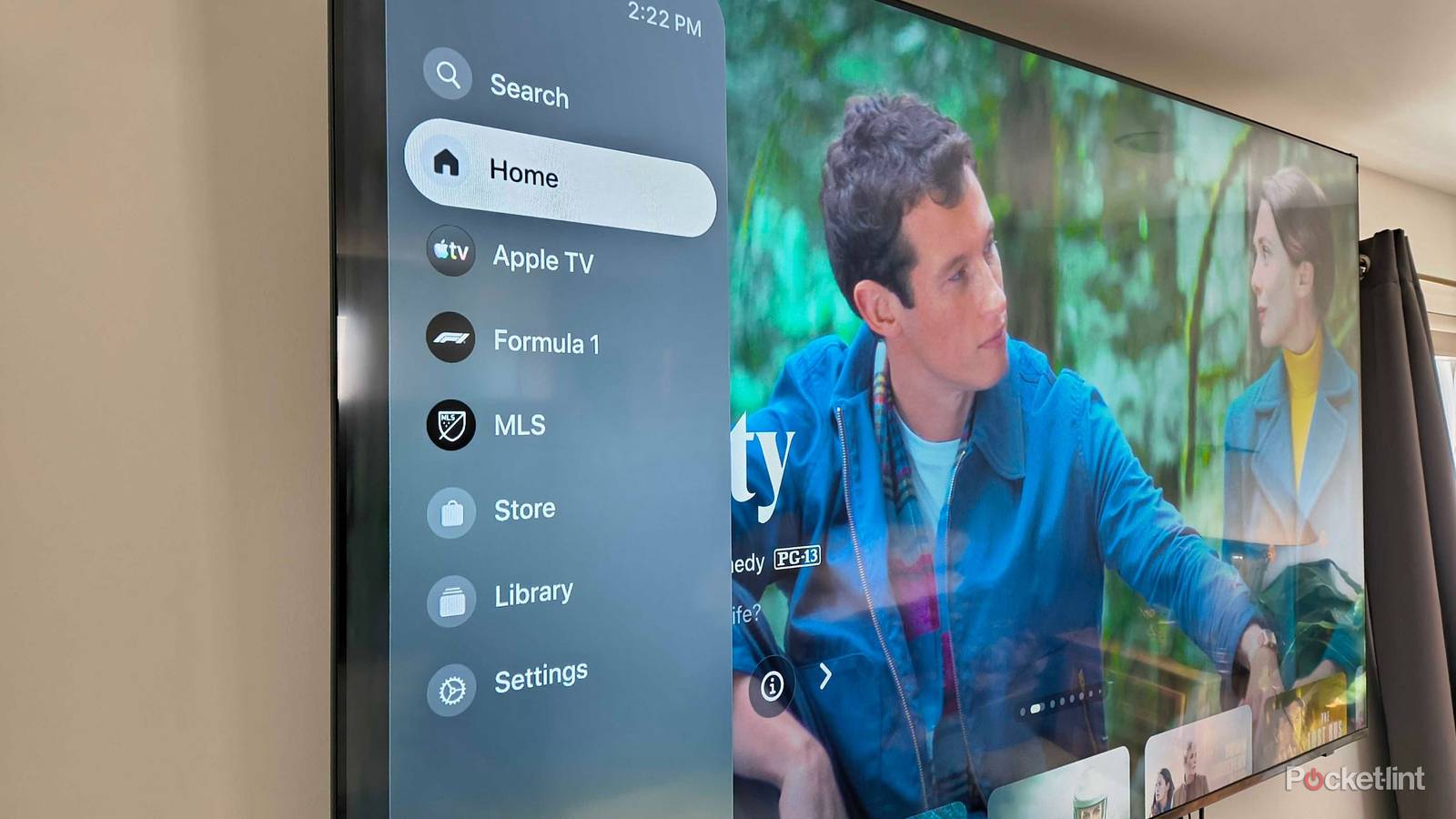
When Apple TV — then Apple TV+ — first premiered in 2019, I wasn’t fully convinced it would last. Knowing Apple, I figured it would give the service a couple of years, since it has at least that much patience (see the iPhone mini). But there was very little to watch at first, and all of it was original. The company was literally giving subscriptions away, in many circumstances. Despite a modest $5 monthly pricetag, you were eligible for a full year if you bought an Apple device, and it was tossed in automatically if you were a student subscriber to Apple Music.
Clearly, Apple TV isn’t going anywhere at this point, especially not with a $4 trillion megacorporation behind it. It’s something you might readily pay for, even at a much higher $13 price point. To me, though, it still doesn’t feel worth a permanent subscription, in the same way many of us are hooked on Netflix or Disney+. There are a few things holding it back, although I’d also like to give credit where it’s due.
What Apple TV is doing right
The premium approach

For a start, just by virtue of time, persistence, and an infinite funding source, Apple TV now has a decent stable of shows to watch. There are dozens of options covering multiple genres, not to mention age groups. If you’ve got a child, in fact, the service may be one of your better options, with everything from Peanuts and Fraggle Rock and Yo Gabba Gabba.
On the adult side, I think Apple’s best decision was to adopt a “premium” approach, much as it does with its hardware. That translates into HBO-style programming, where shows may be slow to emerge and not have many episodes, but clearly have talent and a sizable budget behind them. There’s still no guarantee that you’ll like a series if you pick one at random — there have been some truly mediocre releases, like City on Fire — but at least nothing feels tossed off, like the steady pump of crime, legal, and medical dramas on broadcast TV. Those shows are so bland that even their ads are boring.
In a few cases, Apple has taken some gambles that really paid off. One of its earliest hits was Ted Lasso, a series about an American coaching a British soccer team, a concept some services would’ve rejected outright. For All Mankind has been popular enough to get a spinoff, Star City, and if there’s one show people associate most closely with Apple TV, it’s Severance — a sci-fi drama about people who literally experience separate work and personal lives.
There’s enough diversity that my favorite titles don’t get talked about. Leading them is Masters of the Air, a spiritual successor to Band of Brothers and The Pacific, from some of the same creators. It’s about the USAAF’s 100th Bomb Group, which took massive losses while bombing Europe in WWII. It may be a mini-series, but each episode feels like a small movie, and even if you’re familiar with the history, it gives you a newfound appreciation for the scope and suffering.
Another favorite is Foundation, based on Isaac Asimov’s sci-fi novels, at least up to where I am in the second season. Indeed Apple seems to have accidentally made a deep footprint in sci-fi, scoring some other hits with shows like Silo and Pluribus. Critics seem to love Pluribus, which might be no surprise given that the show was created by Vince Gilligan, the same man responsible for Breaking Bad and Better Call Saul.
The gaps holding Apple TV back
Time to swallow some pride

My greatest personal complaint is that shows like Foundation and Masters of the Air are distinctly in the minority, genre-wise. Most of Apple’s releases seem to be modern-day comedies, dramas, and thrillers, give or take a few decades. I’m sure that appeals to some people, maybe even the majority — but since my favorite shows tend to revolve around fantasy, sci-fi, and war, you can see how this leaves me out in the cold. In that regard, I’m more likely to find something I want from Netflix, even if that company bails on shows the moment they show weak subscriber numbers. Heck, Apple could stand to include more horror as well, Widow’s Bay being a possible flagship.
Zooming out, another issue is Apple’s odd sports coverage. I don’t care about pro sports at all, but I know many people do, and it’s almost amusing that Apple’s two big offerings are F1 and Major League Soccer. Those sports do have a following, yet it’s mostly outside of North America — unless you happen to live in Austin, Texas, which is home to both the Circuit of the Americas and Austin FC. I suppose even Apple is going to have trouble snagging the rights to NFL, MLB, or NBA games, but it could pick up more of them, or perhaps cover niches more associated with America, such as powerlifting.
I’ve avoided talking about movies until now, and that’s deliberate, because Apple TV is a terrible choice for movie night. There are quality (sometimes award-winning) options on the service, some examples being Coda, Killers of the Flower Moon, and The Tragedy of Macbeth. But so many of Apple’s titles are either bad or forgettable that just about any rival service will have a better selection. If The Family Plan 2 is a marquee offering, you’re doing something wrong.
The result of all this is that Apple TV will draw you in for one or two releases, but then get canceled the moment you’re done watching them. If Apple wants to play hardball with Netflix or Prime Video, it needs to match their genre diversity, perhaps ramping up sports and animation diversity as well — there’s no equivalent of Smiling Friends or The Midnight Gospel. It might also need to swallow its pride and start licensing outside content, particularly movies. I know that if I could count on the likes of Aliens or Apocalypse Now as fallbacks, I might be more inclined to stick around for those rare exclusive hits.

- Price
-
$13 per month
- Free trial
-
7 day free trial and 3 months free if you buy an Apple device
- Simultaneous streams
-
6
- # of profiles
-
6