


Even when they were first released, streaming sticks were intended as a workaround. You probably bought one because the software on your TV was slow, too cluttered to make sense of, or just stopped getting new apps after a few years, and $29.99 feels (and still would feel) like a fair price to get around those issues.
That logic has held for around a decade, but stopped this month when Amazon raised the price of every Fire Stick on the market. It was the last big name that hadn’t done this, and a streaming stick now costs more than the thing it was supposed to fix. That, fundamentally, changes consumer behavior as well.
Amazon was the holdout, until it wasn’t
The turnaround tells us more than the price hike does

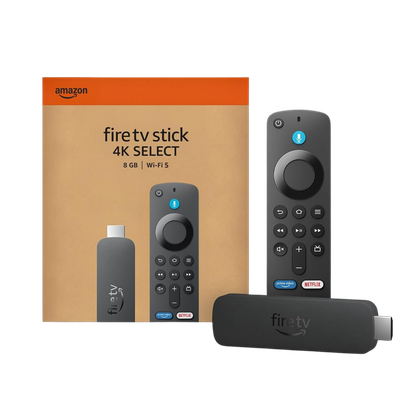
When I wrote about the summer’s widespread price rises a couple of weeks ago, Amazon was the only company that had held its list prices steady, but I also said then that its decision to cut features should worry people. The Fire TV Stick 4K Select and the new Fire TV Stick HD on Vega OS (its Linux-based platform) shipped with 1GB of RAM, compared with 2GB on the older Fire OS stick. There was also Wi-Fi 5 instead of Wi-Fi 6, and no Dolby Vision at all.
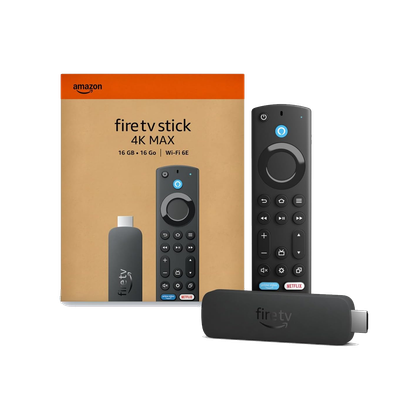
Five days later, however, it had seemingly chosen the worst of both worlds: the Fire TV Stick 4K Max went from $59.99 to $84.99, and the 4K Plus went from $49.99 to $69.99. Similarly, the 4K Select and Fire TV Stick HD both jumped in price (to $49.99 and $39.99, respectively), and when asked, Amazon told us that component costs had risen and it had absorbed them for as long as it could. That’s pretty similar to the statement Apple made in June.
“The consumer electronics industry is facing significant increases in memory and storage component costs. After absorbing these increases for as long as we could, we recently adjusted pricing across our product lines. Our approach has always been to offer great products at accessible prices, and that commitment hasn’t changed.” – spokesperson for Amazon
So now that means every major platform holder, except Google, is charging more for hardware that hasn’t gained any new perks or features. Roku’s Streaming Stick 4K jumped from $49.99 to $79.99, and the Apple TV 4K from $129 to $199, for a box that’s running the same A15 Bionic chip it launched with in 2022. It’s hit the entry-level end of the market, too, with the price of Walmart’s Onn stick roughly doubling without so much as an announcement.
What we’ve all actually been buying is a home screen
Because the home screen was never as free as it appeared

The thing that reframes any 2026 streaming stick purchase is that Roku’s device revenue actually fell by 16% in the first quarter of the year, while its platform business (aka advertising and subscriptions) accounted for around 90% of the company’s revenue. So that suggests that the sticks haven’t been the main product for a while and have become something of a delivery system for the home screen, sold to us for a low price because the results earned back the difference.
Amazon runs on much the same model, which is why the Fire TV interface has always had a promotional layer built in. For years, that’s been a reasonable trade, and I’ve made it myself. If you tell me I have to pay very little cash, regularly receive seamless updates, but put up with a row of sponsored tiles at the top of my screen, I’m going to take that deal.
But at $84.99, that starts to feel like a bad trade-off. Suddenly, you’re paying premium prices for hardware with a business model that assumes you’ll pay them back with your attention. Because you’re not just buying a streamer, you’re also buying advertising space and being charged big bucks for the privilege.
The cheapest fix is always the one you already own
Yet almost no one checks before they shop

It’s easy to say that if the stick you currently have plugged into the back of your TV works, replacing it in 2026 is a terribly timed impulse buy. Amazon’s own support pages list the Fire TV Stick 4K Max (2nd Gen) as scheduled to receive software updates until Dec. 31, 2030, and Roku similarly tends to support its players far longer than most people keep them.
Most common complaints are usually solvable without spending anything, as most streaming platforms let you hide or reorder the app rows you don’t use. A lot of people complain about cluttered screens, but it’s almost never a reason to upgrade the hardware. TVs sold in the last few years also have casting built-in, so you can just use your phone to start watching, skipping the home screen entirely. And, if the issue you’re having is speed rather than layout, it’s often a network issue rather than a device issue (though not always).
In cases where your stick is genuinely dying, we’ve already made the case that a used Roku is a false economy, so buying second-hand also isn’t the easy recommendation it might have been.
If you must buy, buy at a discount
But that might not be as easy as it sounds

While list prices for these devices have definitely moved, that doesn’t mean you have to pay full price for your next streamer. Frequently on sale, the Fire TV Stick 4K Max can go for as little as $49.99, even after the price hike, which makes sense, since these are likely the devices that were made before the reason for the change – component costs – started impacting the market.
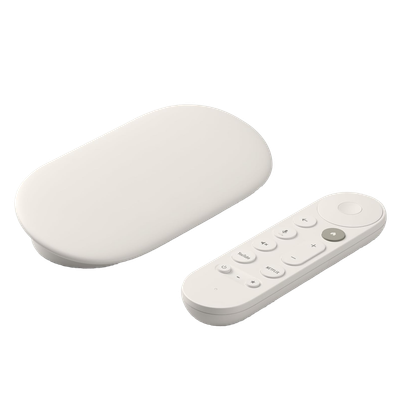
On what to actually buy, we’re in the business of weighing this up daily and have already made the case for the Roku Streaming Stick Plus as the only Roku still worth it at $59.99. I’d also point anyone with the budget to the Google TV Streamer at $99.99, mostly for the 4GB of RAM and the fact that Google still hasn’t moved its base price in the same way as competitors. Memory is the part that’s gotten the most expensive, so that’s a smart buy right now.
Some will say that it’s a matter of waiting it out, but in this case, the forecasts don’t agree. Counterpoint Research reckons that there’s no realistic scenario in which prices correct in any meaningful way within the next year. Once buyers have gotten used to paying more, these things don’t tend to revert.
Which leaves most of us where we started, and perhaps with more affection for the dusty streaming stick that’s been working hard from the back of our sets for years.
-
- Brand
-
Amazon
- Operating System
-
Fire OS
- Downloadable Apps
-
Thousands
- Resolution
-
4K, Dolby Vision, HDR10
- Ports
-
HDMI
The Amazon Fire TV Stick 4K can stream in 4K resolution. It offers millions of titles on a variety of streaming services.
-
- Dimensions
-
6.4 x 3 x 1-inch
- Connective Technology
-
Wi-Fi, Bluetooth
- Brand
-
Google
- What’s Included
-
Remote
- Bluetooth codecs
-
Bluetooth® 5.1
- Wi-Fi
-
Wi-Fi 802.11ac (2.4 GHz / 5 GHz)
The Google TV Streamer is a streaming device designed to support the latest video and audio technologies with AI integration and smart home control.
-
- Brand
-
Amazon
- Resolution
-
4K
- Audio codecs
-
Dolby Atmos
- RAM/storage
-
16 GB


