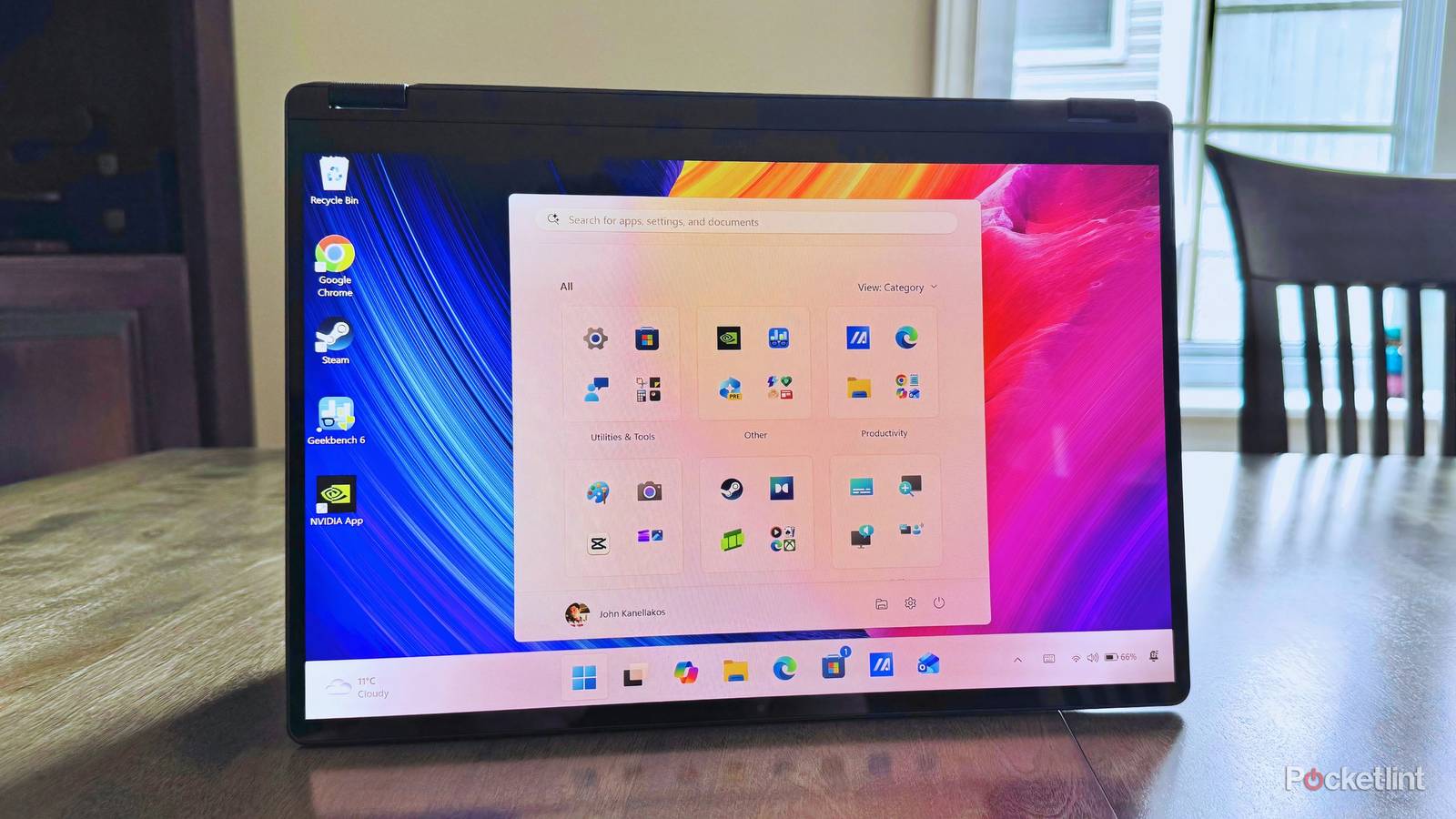
Last month, Microsoft outlined plans to overhaul Windows 11’s performance, reliability, and craft throughout the course of 2026 in a tell-all blog post. As both a follower of tech and an avid PC user myself, this news has been a ray of sunshine in an otherwise tumultuous Windows 11 status quo.
Within this blog post, Microsoft confirmed plans to rebuild the Windows 11 Start Menu using its native WinUI 3 user interface framework (it’s currently built using React), which should improve performance under stress. Now, as per an exclusive report from Windows Central, we have more details on just what’s in store for the Start Menu in 2026.
Sources familiar with the matter have conveyed to Windows Central’s Zac Bowden that Windows 11’s upgraded Start Menu will look visually similar to today’s in-market version — which was recently given a minor face lift — but with several new customization options to boot.

- Operating System
-
Windows 11 Pro
- CPU
-
AMD Ryzen AI 9 HX 370 w/ Radeon 890M
- GPU
-
NVIDIA GeForce RTX 4070
- RAM
-
32GB LPDDR5X
- Storage
-
2TB M.2 NVMe PCIe 4.0 SSD
- Battery
-
73WHrs
The ProArt PX13 is a creator-focused two-in-one PC that runs Windows 11, and that has enough compute under the hood to serve as a compact gaming rig.
In particular, it appears that Microsoft is working to implement the ability to manually adjust the size of the menu. Currently, the menu switches between its smaller and its larger configuration automatically based on screen size and resolution.
Additionally, there will reportedly be options to toggle on or off specific sections of the menu, including Pinned, Recommended, and All. Aside from the All section, these other components can already be added or removed as is, but an overarching toggle for each one within Settings would be an improvement on the whole.
The report also reiterates that performance is a focus internally at Microsoft, with improvements to launch speed and search responsiveness when under heavy work loads. These under-the-hood enhancements are all part of what is known as Windows K2, the internal code name for Microsoft’s aforementioned efforts to improve its flagship desktop OS.
It’s the flagship UI element of Microsoft’s flagship OS

Ever since its debut in 1995, the Start Menu has been a critical component of the Windows operating system. As a one-stop-shop surface for viewing and launching installed applications, searching for files and settings, accessing system shortcuts, and controlling the power state of your PC, the Start Menu is every bit as invaluable a tool today as it was some thirty years ago.
The Start Menu’s influence within the technology industry is undeniably outsized, with other platforms of both the PC and the mobile persuasion featuring their own takes on the menu: Apple’s App Library and Google’s app drawer, for example, both take clear inspiration from the world of PC computing.
With the historical importance of the Start Menu in mind, Microsoft’s commitment to improving its fundamentals is both exciting and relieving. I’ve personally found that the present-day menu on Windows 11 sometimes lags, fails to trigger when using touch controls, and misses keyboard strokes when used as a search launcher.
The Start Menu’s influence within the technology industry is undeniably outsized…
I love the idea of the Start Menu being rebuilt with fully native code, and the notion that we’ll be able to manually customize both its size and its modules is an extremely welcome development. The way I see it, the more native code and the more UI flexibility on offer, the better.
Of course, we’ll have to wait and see if Microsoft can deliver on its promises, and I’m tempering expectations until I can try out the new menu for myself in preview. Here’s hoping Windows 11’s Start Menu truly gets the performance and customization glow-up it so rightfully deserves in 2026.