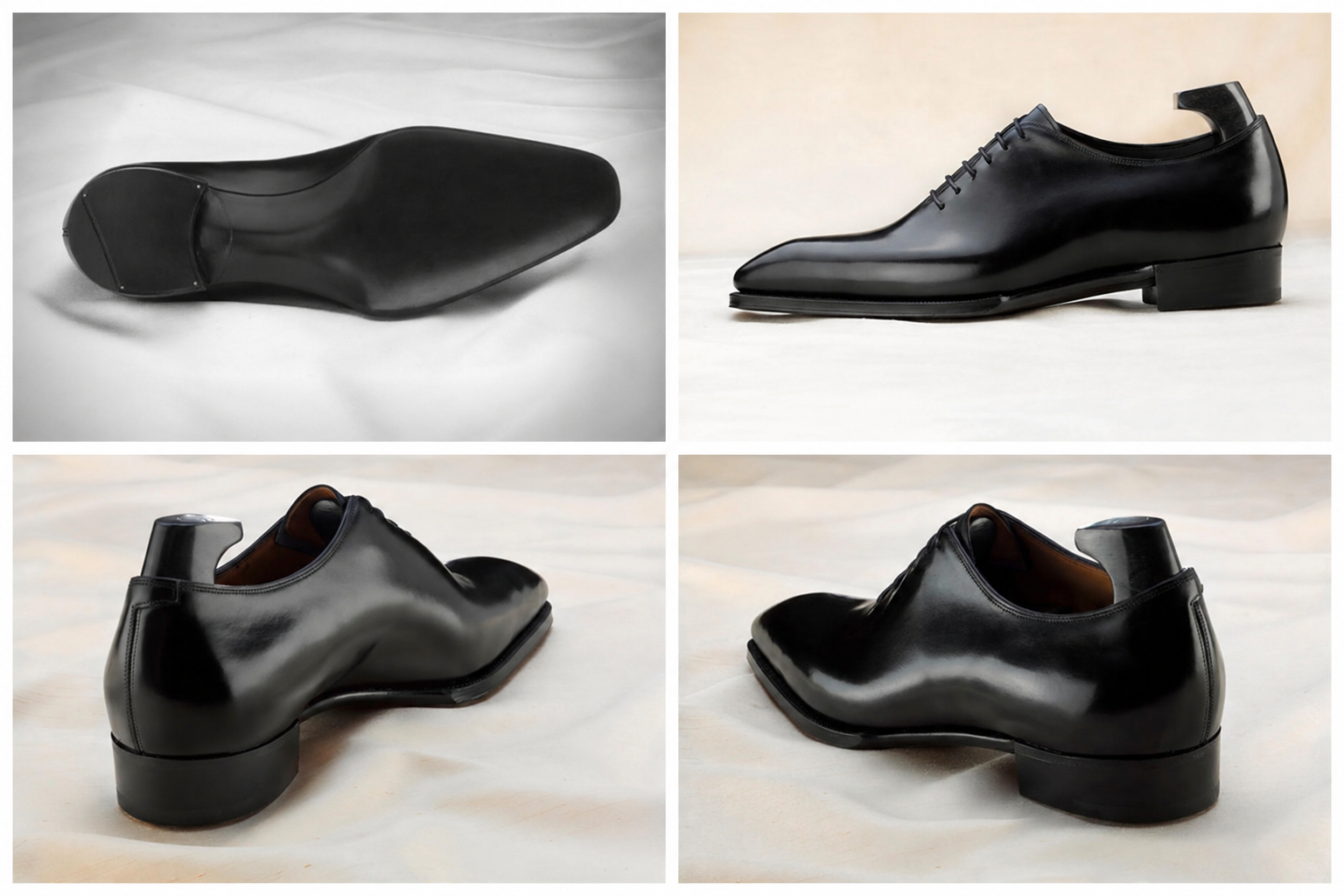
Have you ever wondered why wholecut oxfords can be more expensive than many other styles within the Oxford family? At first glance, it almost seems backward. A wholecut is made from essentially one piece of leather, so logically you might assume that fewer pieces and fewer seams would mean less work and therefore a less expensive shoe.
But the reality is quite the opposite.
A good wholecut requires more selective leather cutting, creates more waste, and is considerably more difficult to last properly. All of those things add time and cost to the production process.
That is why wholecut oxfords often come with a premium. But what about manufacturers that charge exactly the same price for their wholecuts as they do for their other models?
That does not mean the production costs are necessarily identical. Brands price shoes in different ways. Some may absorb the additional cost of producing a wholecut, some may balance margins across the collection, and others may simply prefer uniform pricing across similar models, while gaining more in one model and less in others.
In my own brand, I used to price them differently. Then I got tired of having different prices and just took a slightly lower profit margin on my wholecut oxford model. But I was still charged more for them by the factory. That never changed.
The point is not that every wholecut must retail for more. It is that, all else being equal, producing one properly presents challenges and costs that a conventional multi-piece Oxford does not.
Wholecut Oxfords Require Better Leather Selection
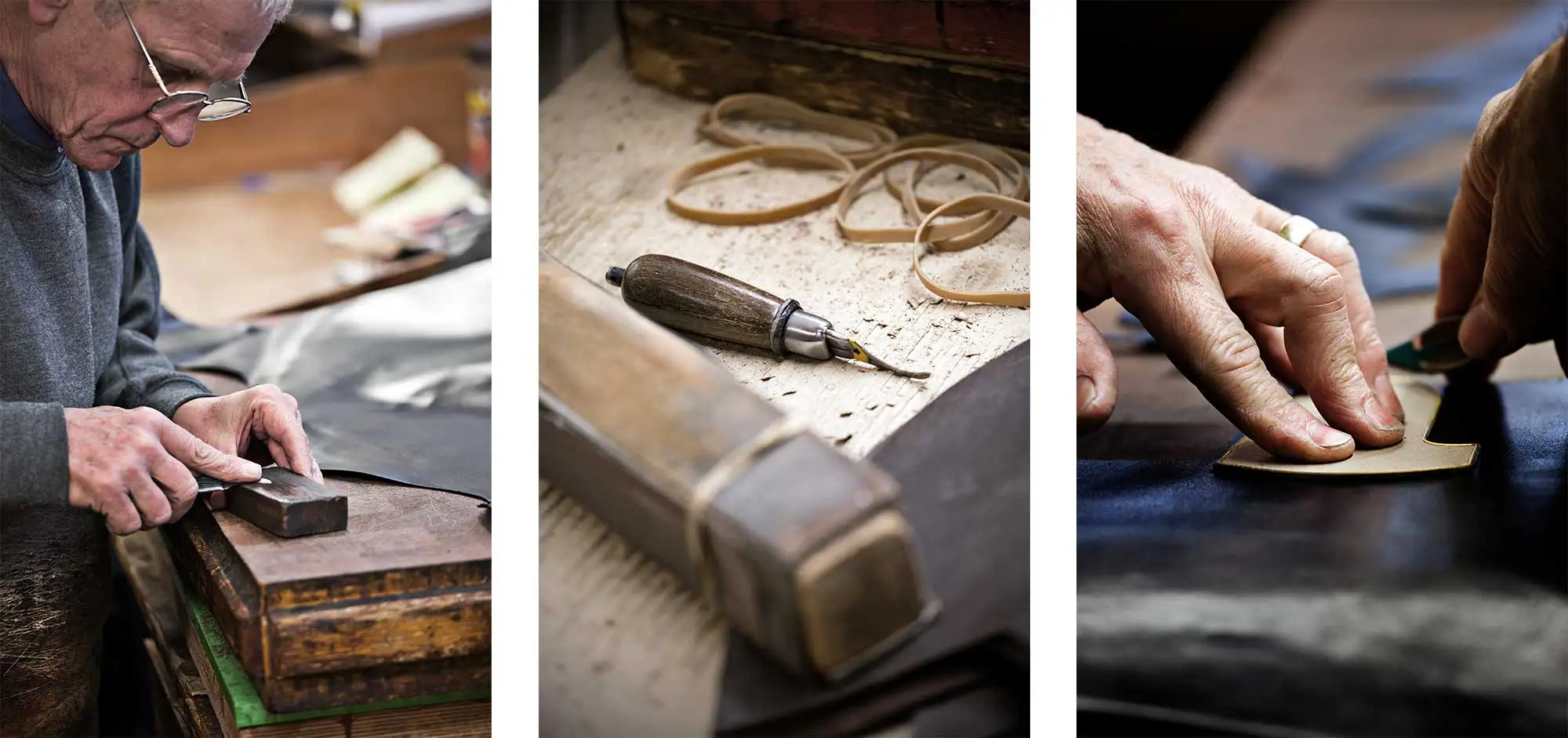
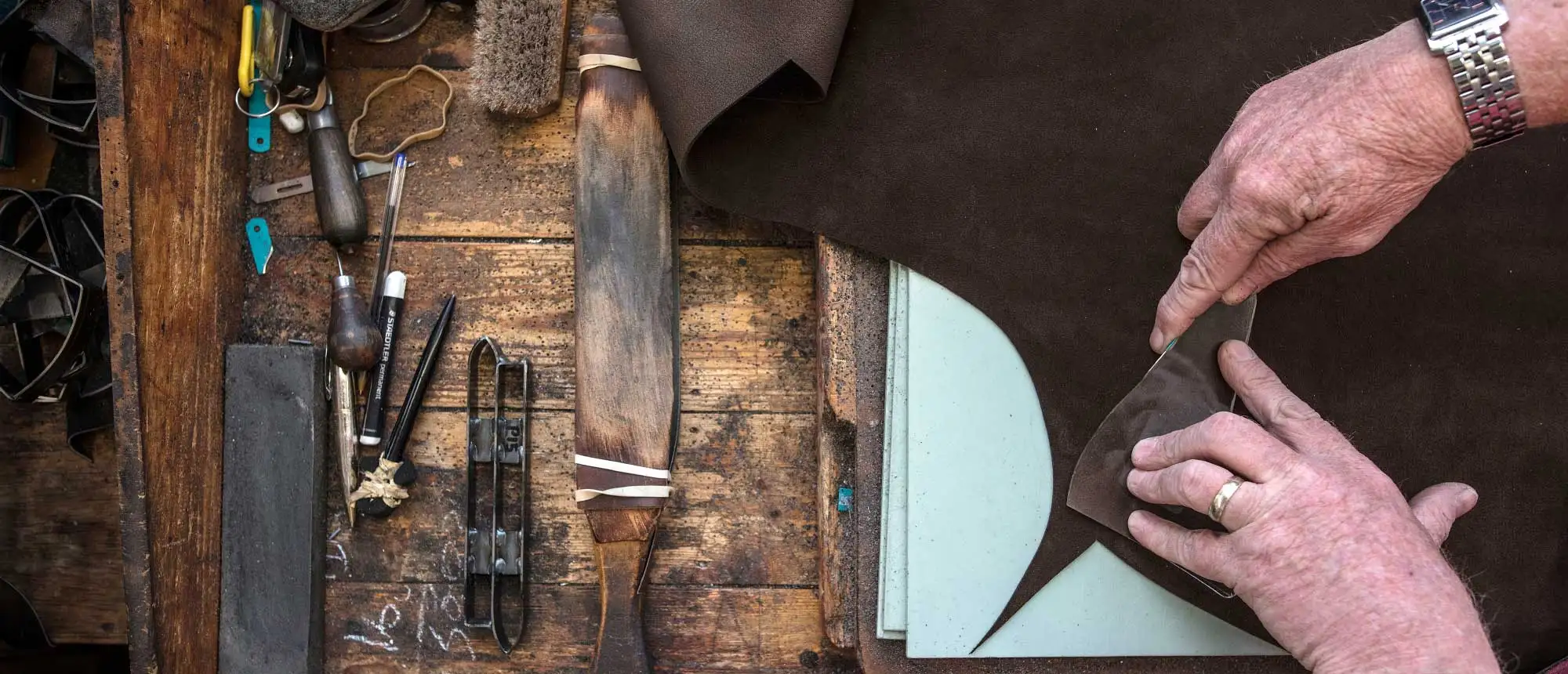
The first stage of quality shoemaking starts with cutting the leather, a process known in the shoe industry as clicking.
How a hide is cut plays a massive role in the eventual ‘perceived’ quality of the shoe. It is one of those areas that separates experienced cutters from people who simply know how to cut around a pattern. The higher you go in price, the more selective the cutting should become. I say should because, naturally, reality is not always quite as straightforward these days.
You are paying for that attention to detail: the trained eye, the steady hand, and the ability to work around the natural imperfections of a hide while still maximizing its usable area. Good clicking really is an art. And that is assuming that the clicking is done by hand. There are many automations these days to save time, whether in a press-cut machine or a laser cut.
And wholecuts make that art considerably more difficult.
When making a wholecut shoe, the cutter needs one very large, clean section of leather for each upper. You cannot simply place the pattern anywhere on the hide and start cutting. The hide must first be examined for scars, veins, loose grain, bites, inconsistencies, and other imperfections. Then the pattern has to be positioned so that the large, highly visible surface of the wholecut comes from one of the cleanest areas available.
This becomes even more challenging when cutting larger sizes. And therein lies one of the major costs: you are using some of the prime real estate of the hide. And the larger the size, the more of that prime you are using.
With a multi-piece shoe, a skilled cutter has considerably more flexibility. Smaller pattern pieces can be positioned around imperfections. Less desirable parts of the hide can sometimes be used for areas such as heel counters, piping, or portions that become less visible once the shoe is assembled.
A full brogue, for example, gives the cutter opportunities that a wholecut simply does not. There is nowhere to hide on a wholecut.
That uninterrupted piece of leather is one of the reasons the style looks so elegant, but it also means that flaws become immediately apparent. You are effectively paying a premium not only for the leather itself, but also for the amount of leather the manufacturer must reject in order to produce that clean upper.
This is something I discuss much more extensively in my guide to leather quality in dress shoes. Leather quality is not simply about the tannery or whether something is called “full grain.” A huge part of quality comes down to what the manufacturer chooses to use — and, just as importantly, what it chooses to reject.
Wholecut Oxfords Are Harder to Last
The second major reason wholecut oxfords are more expensive is that they are harder to make properly. More specifically, they are harder to last. It was a constant struggle to get my factory to last these perfectly and get that excess space out of the vamp. But again, that is easier said than done, especially using a machine for the lasting.
For anyone unfamiliar with the term, lasting is the stage of shoemaking where the finished upper is pulled over the shoe last and formed into its final three-dimensional shape.
With a traditional multi-piece Oxford, the seams within the upper help break up the tension in the leather. A wholecut does not have that luxury. That lack of tension dispersion often leads to excess space left between the upper and the last.
Because the vamp, quarters, and facing are essentially all part of the same uninterrupted piece of leather, pulling on one area affects another. When you pull one side, the other side wants to follow.
That might sound trivial, but it creates a real challenge when trying to get the upper sitting tightly and evenly against the last.
A shoe with multiple pieces and seams gives the maker more control. The seams essentially create boundaries within the upper, allowing different sections to be manipulated with a degree of independence. A wholecut gives you far less leeway.


Poor Lasting Can Lead to Excess Creasing
This becomes particularly important across the vamp. If a wholecut is not lasted properly, excess space can remain between the leather and the last, as mentioned above. Once the shoe is worn, that extra room can translate into unnecessarily heavy/deep creasing.
Properly lasting a wholecut therefore requires a slower, more controlled process. On a lasting machine, you do not simply grab both sides and give the upper one enormous pull. You work it gradually. Pull one side. Then the other. Return to the first. Then back again.
Little by little, the maker balances the tension until the leather sits evenly and firmly against the last. Those extra steps take time. And time, particularly in manufacturing, costs money.
A well-made wholecut should also be allowed adequate time on the last so that the leather properly takes its shape. This is another factor that can influence how cleanly a shoe eventually creases and ages.
I have discussed this relationship between lasting, fit, and creasing in my guide to leather creasing, because a lot of what people blame on “bad leather” can actually be related to how a shoe was lasted or how it fits the wearer.
Why One Piece Does Not Mean Less Work
This is ultimately the misconception surrounding wholecuts. People see fewer pieces and think: Fewer pieces = less work = cheaper price. But shoemaking does not work that way.
Yes, there may technically be less upper stitching involved. But the savings there are offset — and often exceeded — by more demanding leather selection, poorer hide yield, more difficult clicking, more complicated lasting, and potentially more production time.
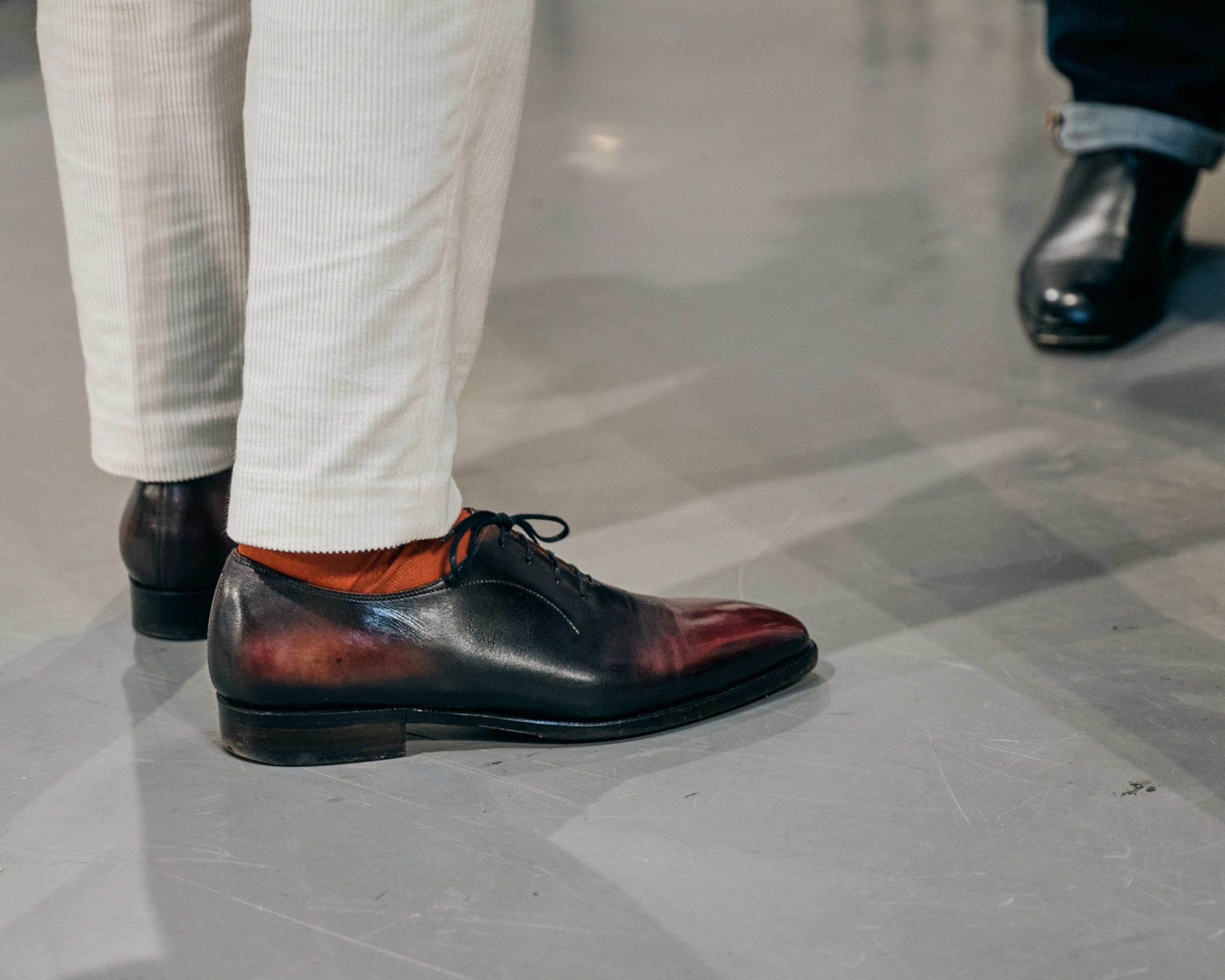
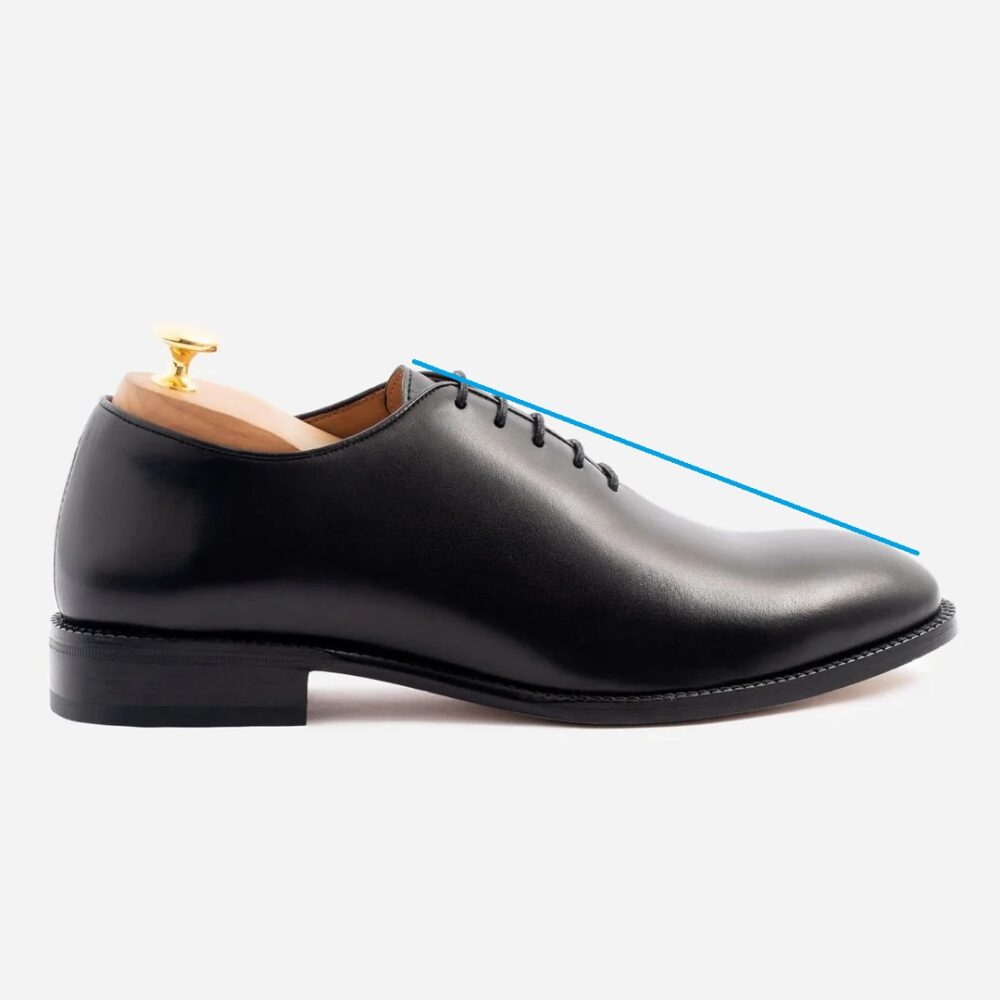
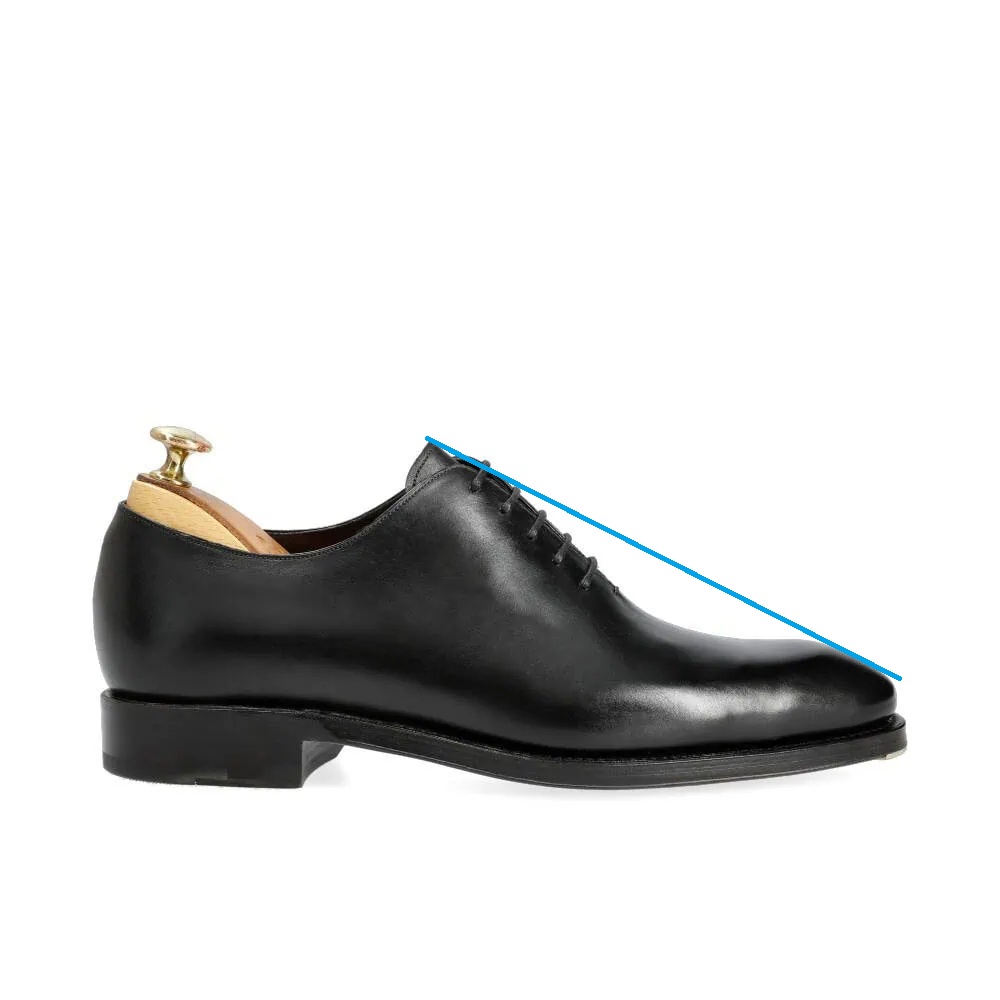
That minimalist appearance is actually rather unforgiving. The simpler the shoe looks, the fewer places there are to disguise mediocre work. You can usually tell a good shoemaker by looking at their wholecut oxford and seeing if there is a clearly defined silhouette shape from the top of the lacing to the tip of the toes. If that line looks straight, it was poorly lasted. See some examples below of what I am referring to (the more curve you see from the blue line to the vamp point, the more it was lasted properly or has a last with actual shape).
Are Wholecut Oxfords Worth the Higher Price?
That ultimately comes down to whether you appreciate the style.
You should not buy a wholecut simply because it costs more or because somebody tells you it represents “higher quality.” There are fantastic cap toes, Adelaide Oxfords, full brogues, and countless other styles that require tremendous craftsmanship.
But if you appreciate that clean, uninterrupted look, then there is something special about a well-made wholecut.
It is also one of the most versatile dress shoes a man can own, particularly in black. I have actually argued before that if you could own only one dress shoe, the black wholecut would make a very strong case for being it.
So the next time you see a wholecut Oxford sitting beside another model from the same manufacturer with a higher price tag, understand that you are not simply paying for the fact that it was made from one piece of leather.
You are paying for what it takes to make that one piece work. And for the manufacturers that charge exactly the same price for their wholecuts as they do for their other models? Well, you can look at that in two ways.
Either their other shoes have enough margin built into them to absorb the difference, or they are taking less margin on the wholecut.
But from a production standpoint, they are not identical in cost.
If you enjoy my editorial posts, please see the Educational Post Page here
—Justin FitzPatrick, The Shoe Snob
Shop · Marketplace · Patreon