


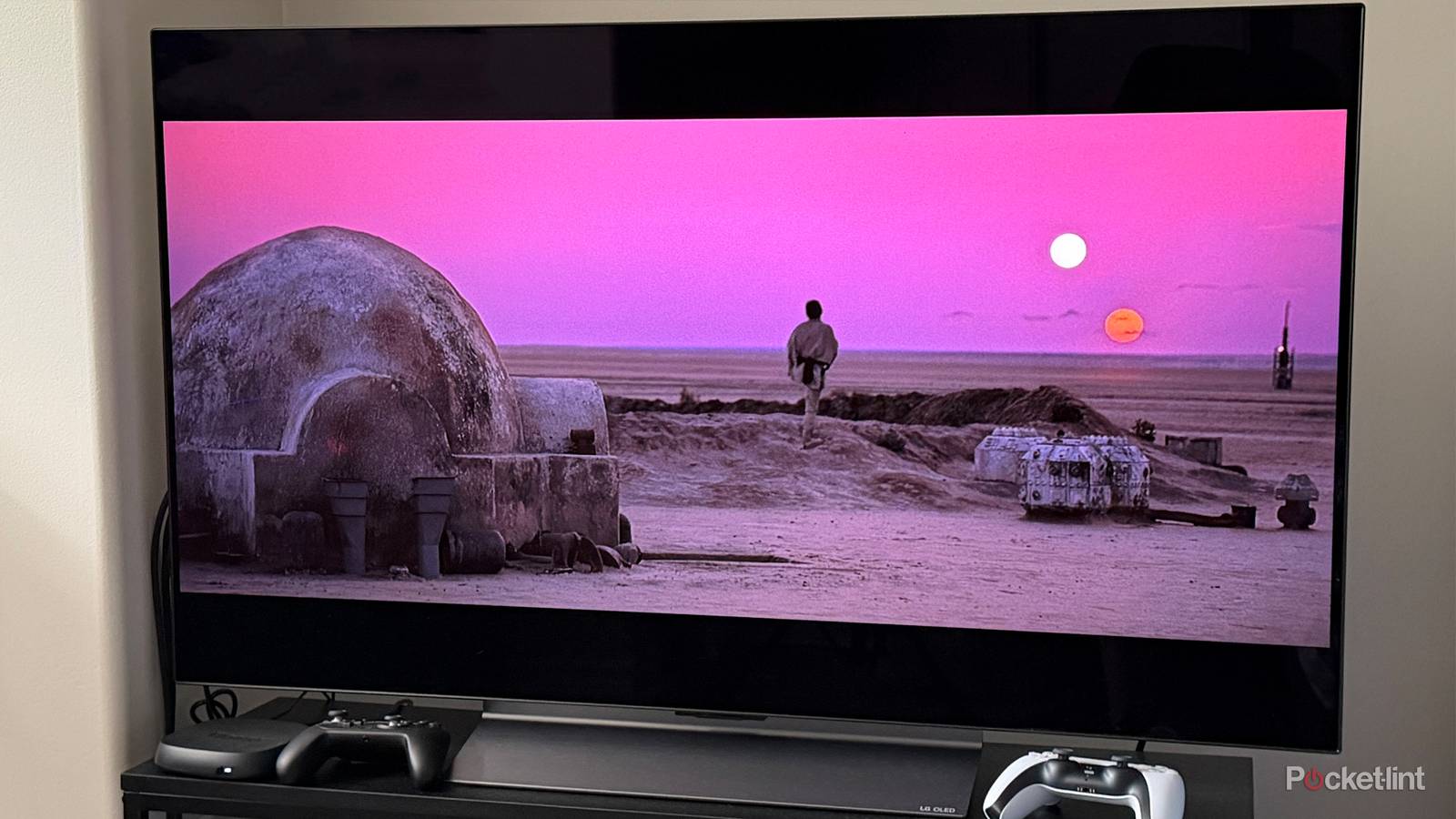
Most of us only buy one TV every few years, and we’re all looking for the best deal. They don’t come cheap, and we want the most advanced tech, like RGB Mini-LED, and a degree of future-proofing, if we’re forking out hundreds or thousands of dollars on our new toy.
So what’s the best way to get the best TV deal? Getting last year’s model is one of the shrewdest ways to stretch your cash without missing out on features.
You’ll still get all the bells and whistles you want at a lower price, with money left over for a soundbar or surround sound system. On the other hand, you could be an early adopter who won’t compromise on features. Here’s why you should and shouldn’t buy last year’s TV models if you’re looking for the best value.
Why you should buy last year’s TV models
There are many benefits to buying last year’s best TVs rather than spending more money on the latest models. Here are some of them.
Price
Get the best value

Most of us have a budget to stick to when buying a new TV, and the price is often the determining factor when we eventually make our choice. New TV models usually debut at CES at the beginning of the year and roll out to buyers within the first six months. This is often the best time to buy a TV from the previous year’s lineup.
If you’re not in a hurry, you can also wait for shopping events, like Black Friday, to find the best deals.
Retailers are eager to get rid of their stock to make space for new inventory and offer fantastic discounts on their existing stock. There’s also an abundance of choice, which declines as they sell out their stock.
For example, Samsung’s 2026 65-inch OLED S85H goes for around $1,500. You can get last year’s equivalent Samsung 65-inch OLED S85F at around $1,000 and save $500. If you’re not in a hurry, you can also wait for shopping events, like Black Friday, to find the best deals. However, this can be risky as there’s often limited stock which runs out fast.
Higher-tier options
Better models to choose from

You can put the savings from buying last year’s model towards a higher-tier model you hadn’t budgeted for. There’s no reason to buy the latest entry-level and midrange models when you can get last year’s flagships for the same price.
Despite being older, these higher-tier TVs will probably include the latest tech and offer better image quality. Many will also have superior build quality and better port selections compatible with faster speeds. Flagship models get more years of software updates, so you’ll be covered for longer than cheaper options.
There’s no reason to buy the latest entry-level and midrange models when you can get last year’s flagships for the same price.
The Hisense range offers typical examples of older higher-end TVs that make more sense than newer entry-level models. The 2026 75-inch U7 goes for around $2,000 and has a 3,000-nit mini-LED display, up to 3,000 local dimming zones, and a 165Hz refresh rate.
You can get last year’s 85-inch U8 TV for less at around $1,700. It isn’t just bigger, but is also brighter at 5,000 nits and has up to 5,600 local dimming zones, while matching the refresh rate. Yes, the newer model has a faster processor and updated exterior, and it’s up to you to decide whether those features warrant the extra cash outlay.
No sacrificing specs or reliability
You’ll still get the specs that matter

I always advise buyers to get the best specs they can afford when recommending TVs. Fortunately, TVs don’t advance at the fastest rate, and last year’s TVs might have slower processors and some older tech, but deliver where it counts in areas like picture quality, refresh rates, dimming zones, and port speeds.
Last year’s TVs might have slower processors and some older tech, but deliver where it counts in areas like picture quality, refresh rates, dimming zones, and port speeds.
Realistically, you’ll get a TV with current Mini-LED or OLED tech, and it’ll have at least a 120Hz refresh rate and multiple HDMI 2.1 ports. The bugs and glitches on these TVs will probably be fixed by now with software updates, and you can trust them to perform without issues.
To put this in perspective, LG’s 2025 C5 65-inch OLED TV goes for around $1,400, while the newer 2026 C6 OLED goes for around $2,000. The newer TV has a faster processor, but the marginally better image quality and higher refresh rate won’t justify the $600 price difference to many buyers.
Why you should buy this year’s TV models
You want what you want

Some buying decisions aren’t quantifiable by specs or price and come down to what you like. If buying the latest model TV makes you happy, you should go for it. You’ll be guaranteed the latest specs and might save money down the line due to the degree of future-proofing it provides.
It’s also worth buying the latest TVs if you don’t mind paying to experience new tech just hitting the market. Someone has to enjoy the latest SQL-Mini LED and mini-LED TVs before they become mainstream, and it may as well be you.

- Display Size
-
42, 48, 55, 65, 77, or 83 inches
- Operating System
-
webOS
- Display Type
-
OLED
- Display Resolution
-
4K (2160p)
- Connectivity
-
Wi-Fi 6E, Bluetooth 5.3
- Weight
-
36.6 pounds


