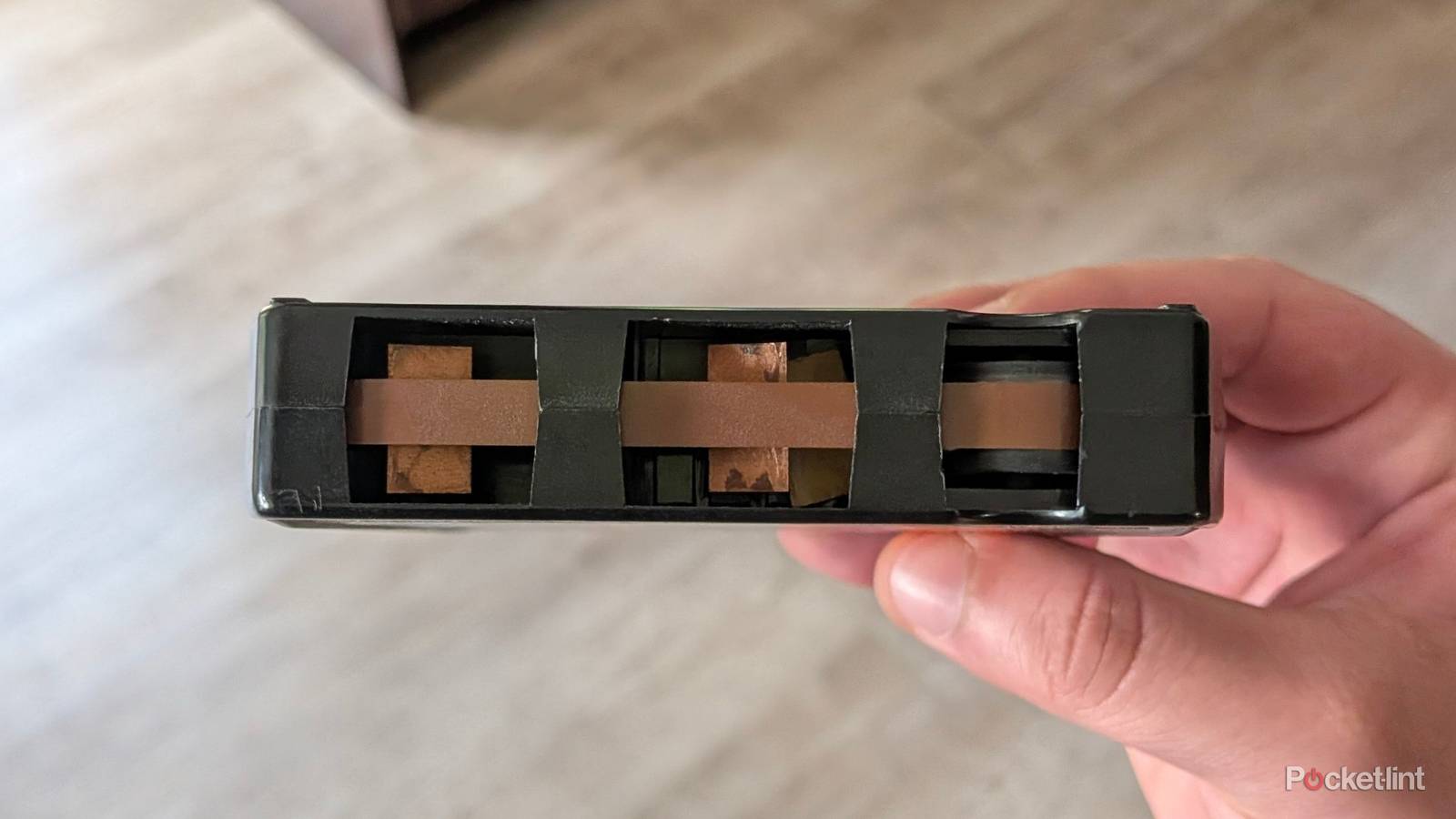
For anyone old enough to remember the tape era, you’ll undoubtedly recall the Compact Cassette. Serving as one of the de facto physical media standards for distributing music during the late 1970s, the 1980s, and the early 1990s, cassettes are a classic (if not exactly beloved) vestige of tech’s storied past.
For a brief period of time after Compact Cassette’s introduction to market, however, it faced competition from a slightly younger rival format known formally as Stereo 8 and colloquially as the 8-track. Stereo 8 released in North America in 1965, developed in collaboration between the Lear Jet Corporation, Ampex, Ford Motor Company, General Motors, Motorola, and RCA Victor.
From the onset, the 8-track’s roots were firmly entrenched within the automotive industry. Arriving at a time when consumers were purchasing vehicles at an increasing rate, the pitch was that you could listen to your favorite tunes while driving from point A to point B, all without the need to flip around the cartridge mid-way through listening.
Curiously, the 8-track’s popularity was relatively limited outside of North America, and it didn’t take long for Compact Cassette to eclipse it in popularity — a trend no doubt supercharged by the release of the cassette-based Sony Walkman in the US in 1980. By the end of the 1980s, 8-track releases had slowed to a crawl, and the rest, as they say, is history.
For the love of all things fragile
The 8-track has stood the test of time, despite being a delicate medium

Like other analog magnetic tape formats, Stereo 8 is notorious for degrading after repeated playbacks. Unlike Compact Cassette tapes, which are relatively resilient from an external perspective, 8-tracks are quite fragile on the whole. Their foam pressure pads inevitably suffer from disintegration, requiring maintenance to get up and running over time.
That being said, at least in my experience, 8-tracks that have been well taken care of over the years are perfectly capable of being played back all these decades later. I have several cartridges in my possession that continue to function as intended, even if said intention is of middling sound quality.
In any case, the 8-track remains an influential physical audio medium, and one that North American drivers (and some home users) in the 1960s and 1970s are sure to have appreciated at the time. I find the technology fascinating, and it evokes a sense of anemoia in me that other physical media formats simply don’t elicit.
Getting back into the grove
I love powering up my family’s old 8-track player

As mentioned, 8-track players are most synonymous with the automotive industry, but that’s not to say that home players didn’t thrive for a period of time. In my case, I have access to a three-in-one vinyl record, AM/FM radio, and 8-track combo player, which is happily stationed at my family’s cottage.
The unit itself is far too large to lug around, being made of solid wood and taking up as much space as a television stand or entertainment center. With this in mind, I’ve been eyeing the second-hand market for more compact options for travel and beyond.
…vintage 8-track players in solid condition can go for a pretty penny.
Considering the age of the format, as well as its somewhat niche historical status, vintage 8-track players in solid condition can go for a pretty penny. It’s possible to find plenty of car radio 8-track modules for cheaper across websites like eBay, while more fanciful and compact home player models are exceedingly rare and expensive.
A variety of unique portable 8-track players have been released over the years, including two of my personal favorites: the Panasonic Dynamite 8 and the Weltron 2001 Spaceball. These retro gadgets are full of character, all while serving as time capsules from a bygone era in tech — a charming era that I hope is never forgotten.