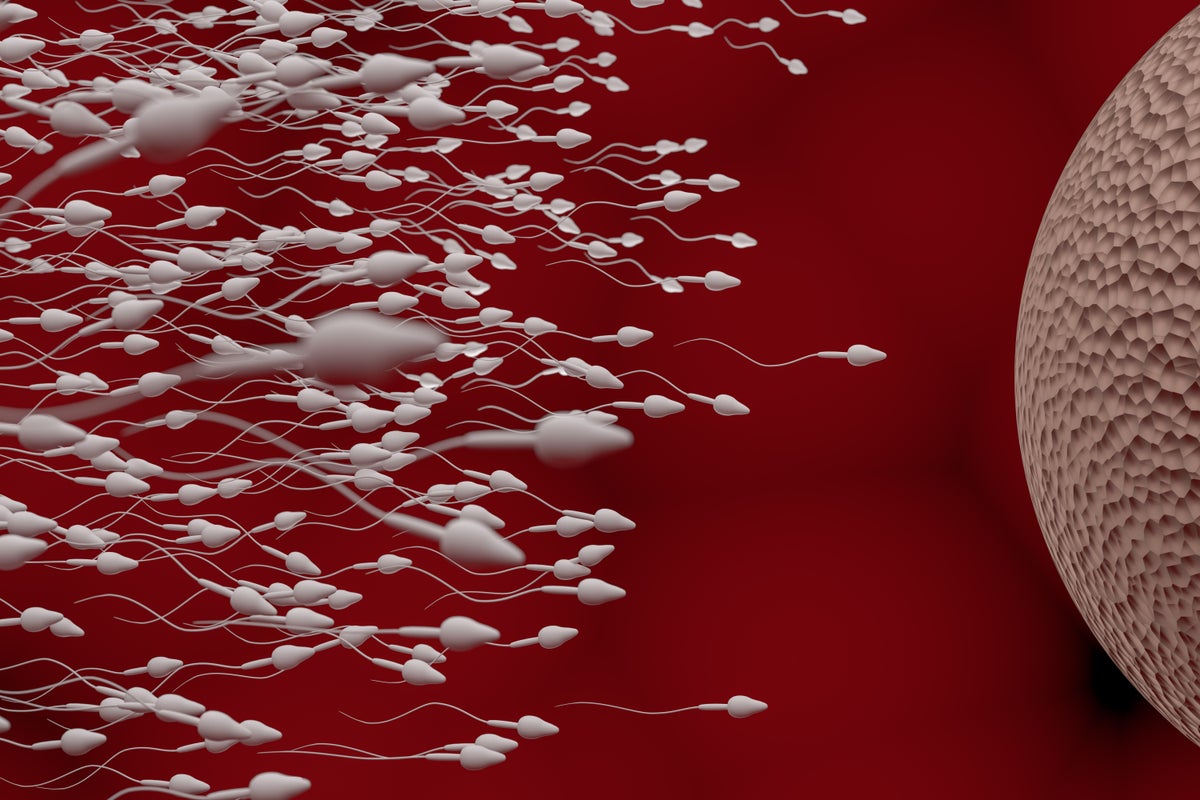
The latest generation of obesity drugs might have another potential benefit: improving fertility in men. A systematic review presented today at the Endocrine Society’s annual meeting in Chicago, Illinois, suggests that GLP-1 medications might increase testosterone levels and help to improve the quality of sperm in men with obesity.
The evidence is still preliminary, and more robust trials are needed to confirm the association, says review co-author Pratibha Natesh, an endocrinologist at Warwick Medical School in Coventry, UK. But emerging evidence from other sources points in the same direction.
Perfect sperm
On supporting science journalism
If you’re enjoying this article, consider supporting our award-winning journalism by subscribing. By purchasing a subscription you are helping to ensure the future of impactful stories about the discoveries and ideas shaping our world today.
Most of the next-generation obesity drugs that have come on the market in the past five years work by binding to the same receptor as a natural hormone called glucagon-like peptide 1 (GLP-1), creating a feeling of fullness. To learn how the drugs affect male fertility, Natesh and her colleagues searched the literature for randomized controlled trials of GLP-1 drugs that included measurements of testosterone levels in men. They found only five studies.
(This article uses ‘men’ to reflect the language used in the review and other studies, while recognizing that not all people who have sperm identify themselves as men.)
In one study, for example, 30 men with low testosterone levels, a condition known as hypogonadism, and obesity were assigned to receive either a GLP-1 drug or testosterone replacement therapy (TRT) at random. At the end of 16 weeks, the testosterone levels of both groups had risen.
Another study randomly assigned 25 men with type 2 diabetes and hypogonadism to receive either a GLP-1 drug or TRT. After 24 weeks, testosterone levels increased in both groups, although the increase was greater among those receiving TRT. In the GLP-1 group, however, sperm quality improved. The percentage of morphologically typical sperm — those with a perfect shape and size — went from 2% at the start of the study to 4% by the end. In the TRT group, sperm count and quality declined, which is expected during this type of therapy.
The other three studies included in the review involved healthy men receiving GLP-1 medications for short periods of time and showed that the drugs had no effect on testosterone levels.
Testosterone boost
The findings of the systematic review are supported by other studies, including research presented last month at the American Urological Association annual meeting in Washington DC by Andrés Guillén-Lozoya, a physician at Mayo Clinic in Rochester, Minnesota. Guillén-Lozoya and his colleagues analysed the electronic health records of more than 1,600 men who had been prescribed obesity drugs and found that participants’ testosterone levels increased by around 30% after treatment with either a GLP-1 drug or a drug that mimics both GLP-1 and a separate hormone called glucose-dependent insulinotropic polypeptide.
And a retrospective study examined the electronic health records of 215 men who were being treated with weight-loss drugs. It found that after treatment, their testosterone levels were, on average, around 20% higher than before treatment.
Fat cells’ effect
Scientists say that it is not surprising that the drugs might affect male fertility. It is well known that obesity lowers levels of testosterone, which is an essential hormone for the production of sperm and therefore for fertility. One reason for the relationship between obesity and lower testosterone is that fat cells contain high levels of an enzyme that converts testosterone into oestradiol, the main female sex hormone. But other metabolic changes and the increased levels of inflammation caused by obesity also affect testosterone production.
Natesh says that the team’s findings should be an “eye opener to all endocrinologists” who are treating men, especially people who are planning to conceive, and have both obesity and symptoms of low testosterone, which can include low libido, depressed mood and muscle loss. The data suggest that, for people who have low testosterone, addressing obesity with lifestyle changes and possibly weight-loss drugs is a reasonable strategy. In many cases those interventions will be enough to bring testosterone levels back up.
“I come across a number of patients in this similar situation,” Natesh says. Her advice to colleagues who are treating people with obesity and low testosterone is not to prescribe “testosterone immediately, look at the broader picture.”
This article is reproduced with permission and was first published on June 15, 2026.
It’s Time to Stand Up for Science
If you enjoyed this article, I’d like to ask for your support. Scientific American has served as an advocate for science and industry for 180 years, and right now may be the most critical moment in that two-century history.
I’ve been a Scientific American subscriber since I was 12 years old, and it helped shape the way I look at the world. SciAm always educates and delights me, and inspires a sense of awe for our vast, beautiful universe. I hope it does that for you, too.
If you subscribe to Scientific American, you help ensure that our coverage is centered on meaningful research and discovery; that we have the resources to report on the decisions that threaten labs across the U.S.; and that we support both budding and working scientists at a time when the value of science itself too often goes unrecognized.
In return, you get essential news, captivating podcasts, brilliant infographics, can’t-miss newsletters, must-watch videos, challenging games, and the science world’s best writing and reporting. You can even gift someone a subscription.
There has never been a more important time for us to stand up and show why science matters. I hope you’ll support us in that mission.