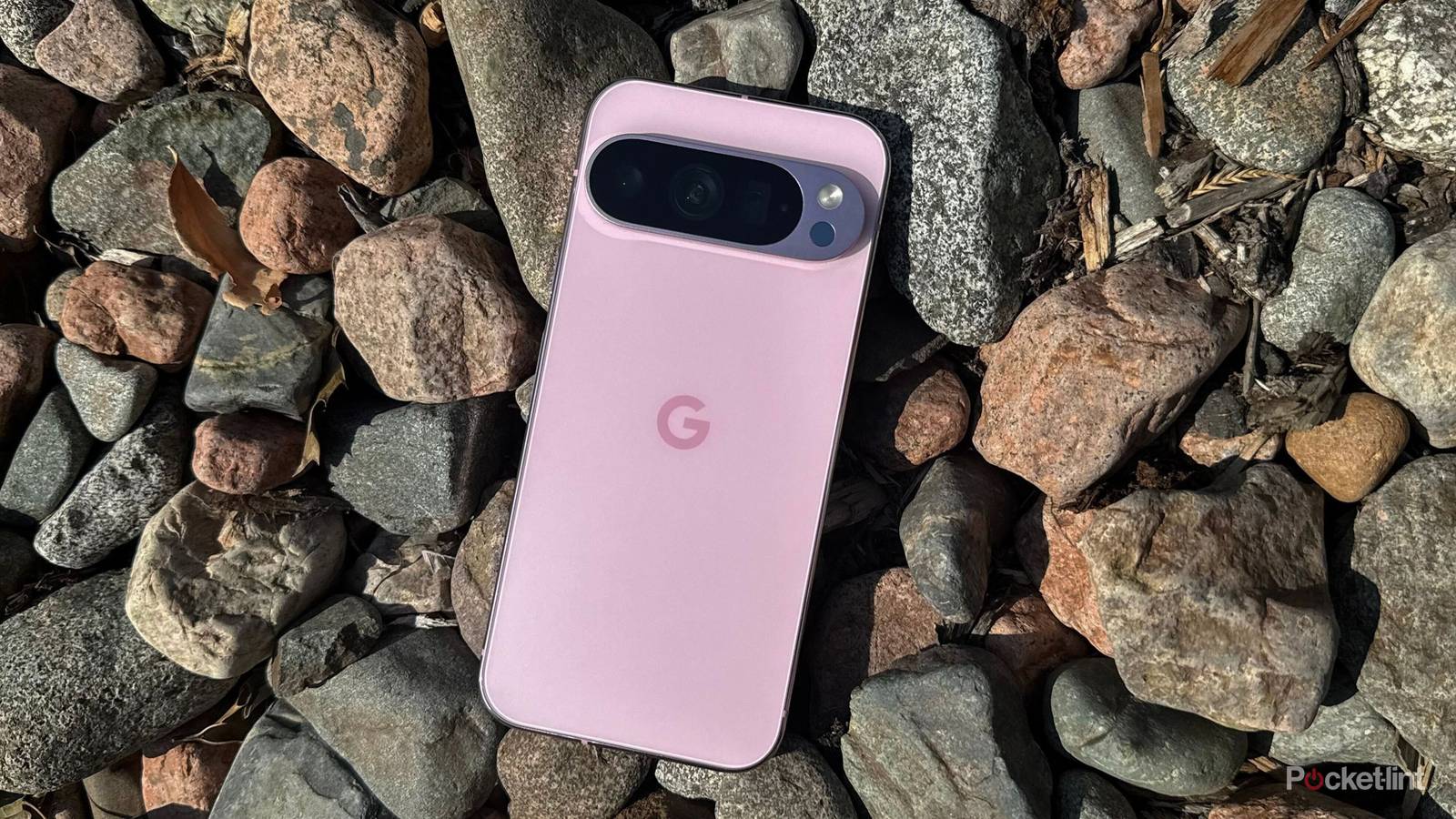
I upgraded to a Google Pixel 9a a few months ago since I was looking for something that still received security updates. Sadly, it meant I had to say goodbye to my OnePlus 8 Pro, my favorite phone I’ve ever owned. My OnePlus 8 Pro was a great phone, but one thing it was lacking was a dedicated headphone jack. That’s something that many modern phones have gotten rid of over the years, and my Pixel 9a is no different.
That’s not a huge deal, as I have a pair of Google Pixel Buds Pro 2 to pair with it. However, I’ve been getting into hiking, and I’m scared of losing an earbud in the woods. My fix for that is a cheap pair of earbuds, as it’s much easier to stomach the loss of a $10 set of headphones instead of something that costs more than 10 times that. The only problem is that I can’t connect headphones to my phone without buying an adapter. Luckily, I found a $15 USB-C to 3.5mm headphone jack adapter from Amazon that solves this problem without adding any extra bulk. It’s the Linsoul Kiwi Ears AD1, and if you’re looking for a cost-effective way to connect your earbuds to your phone’s USB-C slot, this is a good pick. There are also many similar options, so don’t feel tied to this specific one if you don’t like the look of it.

- Brand
-
Google
- SoC
-
Tensor G4, Titan M2
- Display
-
6.3-inch 1080 x 2424 pixel resolution pOLED, (422.2ppi), 60-120Hz variable refresh rate, 1,800 nits (HDR), 2,700 nits (peak brightness)
- RAM
-
8GB
- Storage
-
128GB/256GB
- Battery
-
5,100mAh
Party like it’s 2008, just without the iPod
Doesn’t miss a beat

You might think that dongles add a lot of unnecessary bulk and get in the way, but that’s not the case. The dongle attaches to your earbuds, and you don’t have to ever detach them. Yes, it adds an inch or two to the cable, but you can ball it all up all the same and put it into your bag or pocket. When I’m sitting on the couch playing something on my phone or Android handheld with these on, I don’t even notice the dongle.
It’s annoying that we have to go out and get things like this to use devices we used to be able to use with ease. It’s a problem with phones, and it’s a problem with laptops as well, as they keep getting rid of ports there, too. With that said, I’m glad there are options available and that they are cheap. A dongle like this also has some additional benefits. I’m a big fan of the Bluetooth format, and I use it nearly every day, but I can’t ignore that latency problems show up every now and then. With a wired connection, that’s something you don’t have to worry about. I notice it a lot when I’m playing games and listening to the audio. There are just a few milliseconds of delay, but it’s there. I initially bought this dongle to use with my Anbernic RG Rotate, but I ended up using it more often with my Pixel 9a. On my phone, I mostly listen to things instead of watching them, and when you’re listening to music or a podcast, that kind of delay doesn’t matter at all.
The only real downside I have with the dongle comes from wires in general. It’s a lot easier to open up the case for my Pixel Buds and just pop them into my ear. The earbuds automatically connect, and there’s nothing I need to do from there since my phone remembers they’re paired. With a set of wired headphones, I have to figure out where to place my phone at all times, and that was a big problem when I went on a hike.
On my backpacking bag, the REI Flash 55, I have a pouch on the backpack strap for my phone, and using wired headphones made that a hassle. I had to place my phone in it upside down just so I could have the wire come out smoothly, and each time I took off my bag, I had to take out my earbuds and then my phone to make sure nothing went flying away. Of course, the one time I ignored this step, I ended up losing one of the rubber membranes on the earbud. Thankfully, it was a super cheap pair, but it was still annoying. This wouldn’t happen with Bluetooth earbuds, so I can’t lie and say there aren’t benefits to going completely wireless.
Where I find that wired earbuds work the best is at home when I’m not doing a lot of moving around. Plugging them into my phone, tablet, or handheld game console is simple and easy to enjoy. I don’t have to worry about anything yanking them out of my ear, and the adapter doesn’t feel like it’s adding anything out of the ordinary into the mix.
 Quiz
QuizGoogle Pixel phone series
Trivia challenge
From the original Pixel to the latest flagships — how well do you really know Google’s smartphone lineup?
HistoryHardwareSoftwareCameraDesign
In what year did Google release the very first Pixel smartphone?
Correct! The original Google Pixel and Pixel XL were announced on October 4, 2016. They replaced the Nexus line as Google’s flagship Android devices and were the first phones to carry the Pixel branding.
Not quite. The first Google Pixel was launched in October 2016. It marked a major shift for Google, moving away from the Nexus program to a fully Google-branded hardware experience.
Which Google Pixel series was the first to introduce a dual rear camera system?
Correct! The Pixel 4 was the first Pixel to feature a dual rear camera setup, adding a telephoto lens alongside the main sensor. Earlier Pixels famously relied on a single rear camera and Google’s computational photography to compete.
Not quite. The Pixel 4 was the first in the series to use dual rear cameras. One of the most impressive things about earlier Pixel phones was how competitive their single-camera systems were against multi-lens rivals.
What is the name of Google’s in-house chip that debuted in the Pixel 6 series?
Correct! Google Tensor was introduced with the Pixel 6 in 2021, marking Google’s move away from Qualcomm Snapdragon chips. Tensor was designed with AI and machine learning tasks at its core, powering features like on-device speech recognition and real-time translation.
Not quite. The answer is Google Tensor, which debuted in the Pixel 6. It was a landmark moment for Google, giving the company much greater control over how hardware and software work together on Pixel devices.
Which Pixel phone was the first to ship with Android 12 and its ‘Material You’ design language out of the box?
Correct! The Pixel 6 launched in October 2021 as the first device to ship with Android 12 pre-installed, introducing the bold ‘Material You’ design overhaul. Material You lets the system generate a personalised colour palette based on your wallpaper.
Not quite. The Pixel 6 was the first phone to ship with Android 12 out of the box. The accompanying ‘Material You’ design system was one of the most significant visual refreshes Android had seen in years.
Which Pixel model introduced the now-iconic horizontal camera bar stretching across the back of the phone?
Correct! The Pixel 6 introduced the distinctive horizontal camera visor bar in 2021, a bold design choice that set Pixel phones apart from the competition. The two-tone colour scheme and camera bar became a signature look carried forward into later generations.
Not quite. It was the Pixel 6 that debuted the horizontal camera bar design. This striking visor-style bar was a deliberate statement from Google that Pixel phones should have a unique and recognisable identity.
Which company manufactured the hardware for the original Google Pixel and Pixel XL in 2016?
Correct! HTC manufactured the original Pixel and Pixel XL under a deal with Google. Though Google designed the phones, HTC handled production — a partnership that eventually led to Google acquiring a portion of HTC’s smartphone design team in 2018.
Not quite. HTC was the manufacturer behind the original Pixel phones. The relationship between Google and HTC eventually led to Google purchasing part of HTC’s phone division for around $1.1 billion in 2018.
What computational photography feature, first introduced on the Pixel 3, lets users capture moments that happened before they pressed the shutter button?
Correct! Top Shot, introduced with the Pixel 3, uses the phone’s camera to continuously capture frames before and after the shutter is pressed, then suggests the best shot. It’s particularly useful for photos of moving subjects like children or pets.
Not quite. The feature is called Top Shot, and it debuted on the Pixel 3. By buffering frames before and after you tap the shutter, it helps ensure you always get a sharp, well-timed photo even in tricky situations.
The Pixel 9 Pro Fold, released in 2024, competes directly in which smartphone category?
Correct! The Pixel 9 Pro Fold is Google’s foldable smartphone, competing with devices like the Samsung Galaxy Z Fold series. It features a large inner display when unfolded and a more compact form factor when closed, combining tablet-like screen real estate with pocket-friendly portability.
Not quite. The Pixel 9 Pro Fold sits in the foldable phone category. Google entered the foldable market to take on Samsung’s established Z Fold lineup, bringing its Tensor chip and Pixel camera software to a book-style folding design.
Your Score
/ 8
Thanks for playing!
Nice to have, but not replacing wireless
A surprise to be sure

I’ve been trying to make more deliberate choices about what I do lately. This includes a return to discs, less streaming, more physical books, and more planning on what I want to do. I don’t want to spend hours scrolling on Netflix looking for something, as I’ve learned I can get a lot more done by knowing what I want to do ahead of time. I wanted to get more into the zone by using wired earbuds, but I don’t think I’m ready to take that step.
Don’t get me wrong, it’s cool to have wired earbuds like that, but it feels like I’m just making it harder on myself for the sake of making it harder. I’d much rather pop a physical cartridge into my Switch 2 and play a game through wireless earbuds or the console’s speakers instead of using a set of wired headphones. I know I said it’s not uncomfortable to do this on my couch, but it’s more comfortable to use nothing at all or something wireless. It’s hard to go back to something like wired earbuds when I’ve been used to being wireless for so long.
I’m not saying that you can’t do it, and there is something magical about using a cable instead of being totally wireless, but it’s not going to be something I reach for very often. As it turns out, even I have my limits. In an effort to capture some nostalgia, I tried to get into VHS tapes, but I found that to be too much of a hassle. I don’t like to get rid of newer technology for the sake of getting rid of it, so there are some advancements that I’m happy with. I’m fine with using 4K Blu-rays and modern TVs, and I’ve also learned that I’m fine with using Bluetooth headphones over wired ones. What’s nice is that I can do things how I want, and now that I have this dongle, I can use wired earbuds whenever I want. Maybe I’ll be in the mood for it someday, so I’ll keep them handy. I do need to buy a new set of wired earbuds, though.