


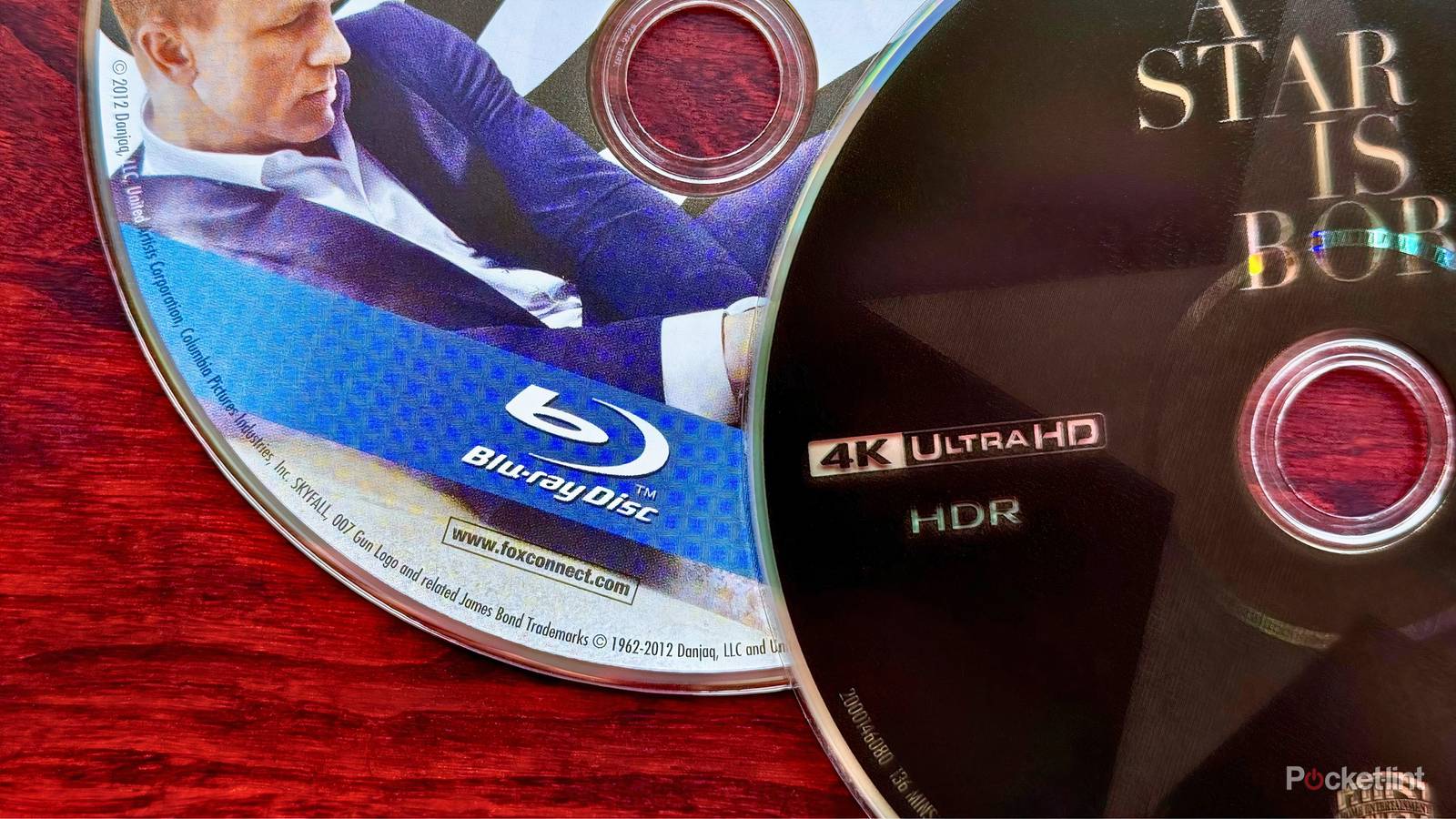
Plenty of people have been collecting physical media for decades, and if you fall into that group, then you’ve probably upgraded your favorite movies from format to format. Titanic is one of my favorite movies, and I have it on VHS, DVD, Blu-ray, and 4K Blu-ray. If there’s something that comes out after 4K Blu-ray, I’ll probably get the upgrade there as well.
I can fully understand somebody wanting to stop their upgrades at a certain point, especially since it costs money each time you make the leap from one format to another. For a lot of people, Blu-ray is a natural jumping-off point. 1080p still looks excellent, practically every new movie gets a Blu-ray release, and it represents a nice middle ground between DVD and 4K Blu-ray. I’m right there with you, and after amassing a large Blu-ray library, I tried to ignore the introduction of 4K Blu-ray. I was doing a good job of it too, but when I grabbed a TV that could use Dolby Vision, everything changed. I quickly became a fan of HDR, and it meant that I had to switch over to buying 4K Blu-ray.
HDR is worth the upgrade if your TV can handle it
One big difference

Going from regular SDR to HDR is a big upgrade, and it’s one of the major selling points of 4K TVs. Sure, the jump from 1080p to 4K is big, but I would wager that a lot of people don’t fully see the difference unless they have their couch close enough to their TVs. However, good HDR is noticeable everywhere because it’ll make the colors look a lot better on what you’re watching. It’ll make your black levels a lot darker, and bright scenes will also look better.
The gap widens further as you introduce Dolby Vision and HDR10+ into the mix, but those aren’t available for everybody. Every 4K TV can do HDR10, and while its results may vary, every TV at least recognizes it. Only certain TVs can do Dolby Vision and HDR10+, and you’ll need a dedicated 4K Blu-ray player. Standalone players are expensive, and it’s probably one of the reasons people settle for using their PS5 or Xbox to play their discs. The problem with a game console as your Blu-ray player is that you can’t get HDR beyond the standard HDR10. That might not be a big deal to some, but it does mean you’re missing out on one of the things that makes 4K Blu-ray better than its competition.
Of course, the big factor here is your TV. As I said, all 4K TVs have HDR, but that doesn’t mean the implementation on them is good. Cheap TVs don’t have enough peak brightness to really make a difference. What should be a dark black ends up being a cloudy grey. What should pop off your screen with brightness ends up being a little duller than you’d think. This is because your TV probably doesn’t have the necessary nits to hit a level that really makes HDR worth it. A lot of computer monitors fall into this trap, and so do your cheap TVs. Nevertheless, mediocre HDR is still better than no HDR, at least in my experience.
Pick and choose from your collection
You don’t have to upgrade all of it

If you have a big Blu-ray collection, it’s obviously not going to be cost-effective to upgrade each one of those discs to a 4K version. What I would do is pick out some of my favorites and go from there. You should also know that not every 4K disc is a true upgrade. Yes, it’s 4K resolution, but a lot of movies are finished in 2K, so a 4K version is just an upscale instead of the real-deal 4K. That doesn’t mean they look bad, though, and they do come with HDR. It’s just that the upgrade isn’t as big as it could be. That’s a bit of a bummer, but it does make it easier to pick and choose what you should upgrade.
It’s also good to read reviews from trusted sources to figure out if the leap in fidelity is worth it. Blu-ray.com is a site I frequent each time a new 4K release comes out. I don’t care much for what the author thought of the movie, but there’s usually a technical breakdown for the picture and audio quality that tends to be very informative. It’s also a good site to keep track of sales, so I find myself going there quite a bit.
It’s way too expensive to upgrade it all, so I’ve just been taking my time. In most cases, I’ve found it easier to just get new 4Ks as they come out, and I only upgrade movies if I can find them for relatively cheap or if I watch them over and over. If it’s something I watch every few years, I don’t see much of a reason to upgrade from the Blu-ray.


