



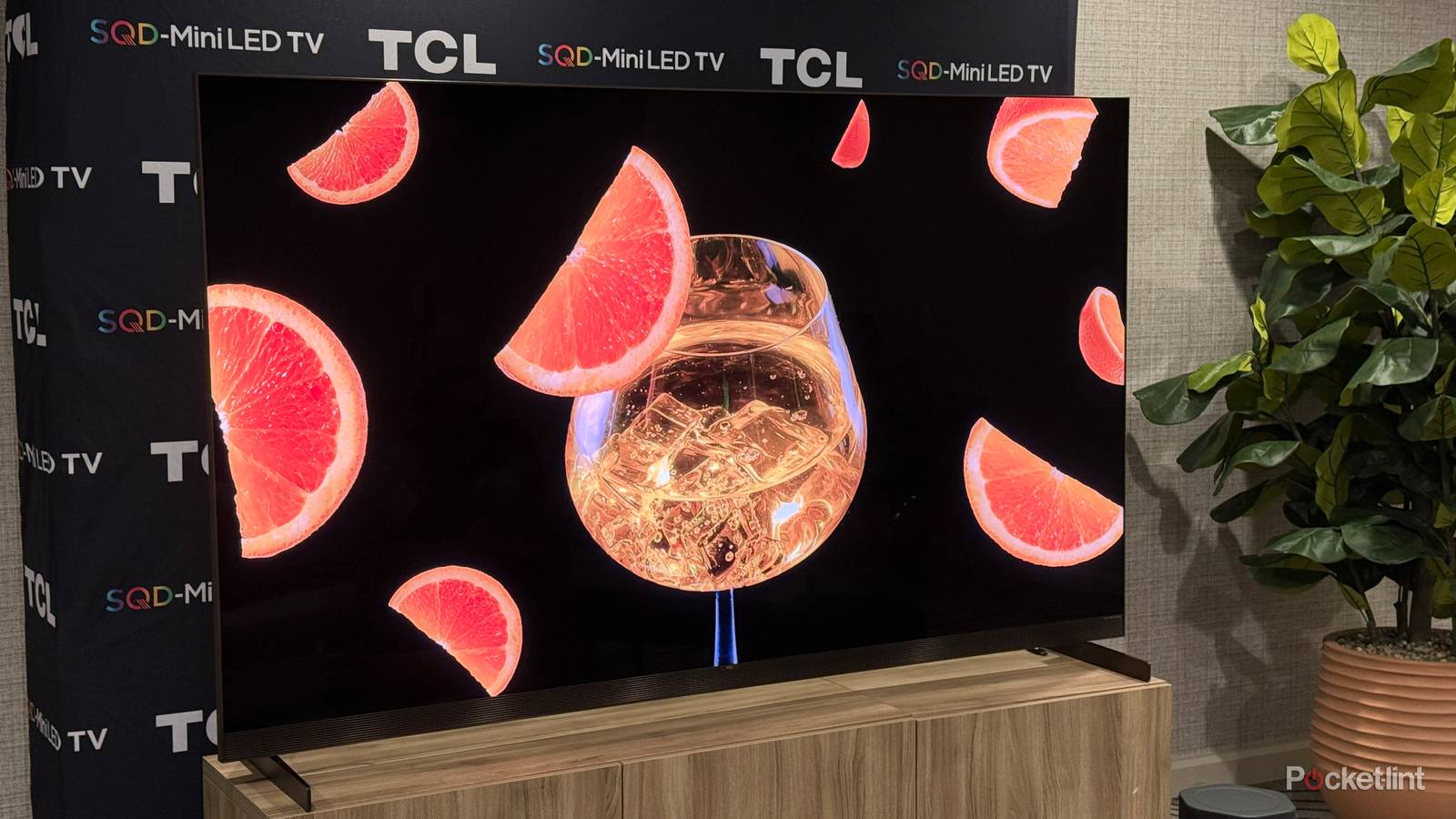
I’m continually amazed by the number of smart TVs on the market at or near the 100-inch mark. Back in the 2010s, a 55-inch TV seemed like more than enough for the average living room, and it probably still is. A 70- or 75-inch TV is gigantic by comparison, since TV sizes are measured diagonally — that extra 20 inches adds up to massive jumps in length and width, never mind an extra 50.
In practice, though, I shouldn’t be surprised. People have long been conditioned to think that a big screen is a TV’s most important feature, and improvements in both technology and production scales have made it possible to buy a 100-inch set without breaking the bank. Even the richest celebrities of the ’90s would be jealous. You probably shouldn’t buy one, though, and some of the reasons are subtler than you might think.
Why you shouldn’t buy a 100-inch TV
Performance, weight, and more

For the average person, the main issue is the price-to-performance ratio. While you can get quality 98- or 100-inch sets for under $2,000, companies often manage that price target by sacrificing features. The Hisense E6, for example, uses a QLED panel instead of mini-LED or OLED. In practice, that might look fine — but mini-LED provides superior brightness and contrast, and what OLED lacks in brightness, it can make up for in the contrast department. Depending on the set, you might also get stuck with problems like inferior refresh rates, outdated ports, or a sub-par interface. I know I’d much rather own my 65-inch mini-LED with Google TV than a 100-inch QLED with Fire OS.
Any 100-inch TV is going to carry inherent issues, however, beginning with pixel density. Most TVs are still stuck at 4K resolution, and stretching those pixels over a larger area is going to make them more conspicuous. In fact, you may feel obligated to pay for the expensive 4K HDR plans some streaming services offer, since any flaws in upscaled 1080p are going to become obvious.
It’s also harder to maintain accurate viewing angles and overall uniformity with a 100-inch panel. On “cheap” TVs, you may catch vignetting or shifting colors as you gaze at the edges, and that’s while sitting on your couch’s sweet spot. If you’ve splurged on a TV for a Super Bowl party, some of your friends on the sides of the room may end up disappointed unless you spend far more than $2,000.
Most TVs are still stuck at 4K resolution, and stretching those pixels over a larger area is going to make them more conspicuous.
A concern that’s all too easy to forget about is physically getting a TV in place. A 100-inch model won’t fit in most vehicles short of a van or SUV, and if you live in one of the upper floors of an apartment complex, you won’t be able to fit it in anything short of the service elevator — assuming there is one. In both houses and apartments, the box could be so big that tight staircases will become a barrier.
Then there’s the matter of weight. The E6 is about 120 pounds (54 kilograms), and there are heavier models than that. Sharing that load with someone is (relatively) easy for a person like me, since I lift weights in my free time — but it might be too much for some buyers, which could mean having to pay for white-glove shipping and installation. Don’t expect most Taskrabbit workers to be prepared.
Extra weight also translates into tougher mounting requirements. You can forget about drywall anchors — you’ll need to bolt the mount directly into wall studs, and you may need a reinforcement plate to prevent wall damage. You can of course get around this by sitting a TV on an entertainment center, but then you’ll need furniture that’s both wide and sturdy enough. A budget piece might collapse under the burden. I’m not exaggerating — IKEA’s toughest models simply aren’t rated for it.
Finally, even if you have the space for a 100-inch TV, it’s going to create issues with room logistics. There’s probably only one or two places it can fit, and that in turn is going to create rigid demands on how you arrange decorations and furniture. If you’ve got a partner or roommate, you”ll ned to consult them first before you risk sabotaging their hopes and dreams. You should be doing that anyway.
What should you choose instead?
Dial back that Freudian complex

Honestly, most people considering a 100-inch TV should take a step back and learn to deprioritize size. For the money, you can get such better picture quality at smaller dimensions, and that’s before calculating all the incidental costs you might incur. A $1,200 “bargain” could end up costing you over $2,000 if you don’t have the right mount or stand, particularly if you need a pro installer to come and help you.
I haven’t even touched on field-of-view so far, since that’s more subjective. As a rule, though,100 inches is liable to be physically uncomfortable to watch. From a standard 9 feet (about 2.7 meters) away, it will completely overwhelm your vision, forcing your eyes to dart around constantly to take in the whole picture. For things to return to sanity, you need to sit over 13 feet (4 meters) away — which is a little ridiculous, even if you’re rich enough to afford that space.
From a standard 9 feet away, a 100-inch TV will completely overwhelm your vision, forcing your eyes to dart around constantly to take in the whole picture.
If you’re hellbent on immersion, it’s probably time to shop for a projector. One comparable to a good 4K TV is going to set you back over $3,000, but in return for that you’ll get a much smaller footprint, and a scalable image — the XGIMI Horizon 20 can hit up to 300 inches, but scale back as far as 40 inches if your reach exceeds your grasp. You’ll want to pair that with a purpose-built screen for the best results, although in a pinch, a smooth white wall will do.
Something that’s increasingly popular is an ultra-short-throw (UST) projector. That tech allows a unit to sit right next to your wall, doing away with the mounting and wiring headaches other projectors sometimes introduce. Again, you may end up paying a lot for the privilege, but it’s hard to top the concept of a complete TV that you can set anywhere and isn’t much bigger than a first-gen Xbox.
One radical alternative is buying an AR/VR headset like the Meta Quest 3 or Apple Vision Pro. Sharing a movie this way can get very expensive, since you’ll need multiple headsets — but the tradeoff is that because the image is virtual, there’s no limit on apparent screen size. You could be watching a theater-sized screen in a studio apartment as long as you have a solid internet connection. As these headsets get smaller, lighter, and cheaper, they may eventually replace both your home theater and your smartphone.

- Brand
-
Apple
- Display Type
-
Micro-LED
- Storage
-
256GB, 512GB, 1TB
- Battery Life
-
Up to 2.5 hours