

The Apollo photos really shouldn’t have been part of the big UFO drop.
Last Friday (May 8), the Pentagon released its first batch of declassified “UFO files,” responding to a directive that President Donald Trump issued in February.
Many of the 158 files focus on recent sightings by advanced U.S. military sensors — a “misshapen and uneven ball of white light” flying over Syria in October 2024, for example, and a small, bright dot cruising through a field of windmills in that same year. But some of them go back decades — all the way to the 1940s in several cases. (There has apparently been a slight cull or consolidation in the past week; there were 161 files when the drop was first announced.)
The older material includes 14 files related to NASA’s human spaceflight programs — two from the Gemini 7 mission to Earth orbit in December 1965, one from Apollo 11 in July 1969, six from Apollo 12 in November of that year, four from Apollo 17 in December 1972 and one from crewed flights to the Skylab space station in 1973 and 1974.
The Apollo 11 file is a “technical crew debriefing,” in which astronauts Neil Armstrong, Buzz Aldrin and Michael Collins discuss a few strange things that they saw and experienced during their historic mission. Aldrin, for example, states that he saw “what I thought were little flashes inside the cabin” — a phenomenon that he attributes to “some sort of penetration” or perhaps static electricity.
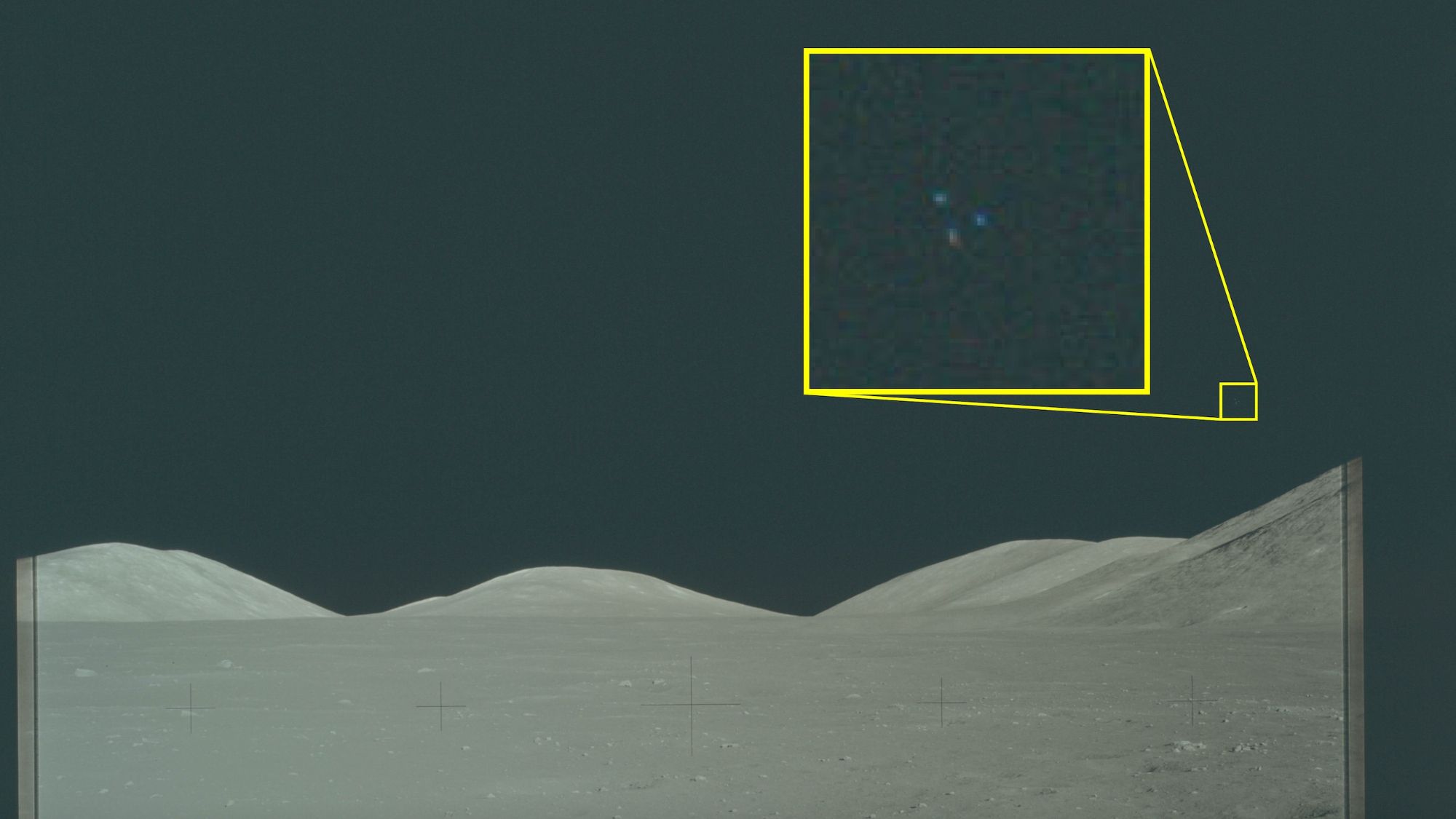
There are crew debriefings from Apollo 17 and Skylab, too, as well as other transcripts and/or audio excerpts from Gemini 7, Apollo 12 and Apollo 17. The UFO file drop also features photos captured on the lunar surface during those latter two missions, with the Pentagon highlighting supposedly mysterious features.
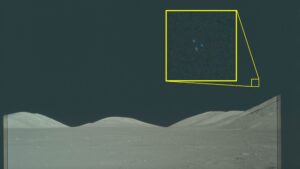
For example, one Apollo 17 photo “contains three ‘dots’ in a triangular formation in the lower right quadrant of the lunar sky that is clearly visible upon magnification of the image,” its description reads. Another, captured during Apollo 12, “features five highlighted areas of interest, labeled ‘Area 1’ through ‘Area 5,’ above the horizon, in which unidentified phenomena are visible.”
These photos and transcripts got a lot of attention shortly after last Friday’s drop, with outlets like CBS News and Fortune discussing the material. Some of these stories used verbs like “reveal,” which is a bit misleading, because this old NASA material has been publicly available for decades.

A number of folks have pointed this out. “Every single image released today from Apollo has simply added yellow boxes to images that have otherwise been public for half a century,” astrophysicist Grant Tremblay noted on X on May 8.
“I am making no comment on aliens or UAP here, and am happy to see the release. But a bunch of serious people are suggesting that the Apollo stuff is ‘newly declassified,’ and that is simply not true,” he added in another X post on that same day. (UAP, short for “unidentified anomalous phenomena,” is the U.S. government’s preferred term for UFOs these days.)
In a May 9 X post, Tremblay guided followers to the Project Apollo Archive on Flickr, inviting them to see the photos in bulk there. Such a perusal will reveal that many Apollo images sport “film defects,” he added, highlighting a likely cause of the lunar “UFOs.”
Graphic designer Jason Major, a space fan and veteran processor of space imagery, made a similar point.
“This is dumb. There are blue spots, specks, scratches, flares, and bits of crud in almost ALL of the Apollo photos. They were TAKEN WITH FILM CAMERAS IN SPACE — not to mention chemically developed and then scanned by various methods over the course of six decades,” Major wrote in a May 8 X post about the Pentagon UFO-file drop.
This isn’t to say that you should ignore the files or dismiss folks who are interested in them; some UAP observations are genuinely mysterious, and keeping an open mind is generally a good thing.
But keep a little perspective, too, and know that people have been poring over the Apollo material for longer than most of us have been alive.