Conny Waters – AncientPages.com – Underwater archaeologists exploring submerged ruins in Alexandria’s Eastern Harbor have discovered a rare bronze seal ring engraved with an image of the fabled Lighthouse of Alexandria, Egypt’s Ministry of Tourism and Antiquities announced.
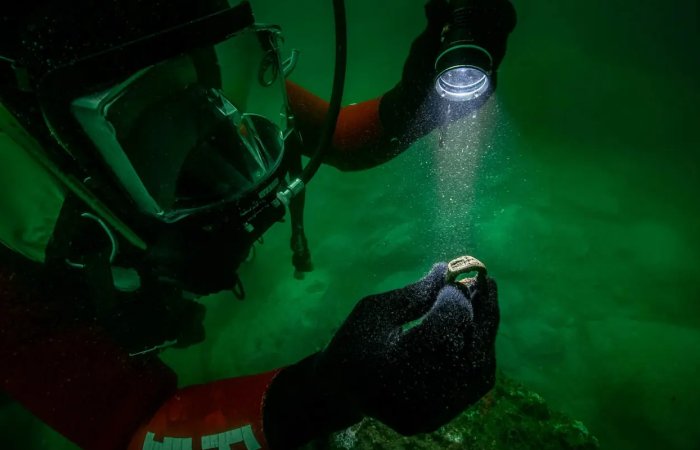
Credit: Ministry of Tourism and Antiquities, Egypt
The artifact offers a unique glimpse into one of the Seven Wonders of the Ancient World and could reshape historians’ understanding of the city’s ancient royal quarter.
An “Exceptional” Architectural Link
The bronze signet ring was recovered from the sunken royal island of Antirhodos, which once formed part of a monumental harbor district known as Portus Magnus. Alongside the ring, divers pulled up a variety of ancient pottery, tableware, oil lamps, and glassware.
While the profile of the towering Pharos lighthouse has previously been identified on Roman-era coins dating to the second century A.D., officials say this is the first time the landmark has been found on a seal ring.
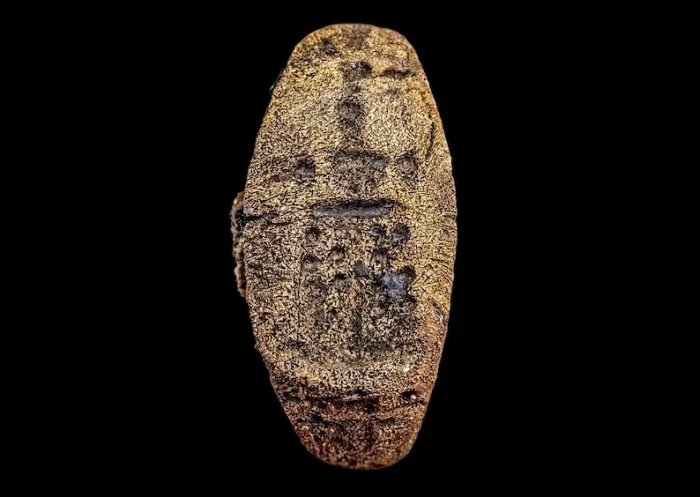
The unique ancient seal ring depicting the Lighthouse of Alexandra. Credit: Ministry of Tourism and Antiquities, Egypt
“The discovery is exceptional,” said Hisham El-Leithy, Secretary-General of Egypt’s Supreme Council of Antiquities. He noted that the ring represents the first known example of its kind.
Rewriting The Timeline Of A Sunken Palace
The Lighthouse of Alexandria (also known as the Pharos of Alexandria) was the world’s first authentic lighthouse. Built in the 3rd century B.C. on the small island of Pharos just off the coast of Egypt, it served as a monumental masterpiece that stood for over 1,600 years
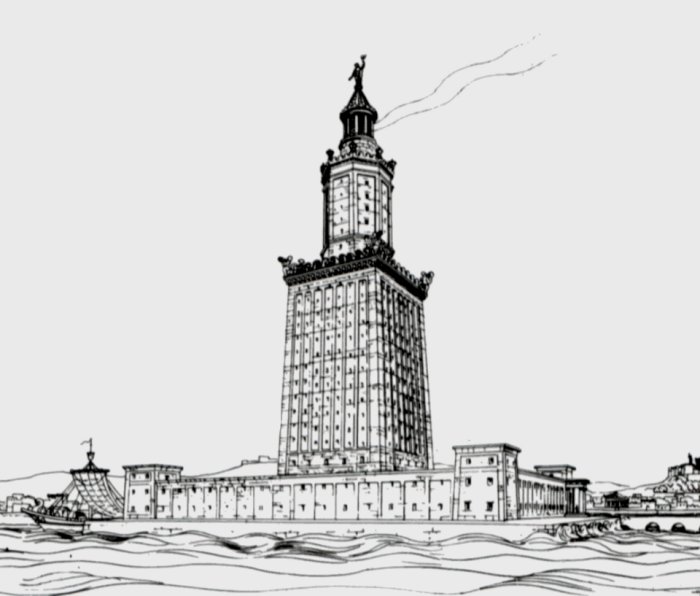
A drawing of the Pharos of Alexandria by German archaeologist Prof. H. Thiersch (1909). Public Domain
In 1994, a team of underwater archaeologists led by Jean-Yves Empereur discovered the lighthouse’s scattered remains on the seabed. Today, divers actively map more than 3,000 architectural fragments—including 80-ton granite blocks, broken columns, and giant Ptolemaic statues—right where they fell.
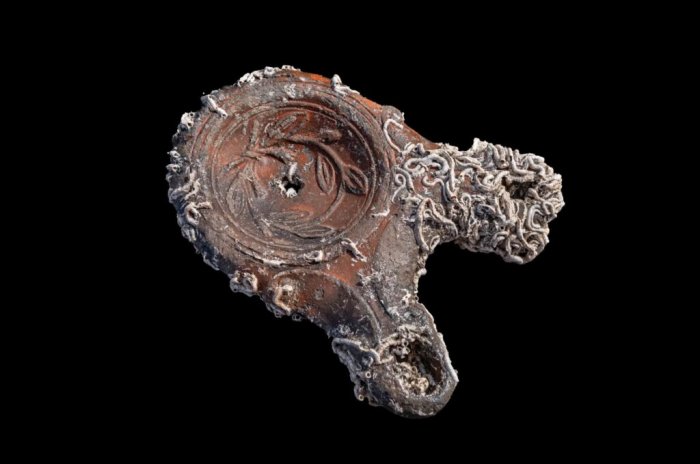
Ancient pottery retrieved from the waters. Credit: Ministry of Tourism and Antiquities, Egypt
The discovery provides crucial evidence regarding the timeline and management of the ancient port. The Greek historian and geographer Strabo famously observed and chronicled the royal palace on Antirhodos during his travels through Egypt between 29 B.C. and 25 B.C.
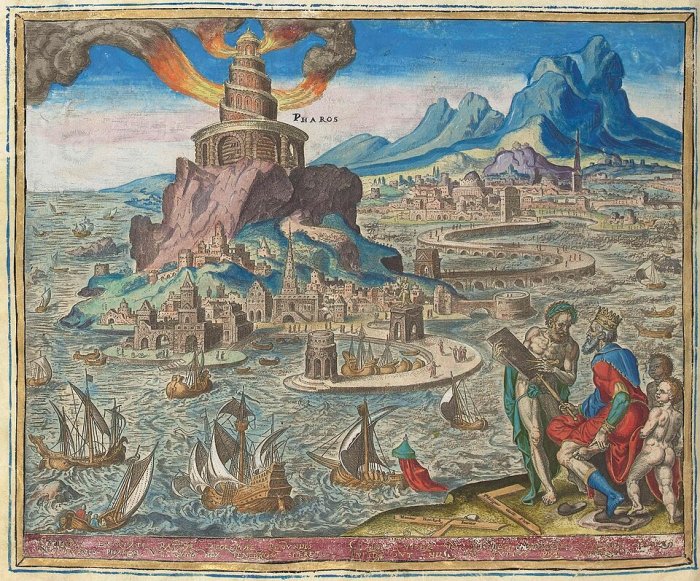
From the 1572 Octo Mundi Miracula, the earliest known representation of the lighthouse in modern times. Public Domain
Because the engraving’s artistic style matches depictions from the second century A.D., ministry experts believe the find indicates that activity at the palace continued long after Strabo’s visit. The site likely remained an active administrative hub well into the Roman period.
An Administrative Fingerprint
In antiquity, seal rings functioned as personal or legal signatures. People pressed them into wax or soft clay to secure letters, validate official documents, or seal trade jars containing wine and olive oil.
See also: More Archaeology News
The European Institute for Underwater Archaeology (IEASM), which led the joint excavation mission, suggests that the ring may have belonged to a high-ranking harbor official. The owner’s responsibilities likely included maritime communications or direct administrative tasks tied to managing the famous lighthouse itself.
Excavations in the Eastern Harbor continue, with teams mapping the city’s vast, earthquake-sunken waterfront.
Source: Egypt’s Ministry of Tourism and Antiquities
Written by Conny Waters – AncientPages.com Staff Writer