Transcript:
Ryan Reed is from the Karuk, Hupa, and Yurok Tribes in California. Growing up, he learned how his people long used intentional fire to keep landscapes healthy.
Reed: “But we were never able to actually go out and do those things.”
In the early 1900s, states and the Forest Service began mandating that all fires be suppressed – effectively outlawing Indigenous fire practices.
The Forest Service has since reversed those policies. But their legacy remains.
Many areas are overgrown with trees and brush that fuel severe fires. And the risks are growing as the climate warms.
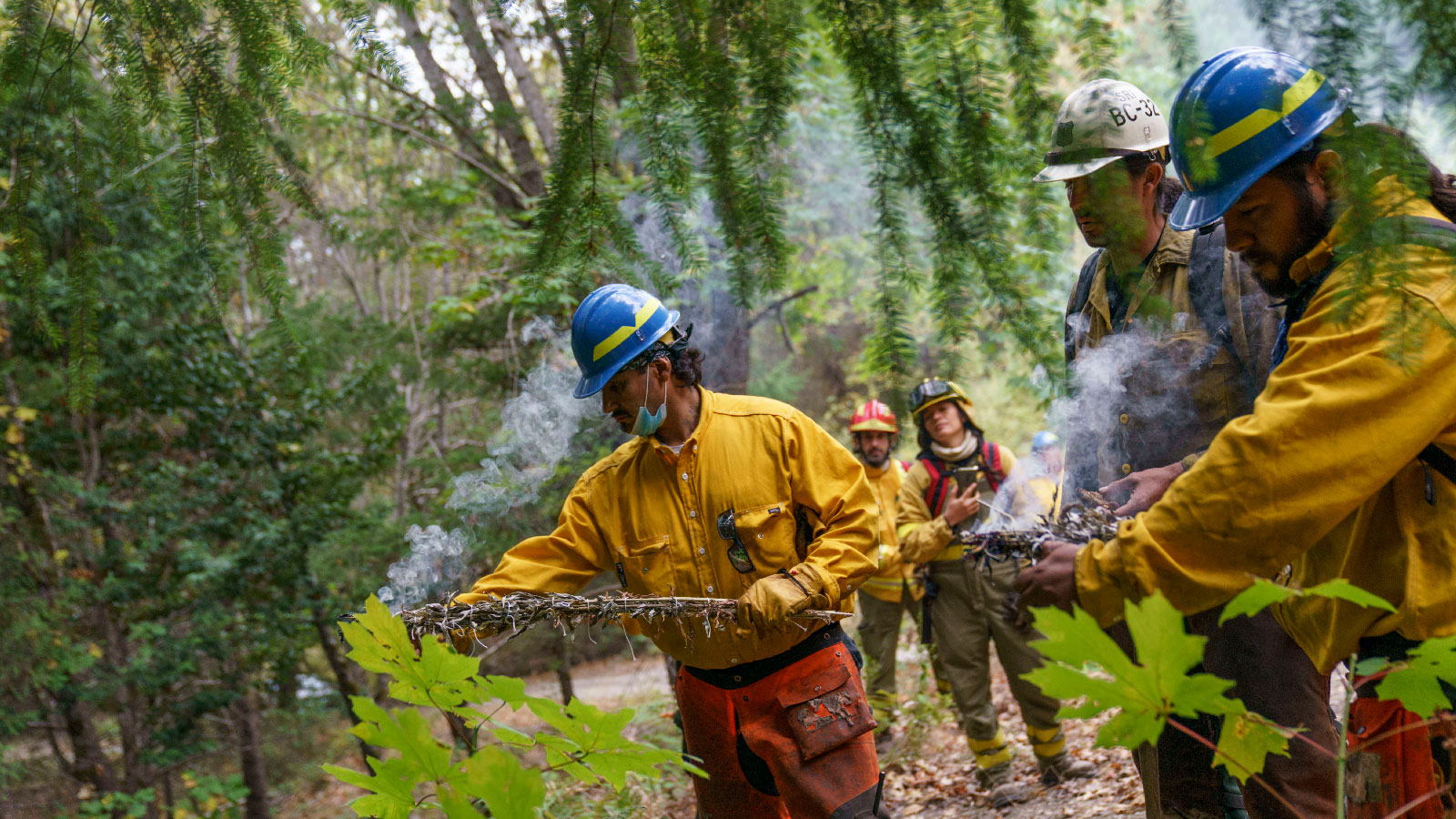
In 2020, after a deadly wildfire near his home, Reed became a wildland firefighter with the Forest Service – a job he held for four summers.
He says at times it felt contradictory.
Reed: “Fighting fire for an agency that have historically marginalized and oppressed my people.”
But he wanted to help keep people safe.
And now, he’s tackling the root of the problem by helping reduce the risk of intense fires.
He cofounded Fire Generation Collaborative, a youth-led organization.
The group educates people on the beneficial uses of fire and advocates for Indigenous land-management practices to build a more resilient future for all.
Reporting credit: Sarah Kennedy / ChavoBart Digital Media