How long does it actually take to make a pair of shoes? If you listen to the marketing surrounding shoemaking, you might believe that every good pair requires hundreds of individual steps, weeks sitting untouched on a last, and months of painstaking work before it is finally ready. But the reality is quite different.
There are a lot of myths in the shoe industry that have been repeated so many times that they have more or less become accepted as fact. You have probably seen the videos: “300 steps to make one pair of shoes,” or claims that shoes have to remain on their lasts for 15, 20, or even 30 days. Then there is the beautifully filmed footage of someone cutting every piece of leather by hand, as though that is how every pair coming out of the factory is actually produced.
I have never really understood the need for it. But I guess it is like using the word ‘handmade’ for everything. We romanticize things to make them look better when the reality is far from the visual production.
A well-made factory shoe does not need a fictional story behind it in order to be good. Machines are not inherently bad. Efficient production is not bad. And something taking longer does not automatically mean that it is better. Yet somehow the shoe industry has spent years convincing people otherwise. Let’s talk about it and get to the bottom of the reality.
Production Time Is Not the Same as Lead Time
The biggest misconception comes from confusing how long a shoe takes to make with how long you have to wait for it. Those are two completely different things. If you order a made-to-order shoe and the company tells you that delivery will take three, four, or even six months, your particular pair is not being worked on continuously for six months.
Most of that time is spent waiting. Waiting for leather to be allocated. Waiting for the upper to be cut and closed. Waiting for a production slot. Waiting for lasting. Waiting for bottoming. Waiting for finishing. And, most importantly, waiting behind all of the orders that were placed before yours. The latter point is the greatest reality of all. Your order does not jump to the head of the queue. And that queue is often long.
I learned this firsthand long before I ever produced shoes. When I used to shine shoes professionally, a proper mirror shine could easily involve two or three hours of actual work on a pair. But doing one pair from beginning to end before touching another pair would have been incredibly inefficient.
Instead, I would have a row of shoes in front of me. I would apply a layer of polish to the first pair, then move to the second, the third, and so on. By the time I reached the tenth pair, the first pair had rested and was ready for its next application.
That is production efficiency. There eventually came a point when I was so busy that I had to tell customers their shoes would take around two weeks. Did it take me two weeks to shine their shoes? Of course not. There were simply 50 other pairs ahead of theirs.
And I was not going to push somebody else’s shoes aside because another customer suddenly decided that theirs was more important. Factories operate under exactly the same principle. But on a grand scale and with large wholesale orders to juggle in between.
Why Your Shoes Can Take Months to Arrive
A good shoe factory normally has multiple orders moving through production simultaneously.
The uppers will be produced in batches. Lasting happens in batches. Sole attachment happens in batches. Finishing happens in batches. Different workers specialize in different operations, and those operations need to be coordinated across hundreds or potentially thousands of pairs.
That is what creates the lead time.
The busier and more successful the factory is, the longer that queue can become. Workforce size, production capacity, material availability, the complexity of the shoe, and the number of orders already confirmed all play a part. But at the same time, a small factory with few workers but a lot of demand can also take a long time.
This becomes especially obvious with MTO shoes. Gaziano & Girling is a great example of this. They are a highly sought-after factory, with a lot of MTO orders. But they are a relatively small factory so often MTO’s take 6 months to maybe even a year because their queue of orders is so high.
A customer might hear “12–16 weeks” and imagine their pair slowly progressing through some artisan’s hands for four months. More realistically, the upper of one’s order might get completed quickly and then spend weeks in a box sitting alongside hundreds of other uppers in other boxes waiting for its turn to enter the next stage of production.
There is nothing wrong with that, as that is the reality of welted shoemaking. And the alternative would actually be worse.
If every new customer could demand that their shoes jump to the front of the queue, the entire production system would become chaos. Somebody else who had already been waiting two months would suddenly be pushed back because another person’s order was considered more urgent.
No good manufacturer wants to work like that. And if they do, they will eventually run into trouble.


Do Shoes Really Need to Sit on the Last for 30 Days?
This is one of my favorite shoe-industry myths. You will often hear that high-quality shoes need to remain on the last for weeks to properly take their shape. There is certainly value in allowing leather to settle around a last. I am not arguing that a shoe should be lasted at breakfast and ripped off the last by lunchtime.
But the idea that every quality factory-made shoe is deliberately placed into a special room where it sits untouched on its last for 15–30 days is simply not how normal shoe production works. Every factory would be out of business if they did that.
A shoe might remain on its last for a period of time because it is progressing through production and waiting between operations. That does not mean the factory has calculated some magical number of days required for the leather to “become” a shoe. Again, we are confusing production logistics with craftsmanship.
Those two things can overlap, but they are not the same. A shoe should sit on the last for at least 48-72 hrs. A week would be great but often not practical for the efficiency of production.
Can a Good Shoe Be Made Quickly?
Technically, a shoe can be made surprisingly quickly. If you had all of the materials ready, all of the necessary craftspeople available, and no other shoes ahead of it, you could move a pair through production within days. But that does not mean I think this is the best way to make one.
Rushing anything increases the chance of mistakes. Certain processes benefit from resting time. Adhesives need to cure. Dye needs to dry. Leather needs time to settle. Workers also need enough time to actually do their jobs properly rather than simply trying to hit a deadline.
But there is a huge difference between saying that a shoe should not be rushed and saying that it physically takes three months to manufacture one pair. It simply doesn’t. Under normal circumstances, the actual production journey of a factory-made shoe can take a couple of weeks, with much of that period consisting of the shoe moving through different stages and waiting between operations.
The three-to-six-month figure you are quoted is always just a lead time based on the factory’s production style, not the amount of labor being put into your individual pair. That distinction matters and is often what confuses people.
Why Does the Shoe Industry Romanticize It?
This is the part I find interesting. I understand why brands do it.
We live in an age where people can order something from Amazon in the morning and become annoyed when it does not arrive the following day. Our perception of how long things should take has completely changed.
That creates a problem for a small shoemaker telling somebody that their shoes will not arrive for four months. And the number of people that have scoffed at a 4-month ‘lead/production’ time is also interesting, too, as some people think the opposite: that a pair of shoes can be made in 3 days.
“Your shoes are number 327 in our production queue” does not sound particularly romantic. “They require hundreds of painstaking steps and months of traditional craftsmanship” sounds much better. And therefore the story grows and continues to be utilized.
Suddenly every piece of leather is hand cut. Every shoe spends a month resting peacefully on its last. Every operation is described as though one master shoemaker is standing over your individual pair from beginning to end.
That might make good marketing. But I don’t think the shoe industry needs it, as it couldn’t be further from the truth. Honesty is what we need to work on providing as a means to educate the customer.
There is nothing unromantic about a well-run factory filled with skilled people who know how to make excellent shoes efficiently. There is nothing wrong with machinery being used where machinery makes sense. And there is nothing wrong with acknowledging that a large portion of a six-month MTO lead time consists of your shoes waiting their turn since the company is highly popular and is in great demand.
Quality should be judged by the result, not by how dramatically we can describe the process.
Good Shoes Still Take Time
None of this is to say that you should expect a made-to-order shoemaker to produce your shoes next week. Quite the opposite.
If a factory tells you that its current lead time is four months, there is probably a reason for that. They have existing customers, production commitments, limitations on capacity, and a system that needs to be respected if quality is going to remain consistent. If that shoemaker starts cutting corners to make things faster, well, they wouldn’t keep that reputation and popularity for long. Their process is exactly what makes them good, and that should not be rushed.
It is quite simple: when a shoemaker becomes popular, waiting times increase. That is just the reality of producing physical goods with human beings involved, especially when output has limitations i.e., so many workers can fit in a factory.
Mistakes happen. Materials arrive late. Uppers need to be remade. A leather develops an issue. A factory receives more orders than expected. Workers get sick. Holidays happen. Production slows. That is real life.
What I would rather see is more honesty surrounding why it takes that long. Your shoe does not need four months because somebody is lovingly staring at it every day while it sits on a last. It needs four months because there are a lot of other people who also ordered shoes, and yours has to wait its turn.
And frankly, there is nothing wrong with that. Patience has always been part of buying good shoes.
We simply do not need to invent a fairy tale to explain why.
—Justin FitzPatrick, The Shoe Snob
Shop · Marketplace · Patreon
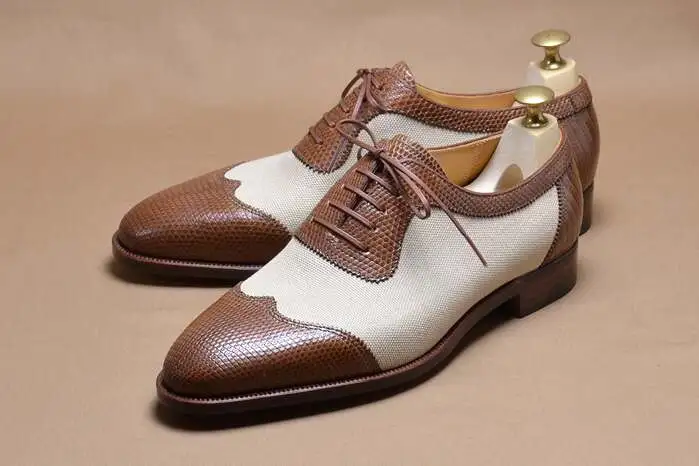
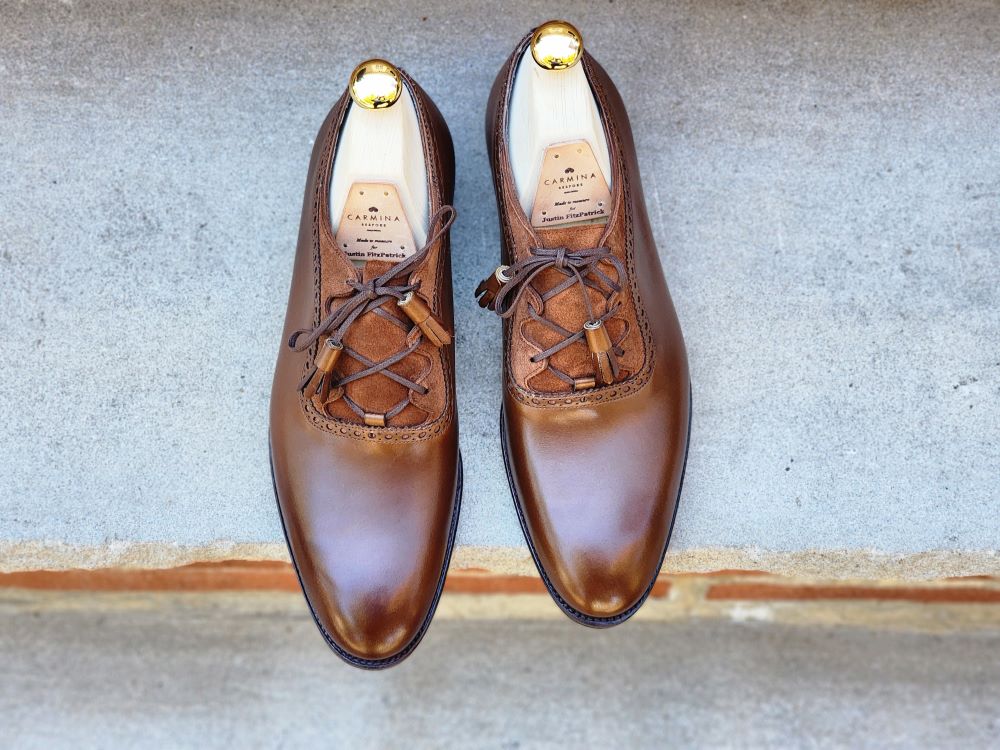
***Republished and rewritten from the original post in 2020. Shoes in the photo have nothing to do with the subject, just eye candy for you to look at while reading 😉 ***