


Conny Waters – AncientPages.com – A recent archaeological discovery at Gabal El-Teir in Minya Governorate provides new insights into the evolution of funerary architecture in ancient Egypt, following the unearthing of two Early Dynastic tombs and burials from the Predynastic and Late Periods.
Credit: Ministry of Tourism and Antiquities
Minister of Tourism and Antiquities Sherif Fathy described the discovery as significant, noting that it offers valuable evidence for tracing the development of funerary architecture across historical periods.
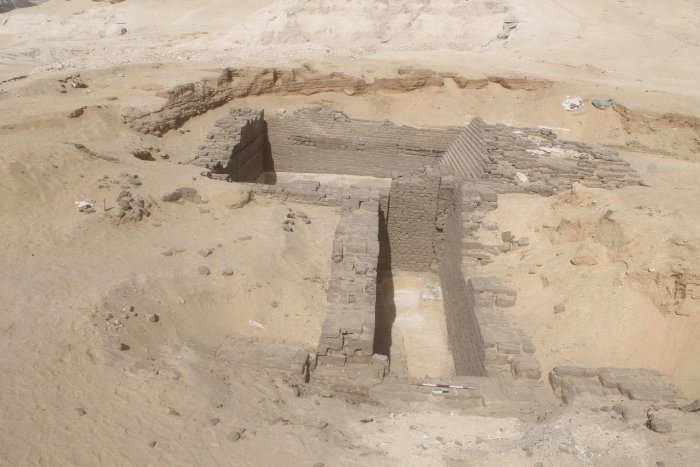
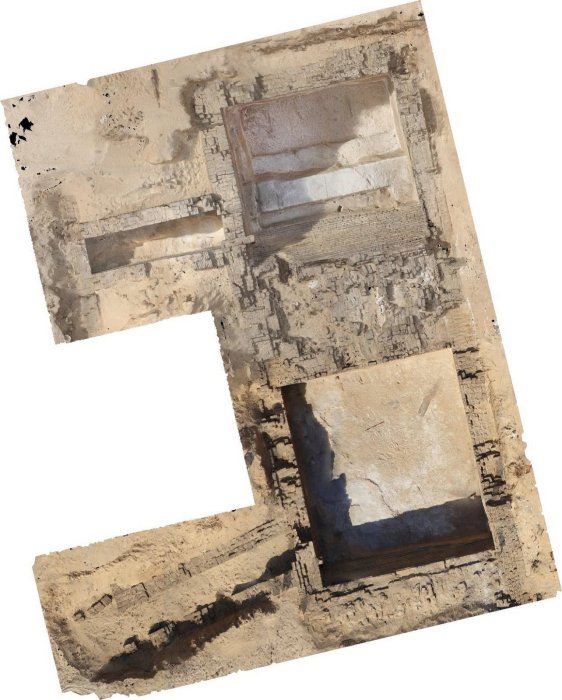
The first Early Dynastic tomb is a rare architectural example with a unique geometric design. The second tomb has a similar layout and is better preserved.
Credit: Ministry of Tourism and Antiquities
Hisham El-Leithy, Secretary-General of the Supreme Council of Antiquities (SCA), stated that preliminary studies reveal similarities between the newly discovered tombs and the tomb of King Den in Abydos.
This resemblance underscores the archaeological significance of Gabal El-Teir and confirms its role as a major necropolis continuously used from the Predynastic to the Late Period.
He added that the first tomb features a distinctive design, with walls that gradually thicken from the base to the top.
This design may represent an early stage in the development of engineering concepts that led to the construction of step pyramids and, later, true pyramids.
Hisham El-Leithy also indicated that the tomb appears to have been quarried in later periods to extract stone blocks.
Credit: Ministry of Tourism and Antiquities
Despite this, the remaining sections preserve valuable evidence of ancient construction techniques, such as oxide lines that reveal precise stone-cutting methods and large wooden supports reinforcing the walls.
Some supports extend the full length of the wall, while others are separate straight segments.
The second tomb, located further south, is nearly identical in architectural design but was not quarried, which has helped preserve its structural elements more effectively.
Credit: Ministry of Tourism and Antiquities
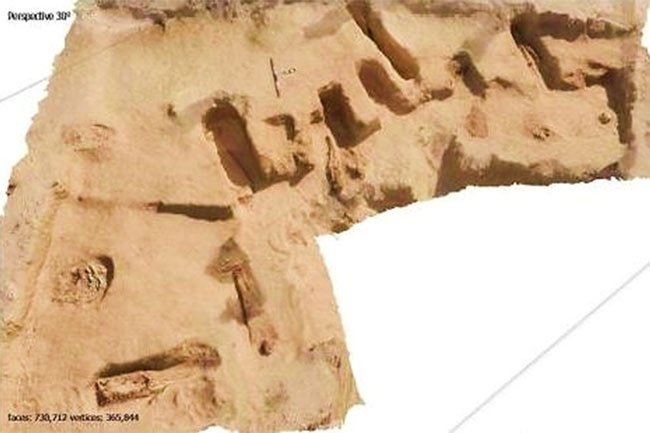
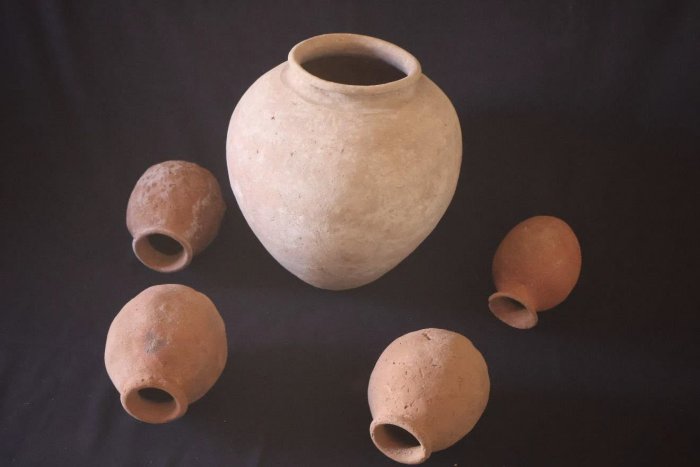
Mohamed Abdel Badei, Head of the Egyptian Antiquities Sector, revealed that the mission also uncovered part of a Predynastic cemetery.
Credit: Ministry of Tourism and Antiquities
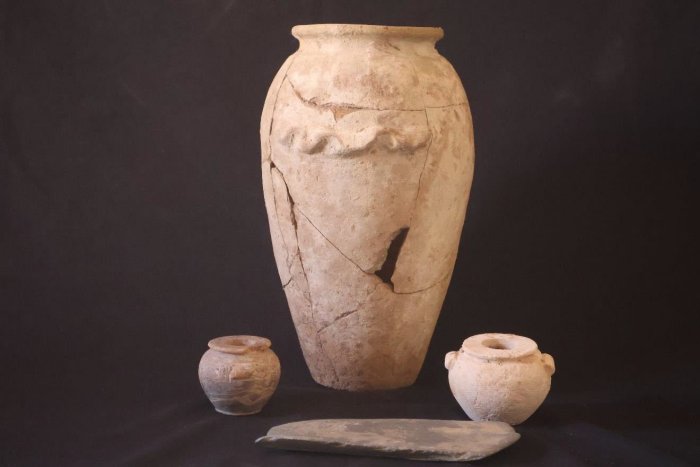
The burials were found in a crouched position and wrapped in remnants of decomposed plant matting, with some accompanied by black-topped pottery vessels dating to the Naqada II and III periods.
See also: More Archaeology News
Additionally, several individual and collective burials were found, some within deteriorated wooden coffins believed to date to the Late Period. These findings confirm the site’s long-term use as a burial ground across multiple historical eras.
Excavations at Gabal El-Teir are ongoing, and archaeologists expect further discoveries that will enhance understanding of the site’s historical and cultural significance.
Source: Ministry of Tourism and Antiquities
Written by Conny Waters – AncientPages.com Staff Writer

