An autistic teenager who swallowed a plastic fork would have survived if doctors acted sooner, an inquest has heard.
Natalia Cestaro, 18, suffered ‘significant pain and clinical deterioration’ before she died in a Coventry hospital on November 15, 2023.
Doctors suspected there was a partial tear in her stomach while removing the cutlery via endoscopy – but took no further action.
Warwickshire Southern Justice Centre heard Natalia, known as Tali, was a ‘bright and outgoing’ girl with a history of ingesting foreign objects.
The hearing was told a planned CT scan was not carried out at the time it should have been and that medical staff failed to flag Tali as a patient for senior review.
There was also ‘inadequate handover’ of her care from the surgical to emergency cover team meaning Tali did not receive senior review the next morning and the urgency of the planned CT scan was missed.
Her deteriorating condition was then not passed to the surgical team and the teenager went on to develop sepsis.
The inquest heard by the time the gastric perforation and resulting sepsis were fully recognised, it was too late to save her.

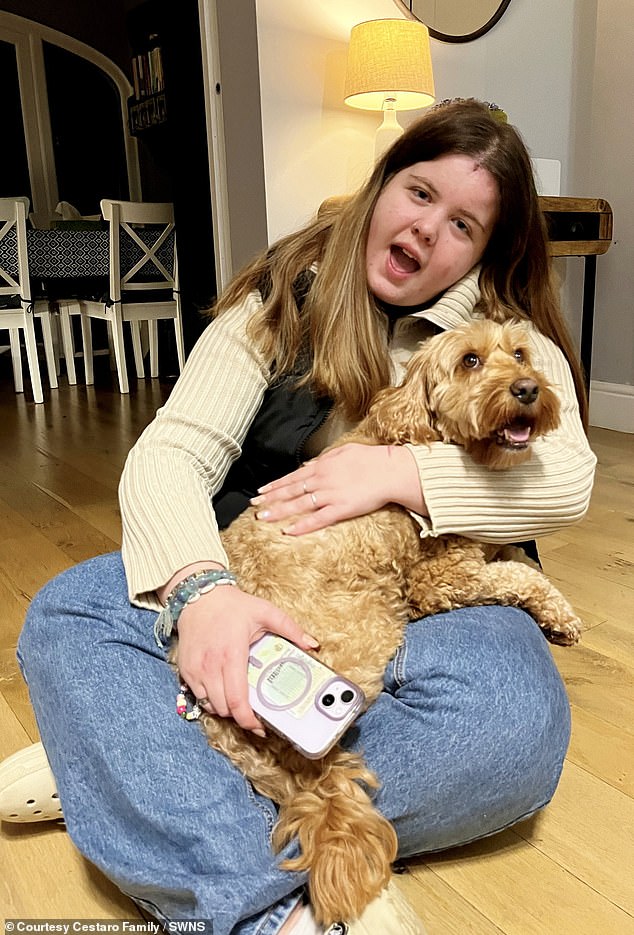
Natalia Cestaro (pictured), 18, suffered ‘significant pain and clinical deterioration’ before she died in a hospital in Coventry on November 15, 2023
Last month, Acting Area Coroner for Coventry and Warwickshire, Linda Lee concluded Tali’s death resulted from ‘medical misadventure against a background of delayed recognition and escalation of post-procedural deterioration, delayed imaging, and failure to maintain nil-by-mouth instructions’.
The coroner also made a Prevention of Future Death Report highlighting shortcomings around impulsive ingestion and communication between mental health and acute services.
The University Hospital Coventry and Warwickshire admitted that on the balance of probabilities, Tali would have survived if there had been an appropriate referral to the surgical team to ensure the CT scan was carried out and her deterioration passed on.
Tali was autistic and had complex mental health needs, including emotionally unstable personality disorder (EUPD), and was an informal patient at the Caludon Centre under the care of Coventry and Warwickshire Partnership NHS Trust.
She was described by her family as bright and outgoing and someone who enjoyed musicals, singing and cooking.
Tali was also said to be deeply supportive of others in the recovery community, sharing her experiences of autism on Instagram.
Speaking after the inquest, Tali’s family said: ‘Tali leaves a hole in our family that can never be filled.
‘We will always be grateful for the time we had with our funny, passionate, whirlwind of a girl, but forever devastated that our time with her was so short.

The University Hospital Coventry and Warwickshire admitted that on the balance of probabilities, Tali would have survived if there had been an appropriate referral to the surgical team. The hospital building is pictured
‘Although Tali is no longer with us, her legacy lives on through the three people whose lives were transformed by her organ donation.
‘We hope that the lessons learned will prevent another family going through what we have been through.’
Law firm Irwin Mitchell, who represented the family, added: ‘Tali’s loved ones remain devastated by her death and the tragic circumstances surrounding it.
‘The family have had a number of concerns about the events that unfolded in the lead up to Tali’s death.
‘Sadly, the inquest has vindicated those concerns.
‘While we’re pleased to have secured answers the family deserve, nothing can make up for their loss. It’s now vital lessons are learned and improvements made to better protect other patients.’
Selen Cavcav, co-lead of casework at the charity Inquest said: ‘Tali died a preventable death whilst she was an informal patient in a mental health unit where she was supposed to be under the care of highly trained staff whose job it was to keep her safe.
‘The fact that some of the failures in her care have been recognised and strong recommendations have been made is a step in the right direction but unless inquest findings and recommendations are analysed and trusts are held accountable for failing to learn lessons and implement changes, we fear that deaths will sadly continue.’
The University Hospital Coventry and Warwickshire NHS Trust said it was ‘deeply sorry’ for the loss and offered its ‘sincere condolences’ to Tali’s family and loved ones.
A spokesman added: ‘UHCW has implemented changes following a patient safety review and we continue to work closely with Coventry and Warwickshire Partnership Trust on a joint action, following a Report to Prevention of Future Deaths, to improve liaison, shared responsibility and specialist input for patients with complex mental health needs.’
The Coventry and Warwickshire Partnership NHS Trust was approached for comment.