


Jan Bartek – AncientPages.com – During excavations at the prehistoric settlement of Lucone di Polpenazze near Lake Garda, northern Italy, archaeologists discovered an ancient tablet inscribed with unusual symbols. This is the third enigmatic tablet found at Site D and the twenty-first in the Lucone plain, confirming the area as the site with the highest number of such tablets discovered to date.
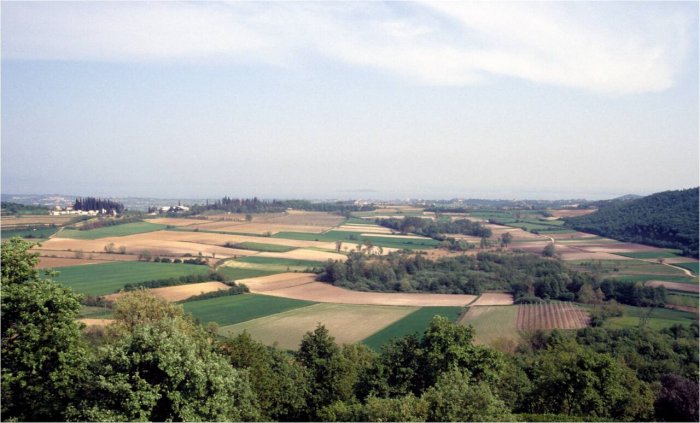
Lucone. Credit: Gafforso – CC BY-SA 3.0
Lucone is a complex archaeological area comprising 111 sites across Italy, Switzerland, France, Germany, Austria, and Slovenia. The region spans from the Neolithic to the Iron Age (5000–500 BC) and includes 19 Italian pile-dwelling settlements, 10 of which are in Lombardy. Recognized as a World Heritage site, Lucone has been the focus of archaeological excavations since 1965. Evidence of human occupation dates back to the late Neolithic period, preceding the Bronze Age settlements.
The mysterious tablet emerged during the third week of the 2026 excavation campaign from a charcoal-rich archaeological layer designated US 1015.
The tablet is estimated to be about 4,000 years old and is considered extraordinary. It belongs to a group known as enigmatic tablets, which are typically small, made of terracotta or occasionally stone, and feature ellipsoidal, oval, or sub-triangular shapes with a flattened profile.
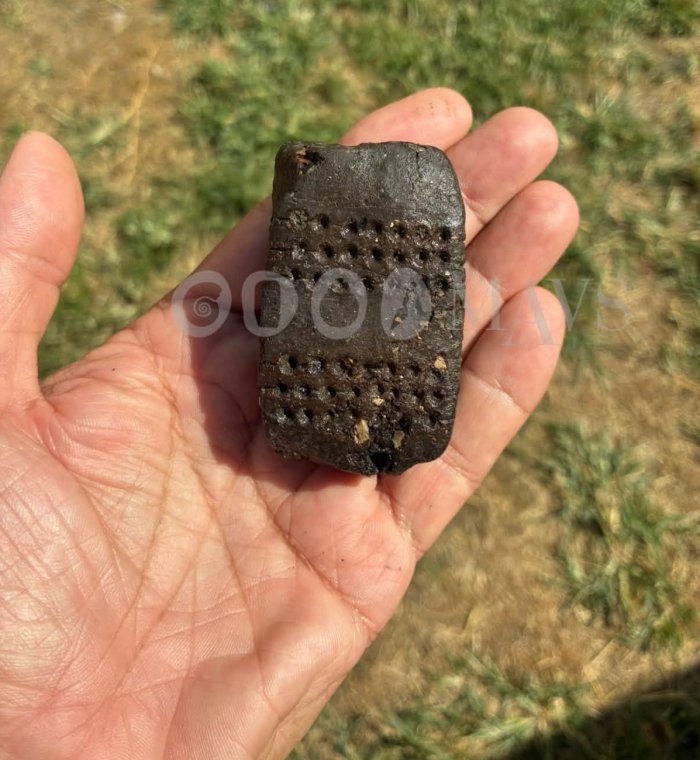
Credit: Scavi al Lucone
These enigmatic objects are usually clay tablets marked with incised lines and various impressions. They are found throughout central Europe and northern Italy. Scholars have proposed several interpretations, suggesting they may have served as calendars, trade records, metallurgical tools, or sacred amulets.
These objects, typically made of stone or clay, often have a lenticular or rectangular profile and are engraved with horizontal lines featuring triangles, circles, squares, and rectangles. Dating to the Early Bronze Age, their purpose remains uncertain. “They have been found in Italy, Croatia, Germany, Switzerland, and the Danube basin,” explains Marco Baioni, director of the MAVS in Gavardo, which coordinates the Polpenazze excavations.
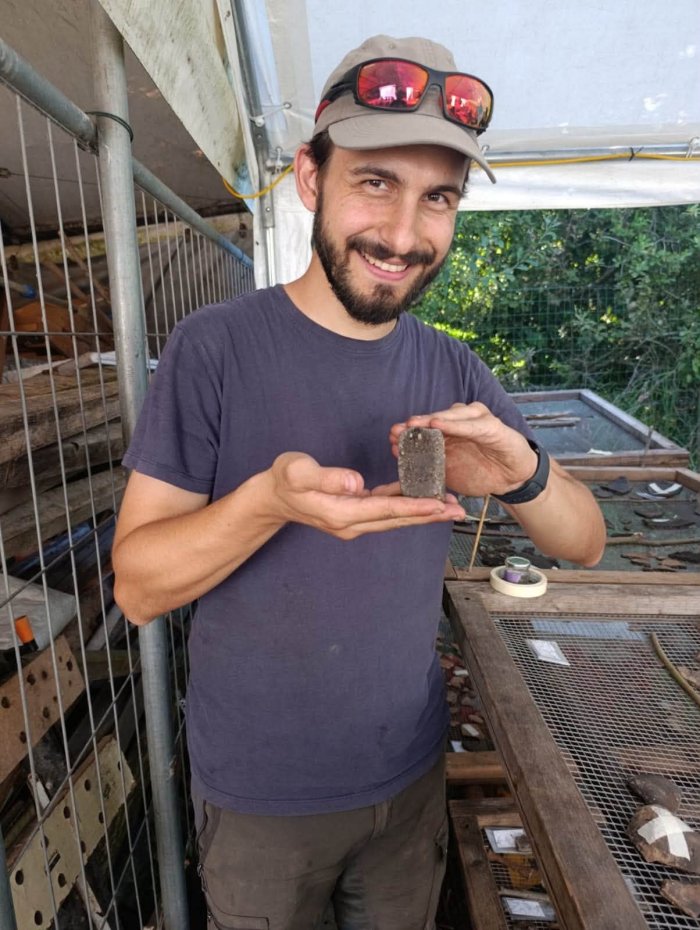
Credit: Scavi al Lucone
“They are always found in large settlements with evidence of metallurgical production, suggesting they may have been used as accounting systems for metal trade. Many scholars compare them to Mesopotamian tokens, a form of pre-writing, while others believe they served as calendars or sacred amulets.”
The 2026 excavation campaign will continue until September 4. Marcello Zane, president of the Piero Simoni Foundation, which manages the MAVS, described the campaign as “a cornucopia of incredible surprises.”
See also: More Archaeology News
In the first three weeks, archaeologists uncovered jugs, vases, various artifacts, animal remains, and wooden objects, including a large beam that may have marked the settlement’s boundaries. For the first time, excavations are focusing on a new sector, with support from UNESCO volunteers from China, Egypt, Moldova, Italy, and Germany.
Source: Scavi al Lucone
Written by Jan Bartek – AncientPages.com Staff Writer

