Emergency services aircraft such as air ambulances would be prioritised under ‘worst case scenario’ planning for jet fuel shortages, the Daily Mail can reveal today.
Ministers are currently war-gaming the possibility of supplies of the fuel starting to dry up around the May half-term holidays, in about five to six weeks’ time, if the Strait of Hormuz remains closed.
As it stands, officials believe less than 10 per cent of flights would have to be cancelled if shortages hit because Britain has ‘diversified’ where it buys the fuel from.
However, this could still affect thousands of passengers as the summer holiday high season ramps up.
Officials have told airlines they must give passengers at least two weeks’ notice of any cancellations to avoid a repeat of chaotic scenes during the Covid-19 pandemic, when flights were axed at the eleventh hour and passengers left in the lurch.
According to sources familiar with shortages planning, were supplies to completely dry up, emergency services craft such as air ambulances and lifeguard and police helicopters would be prioritised for receiving supplies.
However, it is understood that ministers believe this is an unlikely scenario.
It came as the head of a global energy watchdog said they believed shortages in Europe could be just six weeks away.

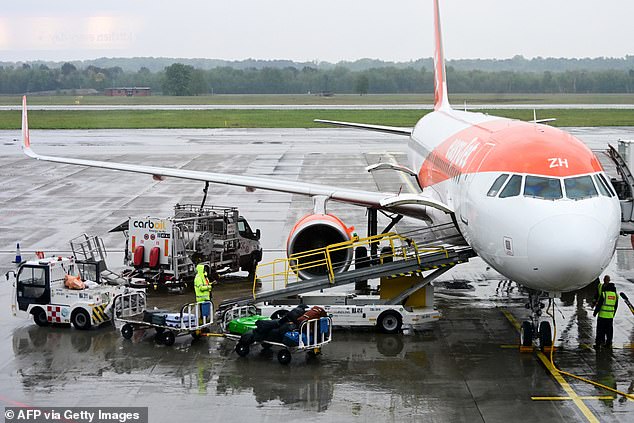
Workers use a fuel truck to service an easyJet plane at Milan’s Malpensa Airport on Monday
Fatih Birol, the executive director of the International Energy Agency, said there would be flight cancellations ‘soon’ if oil supplies from the Middle East were not restored within the coming weeks.
Mr Birol said the conflict was causing ‘the largest energy crisis we have ever faced’.
He said Asian counties such as Japan, India and China that rely on energy from the Middle East are on ‘the front line’, but pressure will then ‘come to Europe and the Americas’.
Europe has ‘maybe six weeks or so (of) jet fuel left’, he warned.
If the Strait of Hormuz is not reopened, the impact on Europe may be that ‘some of the flights from city A to city B might be cancelled as a result of lack of jet fuel’, he added.
The US-Israel war on Iran has caused turmoil in global energy markets since the first strikes at the end of February.
In retaliation, Iran has effectively closed the strait, a vital export route for oil from the Gulf.
As a result, jet fuel prices have rocketed at a faster rate than petrol or diesel prices for cars at forecourts, roughly doubling since the start of the conflict.
It means holidaymakers are also facing sharp fare increases this summer, with some airlines already passing on higher fuel costs to passengers.
EasyJet said today that the conflict in the Middle East cost it about £25million in higher jet fuel prices last month.
It means the airline will likely hike fares to cover the loss, with several other airlines facing a similar situation.
EasyJet chief executive Kenton Jarvis said: ‘We only ever in this industry have three to four weeks visibility (of jet fuel supplies), and that is the same as it was pre-crisis.
‘We have visibility to the middle of May, and we have no concerns. What we’re seeing is airports and fuel suppliers working well to bring jet fuel to the airports.’
The Luton-based airline said it expects to report a headline loss before tax of between £540million and £560million for the six months to the end of March.
The war has introduced ‘near-term uncertainty around fuel costs and customer demand’, easyJet reported.
Bookings are down two percentage points for the three months to the end of both June and September compared with a year ago.
A Government spokesperson said: ‘We continue to engage with British airlines to support their operations against the backdrop of war in the Middle East, and to limit the impact on passengers.
‘Most airlines purchase their aviation fuel in advance to offset price fluctuations, however we are aware of the impact to businesses, and are working with international allies to see a reopening of the Strait as soon as possible.’