There’s a curious triumvirate that rules over all readers, and each bookworm falls into one or multiple classes: the modern e-reader, the audiobook listener, and the physical book loyalist clinging to their hardcovers and paperbacks.
While readers who pledge allegiance to just one of these categories consume stories without care, there are others who feel torn between them. Some days, they want to listen to an audiobook on their drive to work, while on others, they prefer to pack a Kindle in their backpack to read with their eyes — and everyone enjoys a physical page turn now and then.
Reading preferences change. Sometimes, frequently enough that you’ll want to toggle between mediums multiple times during the same book. No one says you can’t have all three, but there’s a lot of page turning, tapping, and scrubbing on your devices (and book) to manually stay synced up at all times. And if reports (per Android Authority) ring true, Spotify may be rolling out a new feature that does the tedious work for you.

- Premium Subscription
-
$12 per month
- Free trial
-
Yes
- Ad plans
-
Free with advertisements
Spotify’s new Page Match feature
Sync your audiobooks with physical books (and e-books)

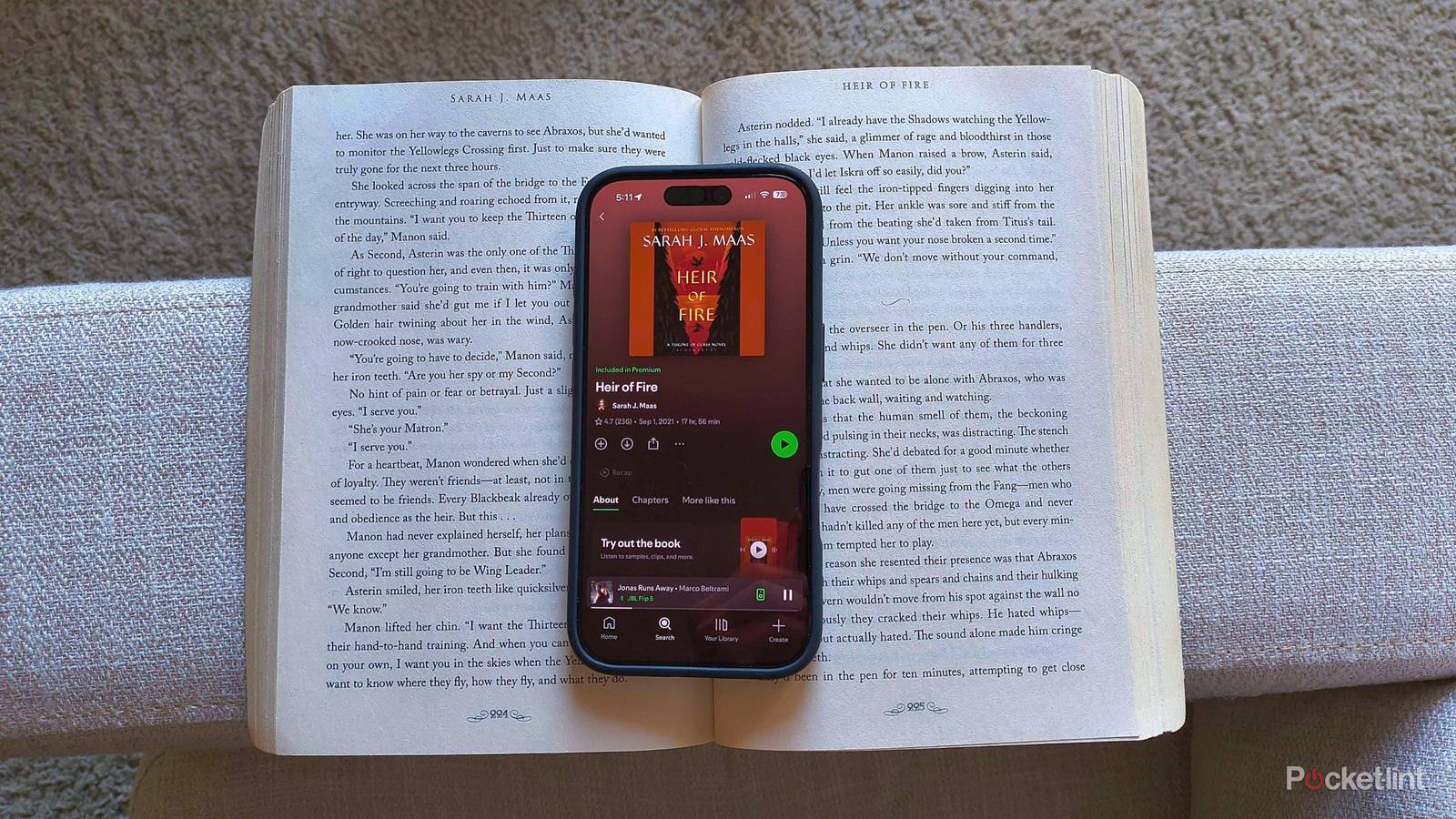
Android Authority picked apart the fine print within Spotify’s 9.1.18.282 app version and found a little gold nugget: code that points to a special new feature clled Page Match. Supposedly, it will allow users to sync up an audiobook with a paper book or e-book, so there’s no confusion about where you left off on one or the other (or the other other).
If you’re listening to an audiobook and want to switch to your physical or e-book, Spotify will tell you exactly what page to turn to, effectively eliminating accidental spoilers if you skip too far ahead. And vice-versa, if you are reading a physical book and want to listen to it instead, you can use your phone’s camera to scan the page to let Spotify know where to pick back up in the audiobook.
So how does Page Match work? Spotify will use technology called optical character recognition (OCR) that essentially reads the text, recognizes your place in the book, and brings you to the exact location within the audiobook. Reversing the process will also work, according to Spotify’s code. The only catch is that you’ll have to own or have access to both the audiobook on Spotify and the physical copy (whether it’s an e-book or paper book).
No more dumb books
So intuitive, you wonder how Spotify’s the first to do it

Spotify’s OCR feature might not be perfect, and the streaming giant isn’t pretending it will — if the app doesn’t recognize a passage when you scan it, you might get a prompt to scan another one around it.
While you might not understand the coding behind it, the Page Match feature feels so simple that it’s surprising Spotify is the company pushing it. Amazon does have a similar feature called Whispersync, but it confines you to its walled garden (big surprise) and only lets you sync Kindle e-books with Audible audiobooks. It leaves physical book lovers out of the equation and effectively in the dust.
Spotify’s inclusion of physical books brings balance back to the triumvirate’s power structure and effectively makes it work for everyone, no matter where you purchase your physical copies from. Take that, Amazon.
So when does Page Match become available? There’s no official word or even announcement yet, so have patience, dear reader. Reading format freedom will arrive soon enough (hopefully).