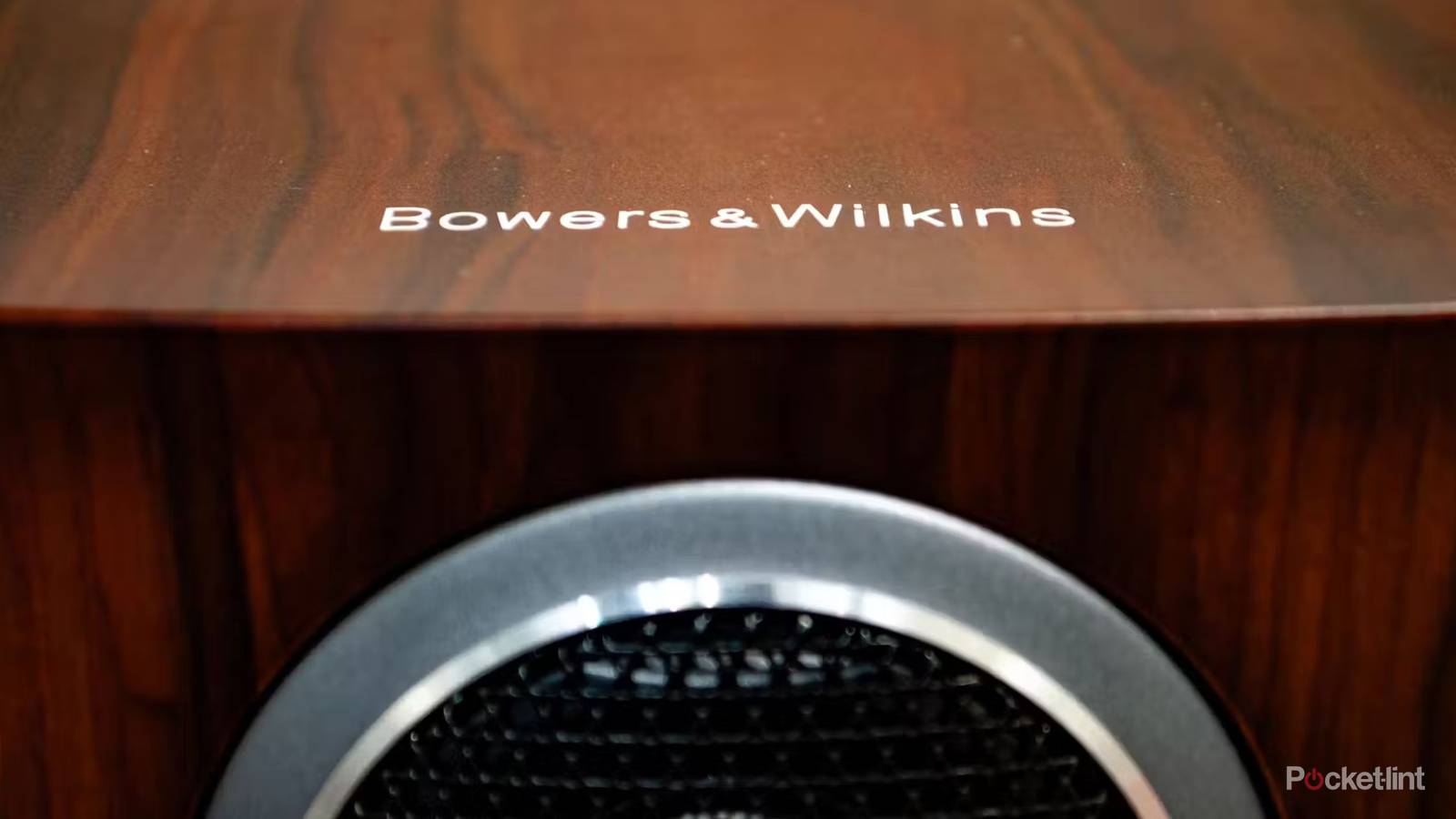
If there’s a universal cliché for an audiophile, it’s probably a room full of giant floorstanding speakers, perhaps hooked up to a record player and a tube amp direct from Fallout. That image exists for a reason — some real-world floor setups can cost tens of thousands of dollars, and I’m sure the richest among us might drop as much on one as you or I might on a house.
Is it plausible to use a more down-to-earth configuration as the basis for a home theater? Not too surprisingly, the answer is yes, and you’ll be hard-pressed to top it from a performance angle. There are some downsides, however, at least three of which keep me from seriously considering the option in my own home. I’m sure you can identify the first right now, but I’ll get to that soon enough.
Why you might want floorstanding speakers for your movies
Feel the force

The main attraction — for people who aren’t chasing a status symbol, anyway — is power. Something tall enough to sit directly on your floor will have plenty of room for full-size tweeters, woofers, and mid-range drivers, over and above what soundbars and bookshelf speakers allow. That means high clarity at any frequency or volume level, which is of course what you want with any form of audio. It’s all the more helpful when watching movies and TV shows, given that you might be shifting from explosions one minute to a quiet dialogue scene the next.
Some of these speakers are so powerful that companies don’t bother selling you on the specs upfront. The Klipsch RP-8060FA II, for example, turns out to offer 150W of continuous power, but 600W peak, and that’s just its main channel. It also has an upfiring Dolby Atmos channel for vertical effects, and that produces 100W continuous or 400W peak. Quality is about more than raw wattage, but it’s safe to say that if you pair two RP-8060FA IIs, they’re going to annihilate a Sonos Arc Ultra in terms of both volume and fidelity. Floor speakers are about as close as you’ll get to theatrical sound. Sometimes they’re better, since they’re focused exclusively on a sweet spot instead of trying to serve dozens or hundreds of people.
One of the other advantages is flexibility. Because floorstanding systems are linked by a receiver, speakers can be added or swapped at will. You might start out with a pair of towers next to your TV, but later add a subwoofer, and eventually some rear, side, and/or ceiling channels. If you’re patient, you could conceivably build out a cinema-quality setup over a decade or longer, although at those timescales you’d risk compatible components becoming outdated or hard to find.
Ironically perhaps, one of the reasons you might go the floor route is efficiency. Because these speakers are so sensitive, they don’t necessarily need as much amp power as some alternatives. Meanwhile, their bass is so punchy that in many rooms, adding a subwoofer is going to feel gratuitous.
Why I stand clear of floor speakers
More than just cost

Price is the leading factor here, naturally. That Klipsch speaker I mentioned can sell for as much as $2,000, and you obviously need a pair. There are certainly cheaper options — but you’re still looking at a few hundred dollars per speaker, plus the cost of a receiver and any other equipment you might need to power your setup. For the average person, there’s no way to justify that, not when modern technology lets you spend less and still have an impressive experience. You’ll want something beyond the cheapest options, to be sure. As long the clarity and bass response is there, though, even a 2.0-channel soundbar can deliver cinematic sound.
When money is no object, human hearing still is. You’re unlikely to crank better floor speakers anywhere near their limits, since that would be deafening for you, and risk complaints from anyone else in your home. In an apartment complex or townhouse, they might be a quick way to make enemies out of your neighbors. You can (and should) listen at more reasonable levels — but at that point, you’re entering the realm where other options may perform well enough to compete.
After price, my greatest concern is actually simplicity. I’m sure installing a receiver and multi-speaker setup is satisfying for some enthusiasts, but for me, it’s a hassle that stands in the way of my entertainment, especially if I have to assemble or mount anything. With one of the better Atmos-capable soundbars, I can be ready in a matter of minutes, and I don’t have to rearrange a room’s look as long as that soundbar has something to sit on.
More importantly, perhaps, alternatives tend to be easier to pack up and move, which can be essential in modern life. Most people no longer have the luxury of staying in the same place for decades. They’re either renters, or remain at the whim of their job or local house prices, which can make it difficult to stay anywhere for longer than a few years. I’m about to move for the third time in less than a decade, and that’s taught me the value of choosing gear that’s simple to pack and less vulnerable to damage in transit. Needless to say, a floor system is the opposite of that.
You’ll have to weigh the sacrifices yourself, ultimately. Some people care so much about home theater audio that even without a huge budget, they’re willing to scrimp money from elsewhere — including the choice of TV they’re watching on — to make their dreams happen.

- Connectivity
-
HDMI eARC, Bluetooth, Wi-Fi, Apple AirPlay 2
- Audio Channels
-
9.1.4
- Surround Sound Support
-
Dolby Atmos