


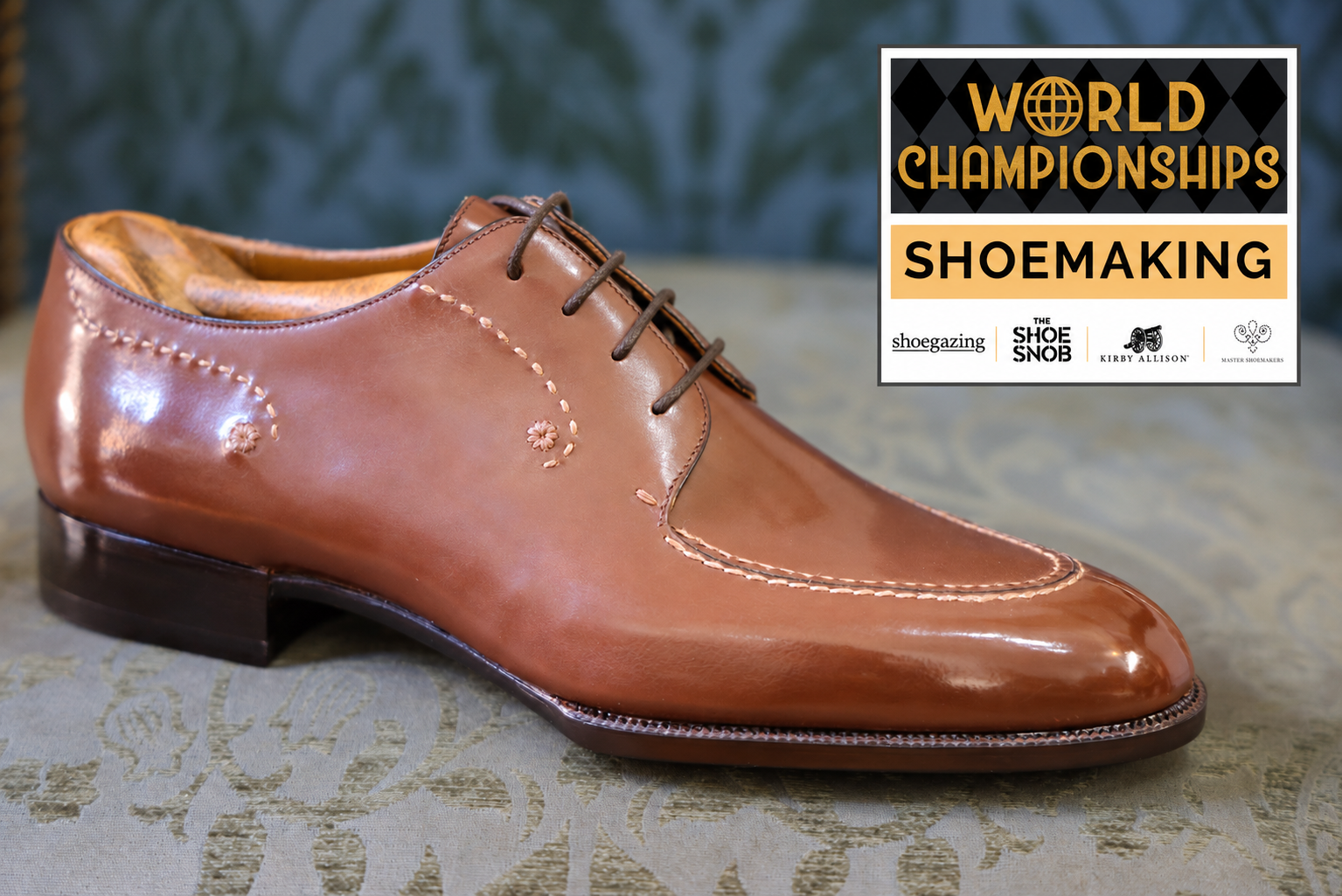
The World Championships of Shoemaking returns in 2027, and the official call for competition is now open.
For the eighth edition of the championship, shoemakers will be tasked with creating a medium brown split-toe derby, with the final taking place during the London Super Trunk Show on Saturday, May 15th, 2027.
And this year, we have significantly raised the stakes!
The total prize purse has increased to £10,000, nearly 70% higher than previously, with £5,000 awarded to the winner, £3,000 to second place and £2,000 to third.
As one of the organizers and judges of this competition, alongside Jesper Ingevaldsson of Shoegazing and Kirby Allison, it has been amazing to watch what this contest has become.
What started as an idea to highlight the incredible skill involved in handmade shoemaking has developed into something that genuinely pushes makers to see how far the craft can go. Even better yet is seeing how these shoes inspire the pushing of boundaries in RTW shoe manufacturing.
And that, for me, remains one of the most important aspects of the World Championships of Shoemaking.
Pushing Bespoke Shoemaking Forward
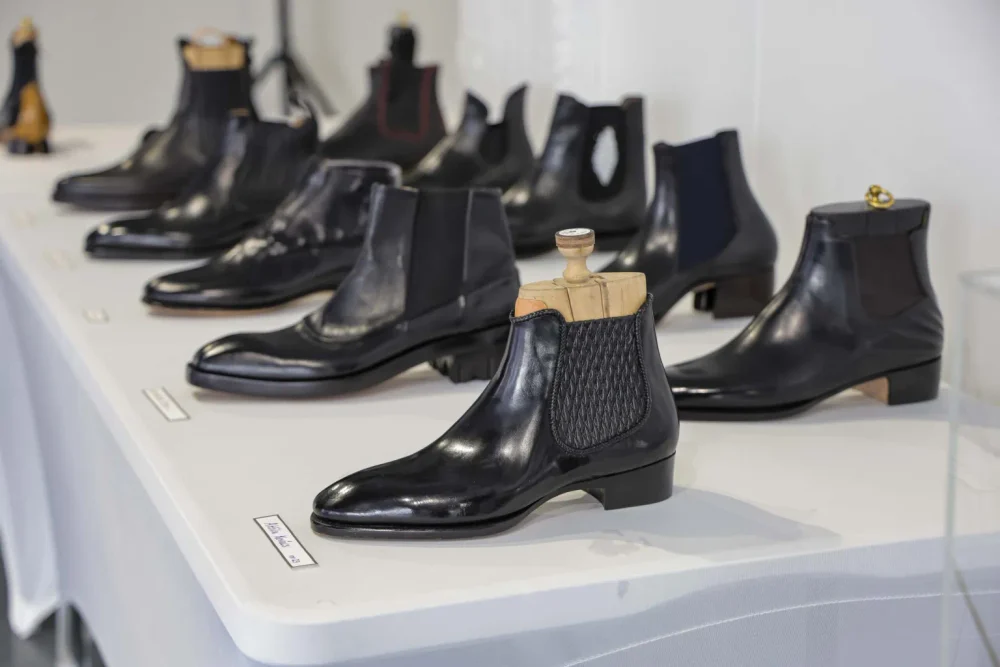
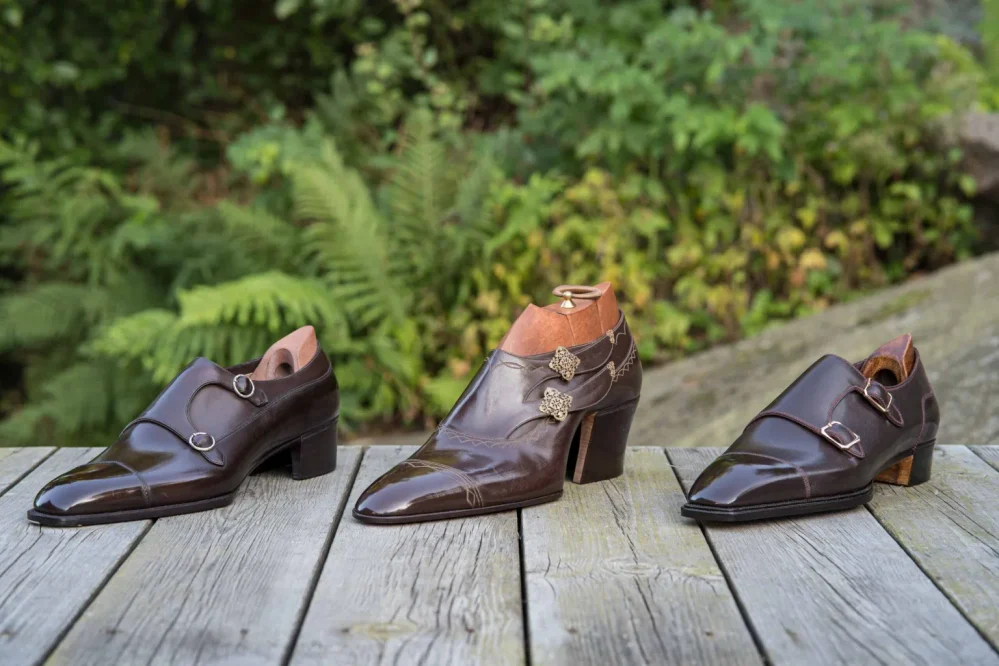
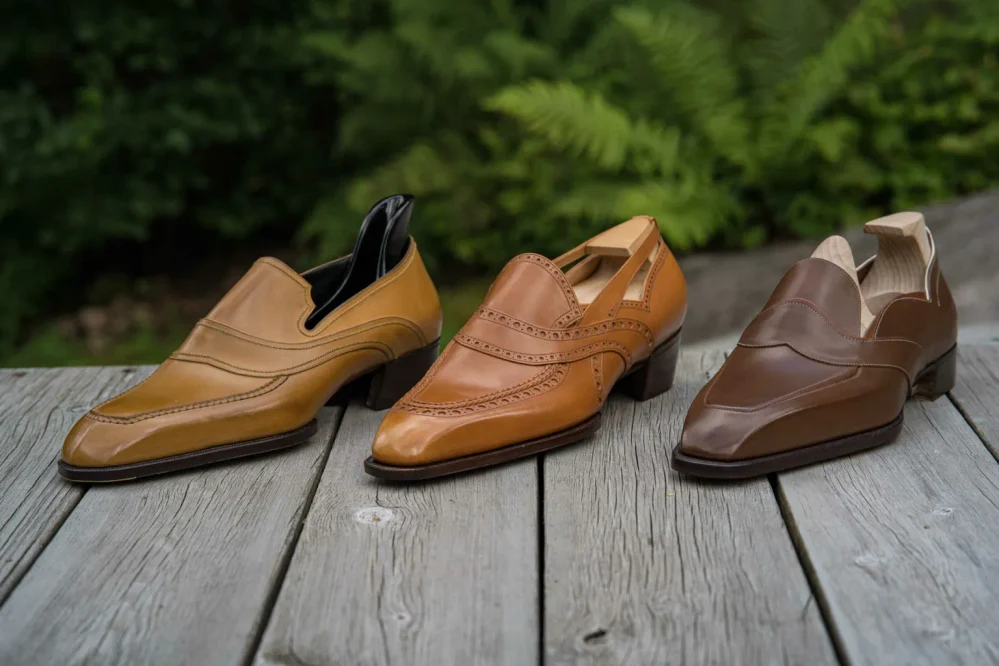
Every year, we see shoes created specifically for this competition that probably would never exist otherwise. Shoemakers experiment. They push techniques further. They rethink construction, finishing, proportions, and design.
Often, the participants create shoes that are closer to museum pieces than normal footwear.
This isn’t really about creating the most commercially viable pair of shoes. It is about seeing what is technically and aesthetically possible when talented craftspeople are given a common framework and told to push themselves.
Over the years, we have seen new construction ideas and finishing techniques emerge through the competition, while the overall standard has continued to rise.
That is exactly what we hoped the championship would achieve.
The competition has also brought meaningful exposure to the makers themselves. Previous editions have received international media coverage — including a BBC World News feature seen by millions — while makers who finish highly have often seen considerable interest in their work afterward.
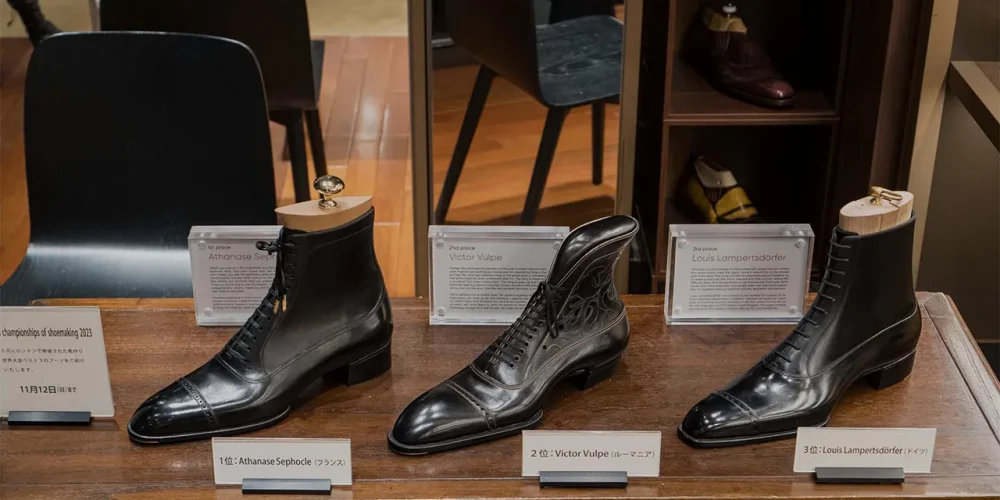
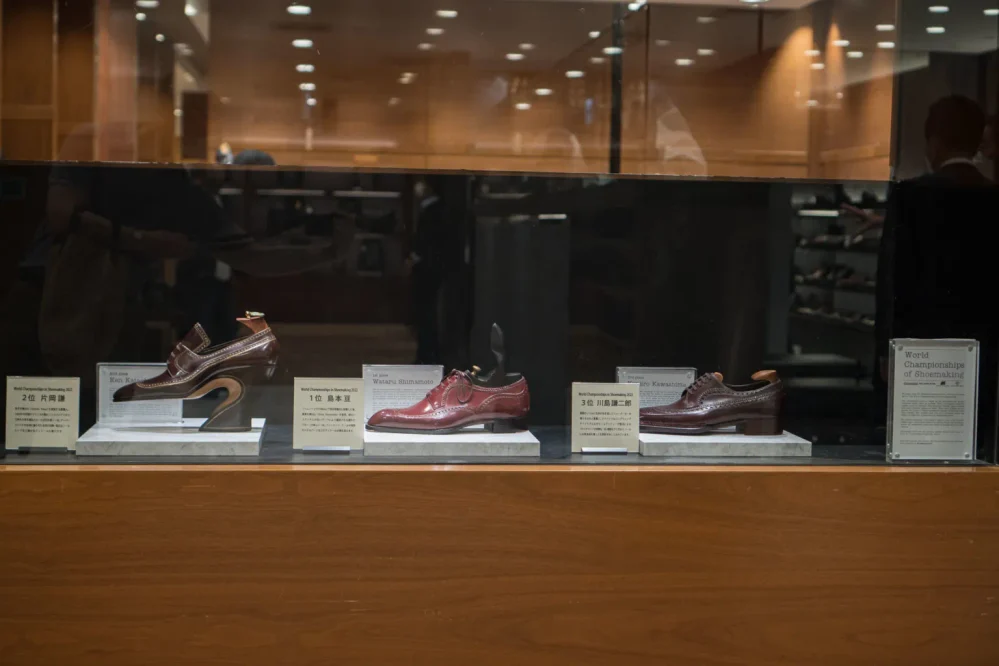
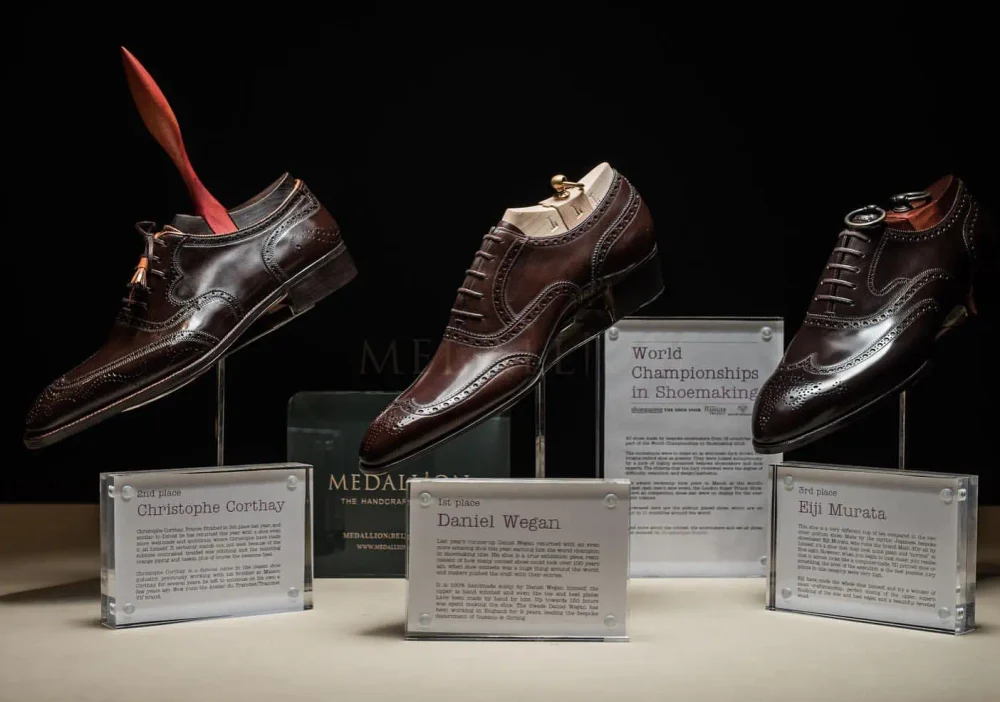
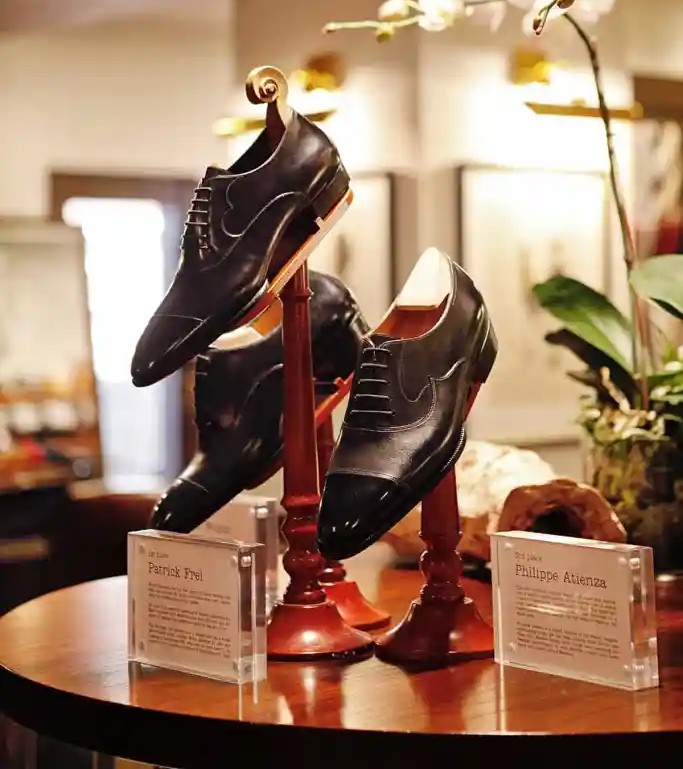
The top three shoes also travel around the world after the competition, traditionally being displayed at roughly ten locations internationally, including places such as Isetan Men’s in Shinjuku, Tokyo, one of the greatest shoe floors in the world.
So even though there can only be one World Champion, there is considerably more value to participating than simply finishing first.
A Message to Shoemakers Thinking of Entering
I want to emphasize this point because we see it happen every year.
Very talented shoemakers register for the competition, start making their shoes, and then withdraw because they feel that what they have created isn’t good enough. I understand the sentiment.
When you see the extraordinary level of work being submitted, it is easy to convince yourself that unless your shoe is perfect, there is no point in entering. But we genuinely believe that is the wrong way to look at it.
The level of this competition is incredibly high. Excellent shoemakers have finished outside the top ten. Makers who have finished relatively low one year have gone on to reach the podium — or vice versa. There is no shame whatsoever in entering the World Championships of Shoemaking and not winning.
Simply completing a shoe, putting your work alongside that of some of the best craftspeople in the world, and allowing thousands of shoe enthusiasts to see it is an achievement in itself. And more importantly, something to be proud of.
The competition only works when good shoemakers are willing to challenge themselves and participate. So if you enter, we strongly encourage you to finish.
The 2027 Challenge: The Split-Toe Derby
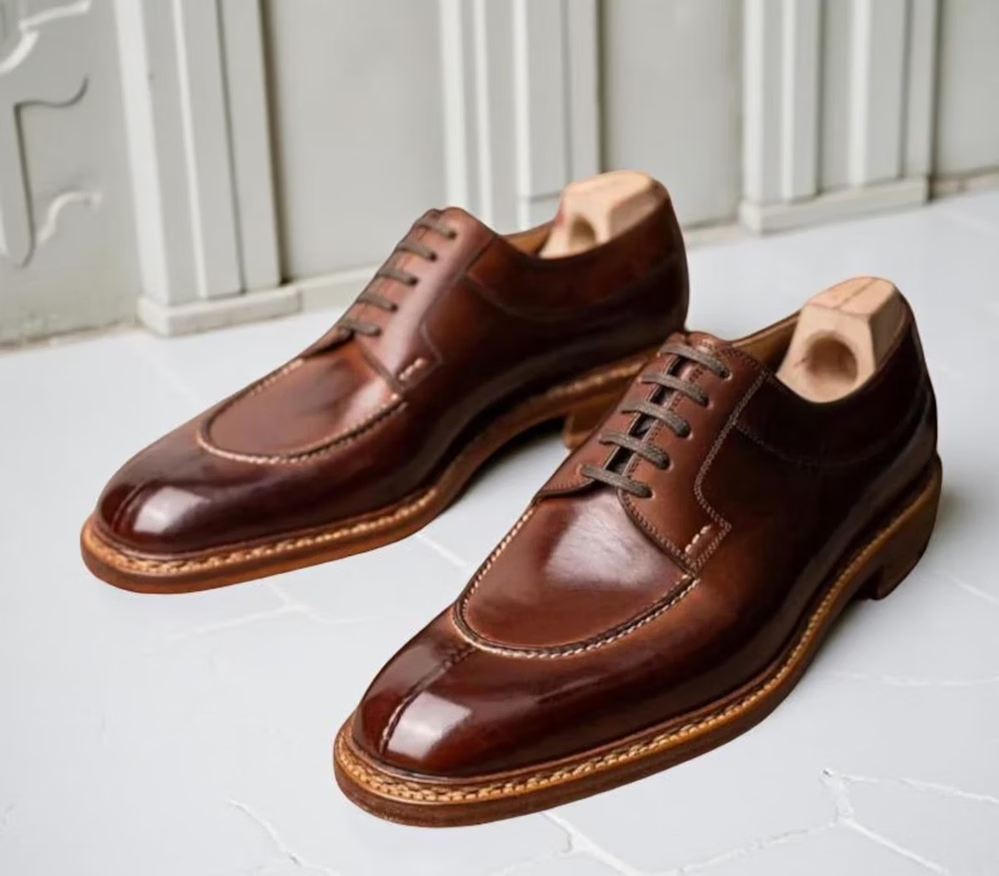
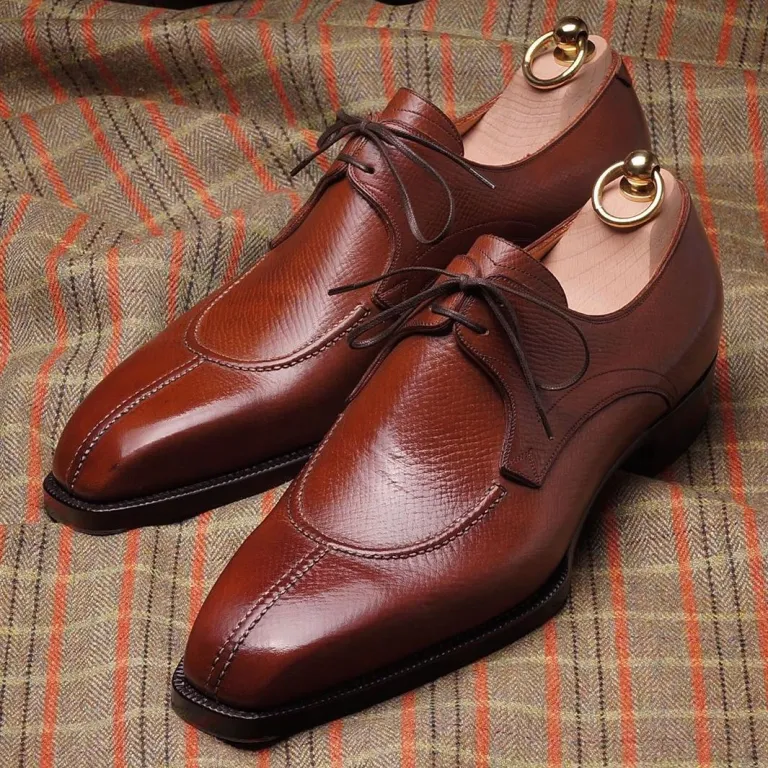
For 2027, competitors must create a medium brown split-toe derby.
I think this is going to be a particularly interesting model for the competition because the split toe gives makers a recognizable framework while still leaving enormous room for interpretation.
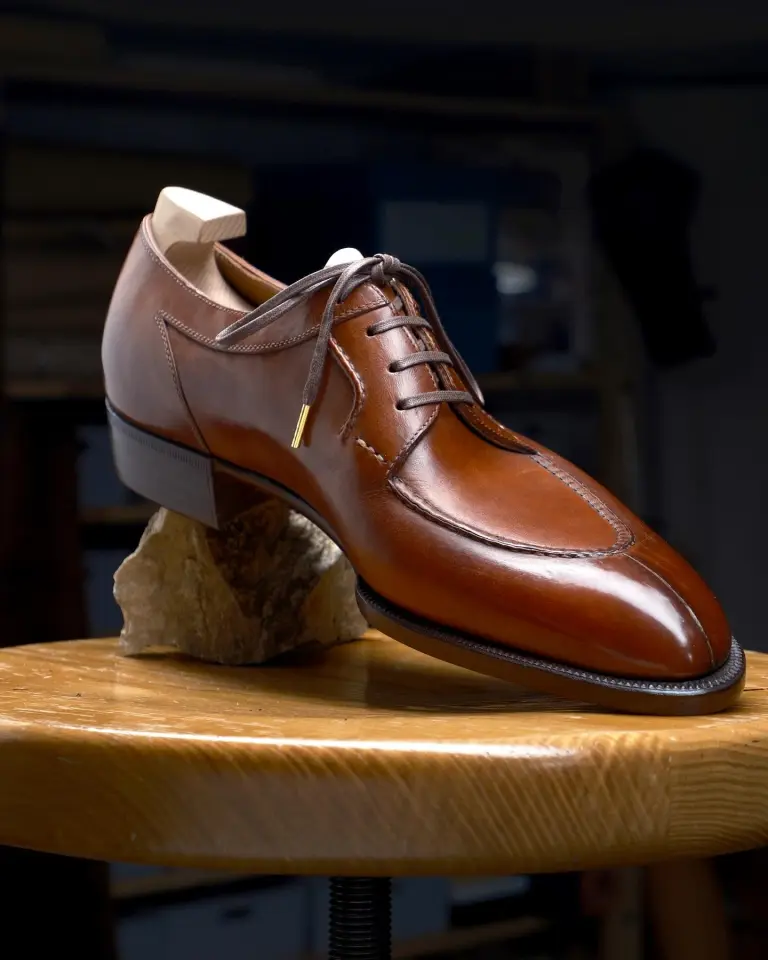
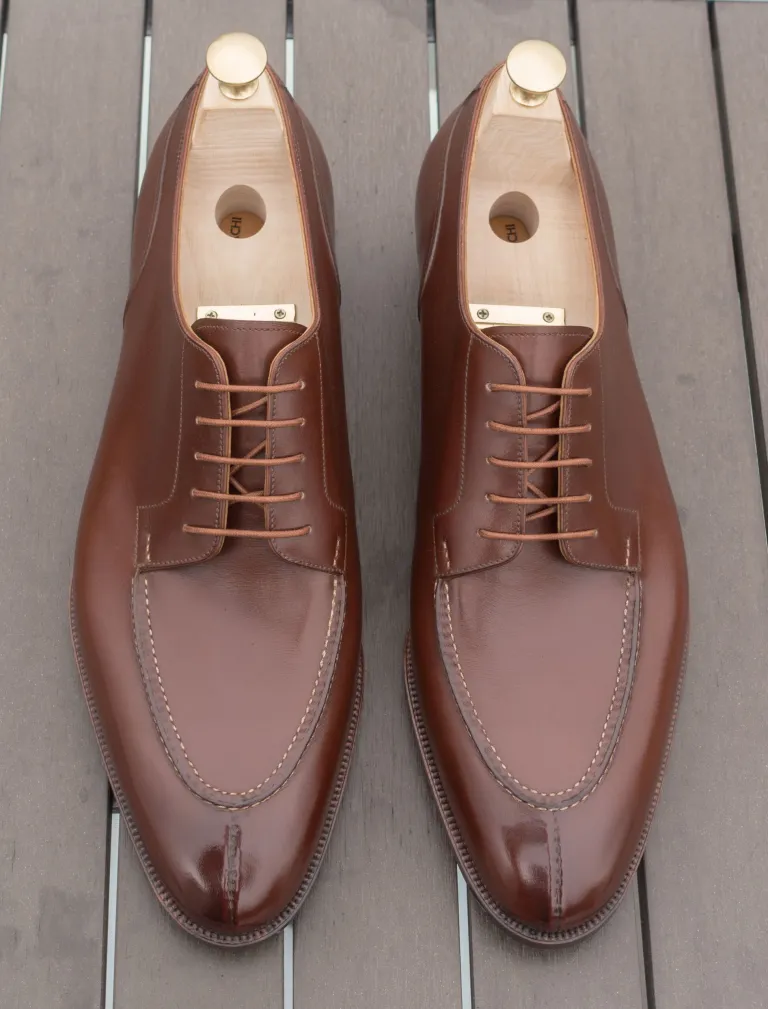
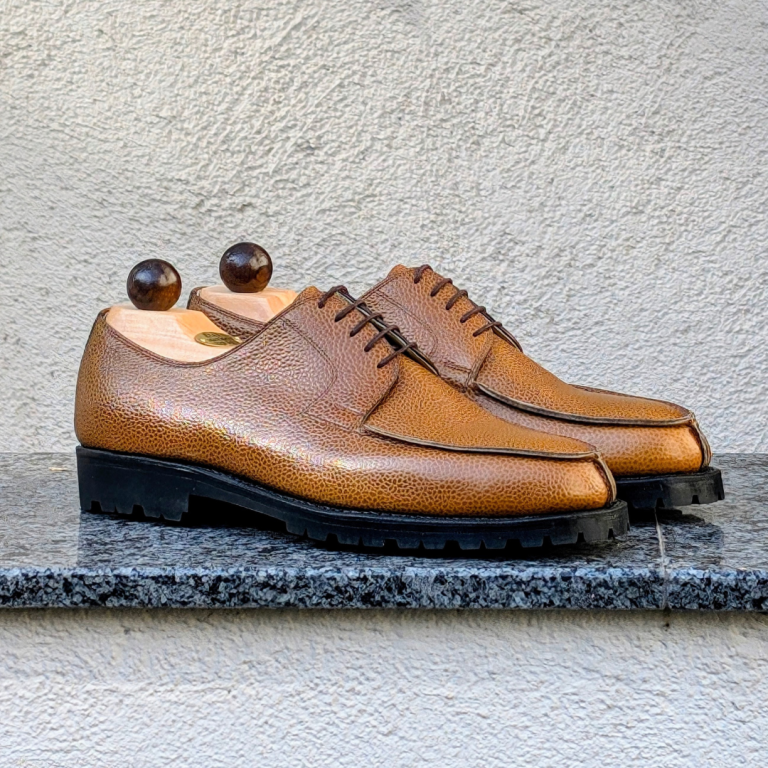
A split-toe derby can take many forms.
You have traditional British interpretations, more substantial Austro-Hungarian versions, elegant Japanese bespoke interpretations, Italian versions with extended split-toe seams, and all manner of Norwegian-inspired construction and sole treatments.
That gives makers considerable freedom to show their own personality. There are, however, several very specific requirements.
The shoe must be:
- A split-toe derby with a genuine split toe constructed from separate pieces and an apron constructed from separate pieces.
- Made from between 2 and 6 pieces of leather.
- A left shoe, size UK 8 or corresponding size.
- No more than two width sizes wider or narrower than a normal standard width.
- Made from smooth, medium brown leather.
- Made without patina.
- Made with a leather sole.
- Hand welted, with handmade sole stitching.
- Constructed with a welt extending at least 270 degrees, meaning the welt and sole stitching must continue along both sides of the waist toward the heel. A blind welt through the waist is permitted.
- Finished with brown sole and heel edges.
- Finished with a natural-colored sole bottom, although decorative wheels, nails and similar details are permitted. Dyeing or burnishing the sole bottom is not.
- Fully finished inside, including sock lining.
- Completely free of branding.
Functional lacing is required. Decorative stitching, brogueing, and punched details are permitted but are not required.
Shoe trees may be included, but because of the logistics involved in judging, they will not be removed and therefore will not form part of the judging.
It is important that competitors follow these specifications carefully. We are being stricter about sizing and width this year.
Small specification errors may result in a 5% deduction from the total score, while larger errors may result in a 10% deduction. Shoes that substantially fail to meet the requirements can be disqualified.
How the Shoes Will Be Judged
The judging is divided into four areas.
Degree of Difficulty – Maximum 10 Points
We look at the complexity of the construction and techniques used, both in the major structural elements of the shoe and in smaller details.
Execution – Maximum 10 Points
Here we judge how well everything has actually been made.
That includes the cleanliness and precision of the construction, finishing, stitching, and other technical elements.
Design / Aesthetics – Maximum 5 Points
This category looks at the overall visual result: proportions, balance, shape, and the harmony of the finished shoe.
Originality – Maximum 5 Points
Originality was added as a specific judging category last year.
We want makers to explore their own ideas rather than simply reproducing techniques or unusual details previously seen on successful competition shoes.
We will therefore assess how unique the design, construction techniques and finishing details are compared with previous championship shoes and handmade shoes more generally.
One thing worth clarifying is that wearability is not a judging criterion.
The competition focuses on craftsmanship, technical execution and design. Fit obviously cannot realistically be judged when everyone is making a single shoe to a predetermined size, and attempting to define exactly where a competition shoe crosses from “wearable” to “unwearable” would be extremely subjective.
£10,000 in Prize Money
The sponsors have generously increased the prize fund substantially for 2027.
1st Place
£5,000
Handmade shoemaking awl
Gold medal
Shoe included in the international exhibition tour
2nd Place
£3,000
Handmade shoemaking awl
Silver medal
Shoe included in the international exhibition tour
3rd Place
£2,000
Handmade shoemaking awl
Bronze medal
Shoe included in the international exhibition tour
The handmade awls are once again made by Phil Norsworthy.
The organizers do not make money from the World Championships of Shoemaking. The financial support we receive for the competition goes toward the prize fund and supporting the shoemakers.
The championship is organized by Shoegazing, The Shoe Snob and Kirby Allison, with financial support from Kirby Allison, the Master Shoemakers book project and Parker Schenecker, brother of our late co-founder Edmund Schenecker.
Previous World Champions
The standard has become increasingly impressive over the years.
Previous winners are:
2018 – Patrick Frei, Germany
2019 – Daniel Wegan, Sweden / UK
2022 – Wataru Shimamoto, Japan
2023 – Athanase Sephocle, France
2024 – Ken Hishinuma, Japan
2025 – Louis Lampertsdörfer, Germany
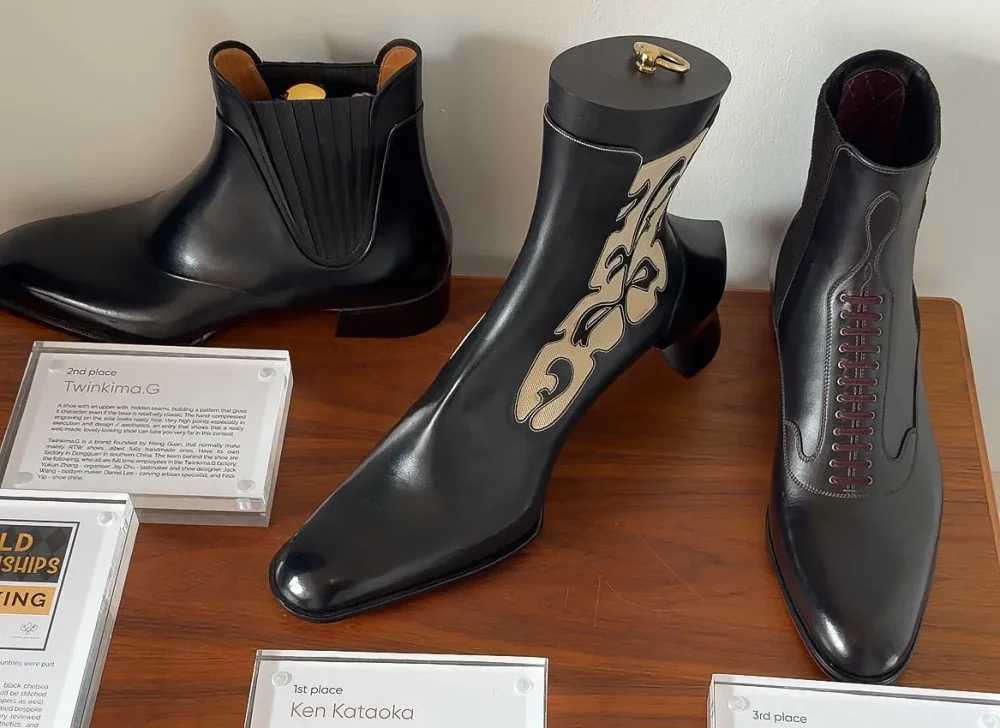
2026 – Ken Kataoka, Japan
In the 2026 competition, Ken Kataoka took first place, Twinkima.G of China finished second and Dmitry Avdyukhov of Russia finished third.
Looking back over that list shows just how international this competition has become.
And I expect the split-toe derby challenge to bring another very interesting mix of approaches from different shoemaking traditions around the world.
How to Enter the 2027 World Championships of Shoemaking
Both individual shoemakers and companies can enter.
If several people are involved in producing the shoe, every person involved must be identified along with the specific processes that person completed.
Only one shoe may be entered per competitor.
Entry is free of charge.
To register, email: [email protected]
Registration must be completed no later than February 15th, 2027
Include the name of the shoemaker and/or brand under which you wish to compete.
Competitors are encouraged to photograph the making process, as those images can be shared after the competition.
However, the competition shoe itself cannot be shown publicly before May 15th.
Competitors also cannot publicly reveal that they are participating before the competition.
This is important because the judging — apart from Jesper, who handles registration — is anonymous.
Important Competition Dates
February 15th, 2027
Deadline to register.
May 12th, 2027
Competition shoes must have arrived in London.
Shoes must be shipped in a way that ensures the organizers do not receive customs charges or other fees.
May 14th, 2027
The jury will inspect and score the competition shoes.
May 15th, 2027
All entries will be displayed publicly at the London Super Trunk Show.
The award ceremony will take place at 5:30 PM, when the 2027 World Champion of Shoemaking, second place, and third place will be announced, along with the complete top ten.
Competitors do not have to attend the event personally, although naturally we always love having participating shoemakers with us in London.
The 2027 Jury
The preliminary jury consists of a combination of bespoke shoemakers and people working professionally within the shoe industry:
Jean-Michel Casalonga – Bespoke shoemaker
Louis Lampertsdörfer – Bespoke shoemaker and 2025 World Champion
Emiko Matsuda – Bespoke shoemaker
Vivian Saskia Wittmer – Bespoke shoemaker
Riccardo Cianci – Bespoke shoemaker
Athanase Sephocle – Bespoke shoemaker at Berluti and former World Champion
Kirby Allison – Founder of Kirby Allison and competition sponsor
Gary Tok – Author of Master Shoemakers and competition sponsor
Jesper Ingevaldsson – Shoegazing
Justin FitzPatrick – The Shoe Snob
The jury’s decision is final.
Jesper will know the identities of the entrants because he handles registrations and competition questions. For the remaining jury members, the shoes are judged anonymously.
What Happens to the Shoes Afterwards?
All competition shoes will eventually be returned to their makers. The top three shoes will first go on the traditional international exhibition tour before being returned.
Other entries can therefore later be used by their makers as samples or display shoes.
Where return shipping is required, competitors are responsible for arranging a prepaid return shipping label.
Prize money will be paid to the top three competitors several weeks after the competition.
Because international banking restrictions can occasionally prevent transfers to particular countries, competitors affected by such restrictions must be able to receive payment through an eligible international bank account or a service such as Wise.
All competition shoes will also be showcased here on The Shoe Snob, as well as on Shoegazing. The leading entries will be covered on Kirby Allison’s YouTube channel, with additional shoes appearing throughout our respective social-media channels.
The Final – London Super Trunk Show 2027
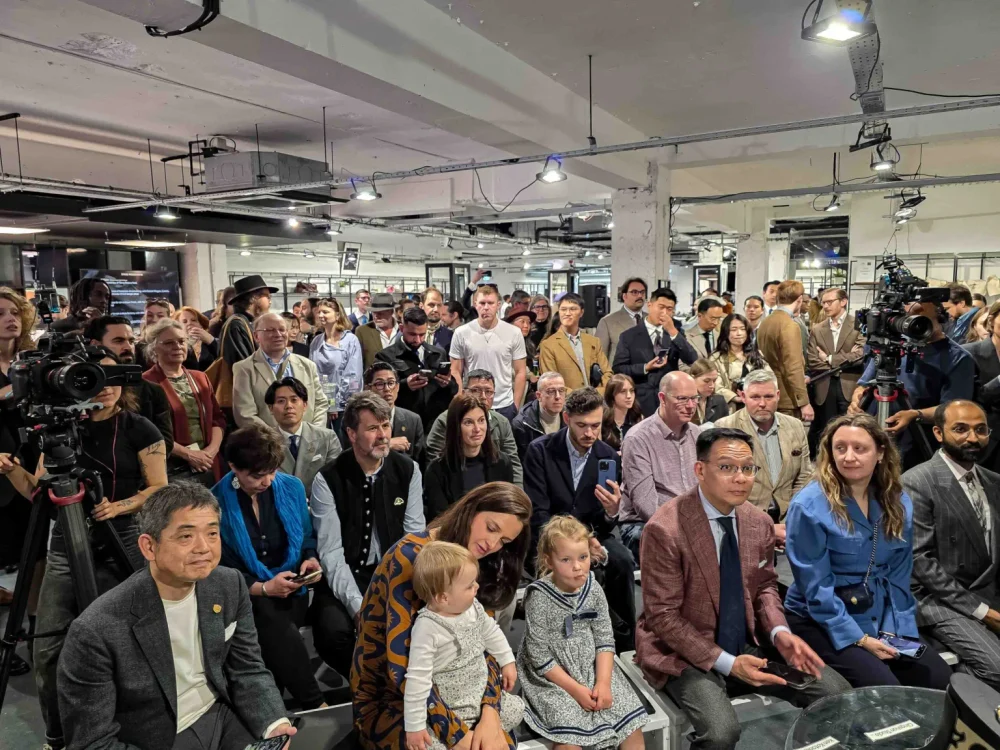
The final will once again take place during the London Super Trunk Show, on Saturday, May 15th, 2027, at Showcase.co on Regent Street, just below Piccadilly Circus.
The London Super Trunk Show will bring together up to approximately 15 exhibitors from around the world and will also host the finals of the World Championships of Shoe Shining and the World Championships of Shoe Patina, among other activities.
More information about the full event will come closer to the date.
For now, if you are a shoemaker who has ever considered entering the World Championships of Shoemaking, this is your invitation.
Make the shoe 👉 Finish the shoe 👉 Send it in.
You might become the next World Champion!!
And even if you don’t, you will have taken part in something that is helping preserve, showcase, and — most importantly — push forward the art of handmade shoemaking.
—Justin FitzPatrick, The Shoe Snob
Shop · Marketplace · Patreon


