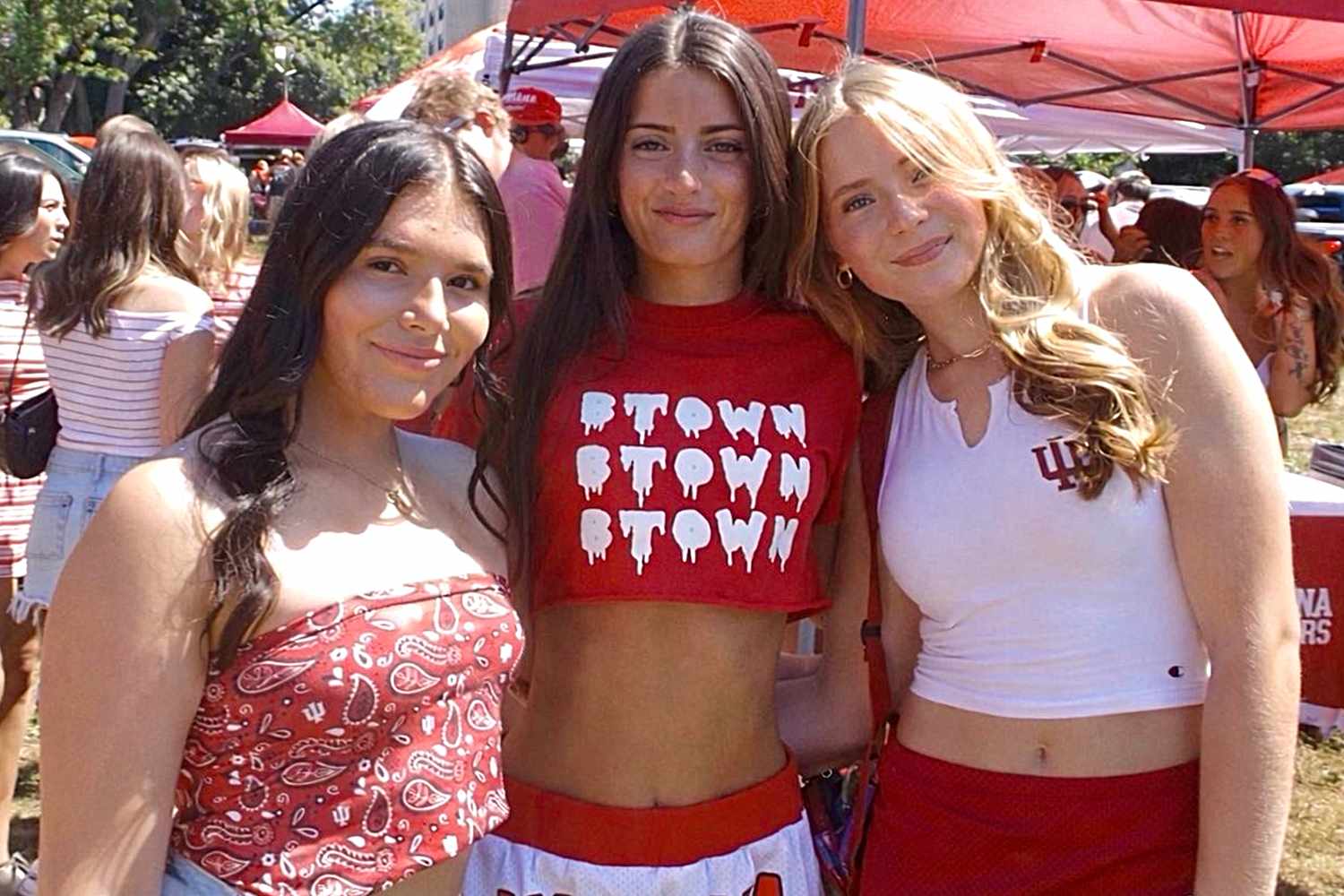
Hamilton, now 19, tells PEOPLE there are days when her diagnosis weighs on her "heavily," and then there "are some days where it's just another day"
:max_bytes(150000):strip_icc():format(jpeg)/Macey-Hamilton-2-033026-2d21271ac23c41129e8fb63c7d1214c9.jpg "Macey Hamilton")
Credit: Courtesy of Macey Hamilton
NEED TO KNOW
- Macey Hamilton was diagnosed with MRKH syndrome at 15, learning she was missing a kidney, her uterus and vaginal canal
- The diagnosis meant she would not be able to carry a pregnancy, a heartbreaking realization for someone who “always said I wanted kids”
- The college student shared her story on TikTok to raise awareness and now talks to PEOPLE
When Macey Hamilton was a freshman in high school, she started noticing "really bad back pain."
Thinking it could have been caused by a sports injury, Hamilton went to see an orthopedist, but when he took an MRI of her back, it revealed she had an "absent left kidney."
"He was like, 'Did you know that you didn't have a kidney?' And we were like, 'No,' " she remembers while chatting with PEOPLE.
Wanting to further investigate, Hamilton continued to undergo "different labs, tests and imaging." After going to doctors for "about a year," the teen living in Northwest Indiana finally got answers.
In September 2022, at the start of her sophomore year, she was officially diagnosed with Mayer-Rokitansky-Küster-Hauser Syndrome Type 2 (MRKH) at the age of 15.
"It just evolved from finding out I didn't have a kidney to then finding out I didn't have a uterus," she shares, noting that she also has an "absent vaginal canal."

Credit: Courtesy of Macey Hamilton
According to the Cleveland Clinic, MRKH syndrome is a rare condition that people are born with in which the uterus and upper vagina are missing or don’t fully develop. While the ovaries and vulva usually develop normally, with Type 2 MRKH syndrome, sometimes organs like the kidneys and the spine also form differently.
Hamilton, now 19, says the only reproductive organs that she has are her ovaries. Given her diagnosis, it would be impossible for her to carry a pregnancy, which she admits was a heartbreaking reality to face at such a young age.
"I actually remember the conversation because my doctor — she thought that I knew already that I didn't have a uterus, and so she just told me, 'Oh, you don't have a uterus,' " Hamilton recalls. "And at first, I didn't really think about the implications of that. I was just like, 'Oh, I don't have a period. Sweet!' "
"And then my mom was in the room, and she asked me, 'Are you okay?' And then I was like, 'Oh s—, this is not good for my life.' "
Hamilton was later diagnosed with hyperparathyroidism, which occurs when there is too much parathyroid hormone in the blood, and ankylosing spondylitis, which is an autoimmune disorder that affects the proteins in her back, leading to inflammation and pain. While there is no way to treat MRKH, she gets weekly injections to lessen her back pain.
Hamilton tells PEOPLE she has always been "motherly" and "always said I wanted kids" — so much so that when her parents built a new home, they specifically gave her the only bathroom in the house with a bathtub, believing she would one day bring her kids there, since her siblings "don't really want kids."
"It is a forever home, so my parents are going to live there until they die, and so they wanted us to be able to bring our kids back and stay the night, stay a few days," she explains. "And obviously, little kids, they take baths, not showers. So that was the whole hope and goal and idea."
Hamilton recently shared a TikTok about the harsh irony of the situation, giving a glimpse into her diagnosis. The video went viral, amassing nearly 13 million views.
Over the last 4 years, Hamilton says her outlook on her diagnosis has "ebbed and flowed."
It has forced her to fight against societal expectations for women regarding motherhood.
"I think that, especially in our society, a lot of people, the kind of norm is that, okay, a woman's going to get married, going to have kids, etc.," she explains, noting that there have been instances in which she's felt ideas about what a "real woman" is have been "pushed" onto her.
"It's like, 'Oh, I can't be a real woman because I can't have these kids and whatever.' So that's, I would say, the hardest thing," she shares. "You kind of just feel less of a woman, like honestly, there's no really way to beat around the bush with that, especially in our society's norms."
Still, she tries to look toward other "strong" and "amazing" women in the spotlight who are child-free as a way to remind herself that that way of thinking is simply "not true."
While there are still ways she can have kids biologically, such as surrogacy, she notes that "it's just going to cost a lot of money."
As a college student, however, she says that "no one's really thinking about having kids," which makes it easier. Still, she admits that it has already started to impact her love life, as she can't have normal "sexual encounters" and has to talk to potential partners about her condition.
Whether she has kids or not, Hamilton still sees children in her future, as she is currently getting her degree in Human Development and Family Studies (HDFS), with hopes of becoming a child life specialist.
She tells PEOPLE her diagnosis was "the whole reason" she wanted to become a healthcare professional.
@_notmacey i need to go viral bc then i can fall back on my famousness when i fail out of nursing school #mrkh #fyp #nurse #help
♬ original sound – macey
While she always wanted to be a nurse, with MRKH syndrome, she "can't really lift anything" or "do a bunch of strenuous activity, and you kind of have to be a nurse."
"So I just decided on a child life specialist," she shares. "Basically, you go into hospitals and explain — if a kid is in the hospital and they're getting an X-ray or they're going to be there for a long time, you go in and explain to them in terms that they can understand. So you just ease their mind a little bit."
In the meantime, Hamilton plans to continue speaking openly about MRKH in hopes of helping others "feel less alone."
"A lot more people have it than you would think, and just because a person doesn't talk about it doesn't mean that they don't experience it or experience the issues or everything that comes with it," she says, urging people to "be a lot more compassionate," as people are often dealing with more than meets the eye.