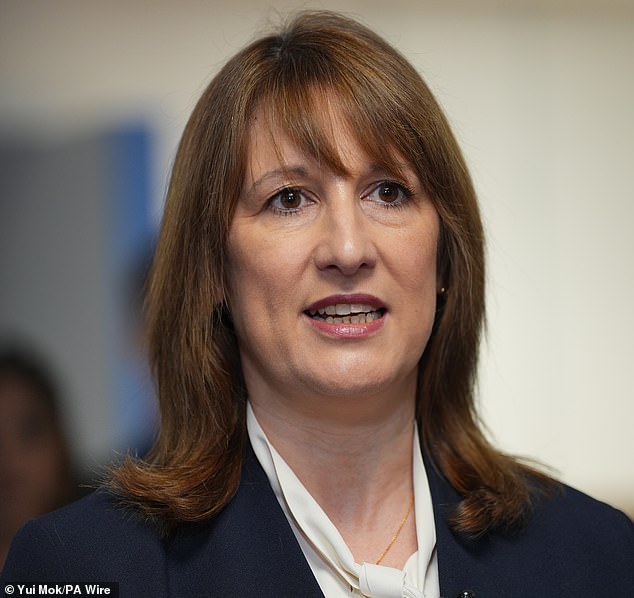
Rachel Reeves was today warned she could be facing another black hole in the public finances as she prepares for her Spring Statement.
The Institute for Fiscal Studies (IFS) said, while next week’s economic update is expected to be a low-key affair, the Chancellor might face a fresh headache later in the year.
In a new analysis, the think tank pointed to a drop in net migration and ‘subdued’ tax receipts as looming risks.
These are ‘unlikely to crystallise into a major problem’ for Ms Reeves at her Spring Statement but ‘could create considerable fiscal challenges later in the year’, the IFS said.
It added the Chancellor’s fiscal rules ‘could come back into focus’ by the time of her next Budget in the autumn.
The analysis will spark fears that Ms Reeves might have to raise taxes yet again if she faces a fresh scramble to balance the books this year.
The run-up to last year’s Budget in November was dominated by feverish speculation about the size of a black hole in the Chancellor’s spending plans.
Ms Reeves added to the sense of alarm about the country’s finances by using a highly unusual pre-Budget speech to warn of ‘hard choices’.

Rachel Reeves has been warned she could be facing another black hole in the public finances as she prepares for her Spring Statement

In a new analysis, the Institute for Fiscal Studies pointed to how latest data showed net migration significantly below the OBR’s forecast for 2025

The think tank also said, despite higher-than-expected inflation and wage growth, tax receipts over 2025 were ‘somewhat subdued’
The Chancellor was later accused of misleading the public when it emerged the Office for Budget Responsibility (OBR) watchdog had actually told her she had a small surplus.
She was subsequently accused of lying to voters in order to justify her £30billion package of tax hikes.
In its analysis, the IFS pointed to how latest data showed net migration significantly below the OBR’s forecast for 2025.
A continued fall in net migration – or if it stabilises at a level significantly below the OBR’s forecast – would be likely to ‘materially hit growth in total GDP and overall tax revenues’, it added.
The IFS also said, despite higher-than-expected inflation and wage growth, tax receipts over 2025 were ‘somewhat subdued’.
‘Each issue has the potential to put a dent in the forecast for tax revenues at some point in future – including when performance against the fiscal rules is formally assessed again this autumn,’ the think tank said.
Nick Ridpath, research economist at the IFS and an author of the analysis, said: ‘The Chancellor looks set to follow through on her commitment to hold only one fiscal event per year, which means next week’s Spring Forecast is unlikely to contain any big policy surprises.
‘However, a new forecast from the OBR may shine a light on emerging risks to the medium-term borrowing outlook.
‘A sharp decline in net migration has the potential to reduce future tax revenues.
‘The OBR will likely wait for more data before updating its medium-term outlook, but if recent trends do continue, the Chancellor’s fiscal rules could come back into focus by the Autumn Budget.’