



For the most part, Nintendo is synonymous with cartridges. For better or worse, the company stuck with the technology in 1996’s Nintendo 64 game console at a time when Sony and others were championing CD optical discs, and the modern Switch and Switch 2 hybrid devices use cartridge-adjacent flash cards to store physical games onto.
For a while, however, Nintendo was all-in on optical-based storage, both with the GameCube and then later with the Wii. This all culminated in 2012’s Wii U, which served as the final (and, in retrospect, the ultimate) Nintendo home console to ship with an optical drive.
 Quiz
QuizBlu-ray and DVD technology
Trivia challenge
From spinning discs to high-definition glory — how much do you really know about Blu-ray and DVD?
HistoryHardwareFormatsCapacityStandards
In what year was the DVD format officially launched for consumer use?
That’s right! DVD was officially launched in Japan in November 1996, before rolling out to North America in 1997. The format was developed by a consortium of major electronics companies including Sony, Panasonic, and Philips.
Not quite — DVD launched in Japan in November 1996. It then made its way to North American markets in 1997, quickly displacing VHS as the dominant home video format over the following years.
What colour laser does a standard Blu-ray player use to read discs?
Correct! Blu-ray players use a blue-violet laser with a wavelength of 405nm. This shorter wavelength compared to the red laser used in DVDs allows data to be packed much more densely on the disc surface.
The answer is blue-violet, with a wavelength of 405nm. This is actually what gives Blu-ray its name. The shorter wavelength compared to the red laser in DVDs is what enables the significantly higher storage capacity.
What is the storage capacity of a standard single-layer Blu-ray disc?
Spot on! A single-layer Blu-ray disc holds 25GB of data. Dual-layer discs double that to 50GB, while newer BDXL triple-layer discs can hold up to 100GB, making them ideal for 4K Ultra HD content.
The correct answer is 25GB for a single-layer Blu-ray disc. Dual-layer discs hold 50GB, which is why most feature films are released on dual-layer media to accommodate high-bitrate video and lossless audio tracks.
Which format did Blu-ray defeat in the high-definition disc format war of the mid-2000s?
Exactly right! Blu-ray defeated HD DVD in a format war that concluded in early 2008. The turning point came when Warner Bros. announced it would exclusively support Blu-ray, prompting Toshiba to discontinue HD DVD shortly after.
The correct answer is HD DVD, backed primarily by Toshiba and Microsoft. The format war ended in February 2008 when Toshiba officially discontinued HD DVD after Warner Bros. threw its exclusive support behind Blu-ray.
What is the maximum video resolution supported by a standard Blu-ray disc (not Ultra HD)?
That’s correct! Standard Blu-ray supports up to 1080p (Full HD) resolution at up to 60 frames per second. It was a massive leap over DVD’s 480p standard definition, and helped drive widespread adoption of HD televisions.
Standard Blu-ray tops out at 1080p Full HD resolution. This was a significant upgrade over DVD’s 480p and helped establish the format as the premium home video choice — until 4K Ultra HD Blu-ray arrived to raise the bar again.
Which company originally developed the DVD format alongside JVC, Sony, and others?
Correct! Philips was one of the founding members of the DVD Consortium alongside Sony, Panasonic, Hitachi, JVC, and others. Philips had already co-developed the CD format with Sony, so its involvement in DVD was a natural progression.
The answer is Philips, which co-developed the DVD standard alongside Sony, Panasonic, JVC, and Hitachi among others. Philips had significant experience in optical disc technology, having previously co-invented the CD with Sony back in the early 1980s.
What laser wavelength does a standard DVD player use to read discs?
Well done! DVD players use a red laser with a wavelength of 650nm. This is shorter than the 780nm infrared laser used in CD players, allowing DVDs to store more data, but longer than Blu-ray’s 405nm laser which enables even denser storage.
DVD players use a 650nm red laser. For comparison, CD players use a 780nm infrared laser, while Blu-ray uses a 405nm blue-violet laser. The progression to shorter wavelengths is what has driven increases in optical disc storage capacity over the decades.
What does the acronym ‘BD-ROM’ stand for in Blu-ray terminology?
Correct! BD-ROM stands for Blu-ray Disc Read-Only Memory. It is the standard format used for commercially pressed Blu-ray movies and games, as opposed to BD-R (recordable) or BD-RE (rewritable) formats used for home recording.
BD-ROM stands for Blu-ray Disc Read-Only Memory. This is the pre-pressed, non-recordable format you find on commercial movie and game releases. The Blu-ray family also includes BD-R for write-once recording and BD-RE for rewritable discs.
Your Score
/ 8
Thanks for playing!
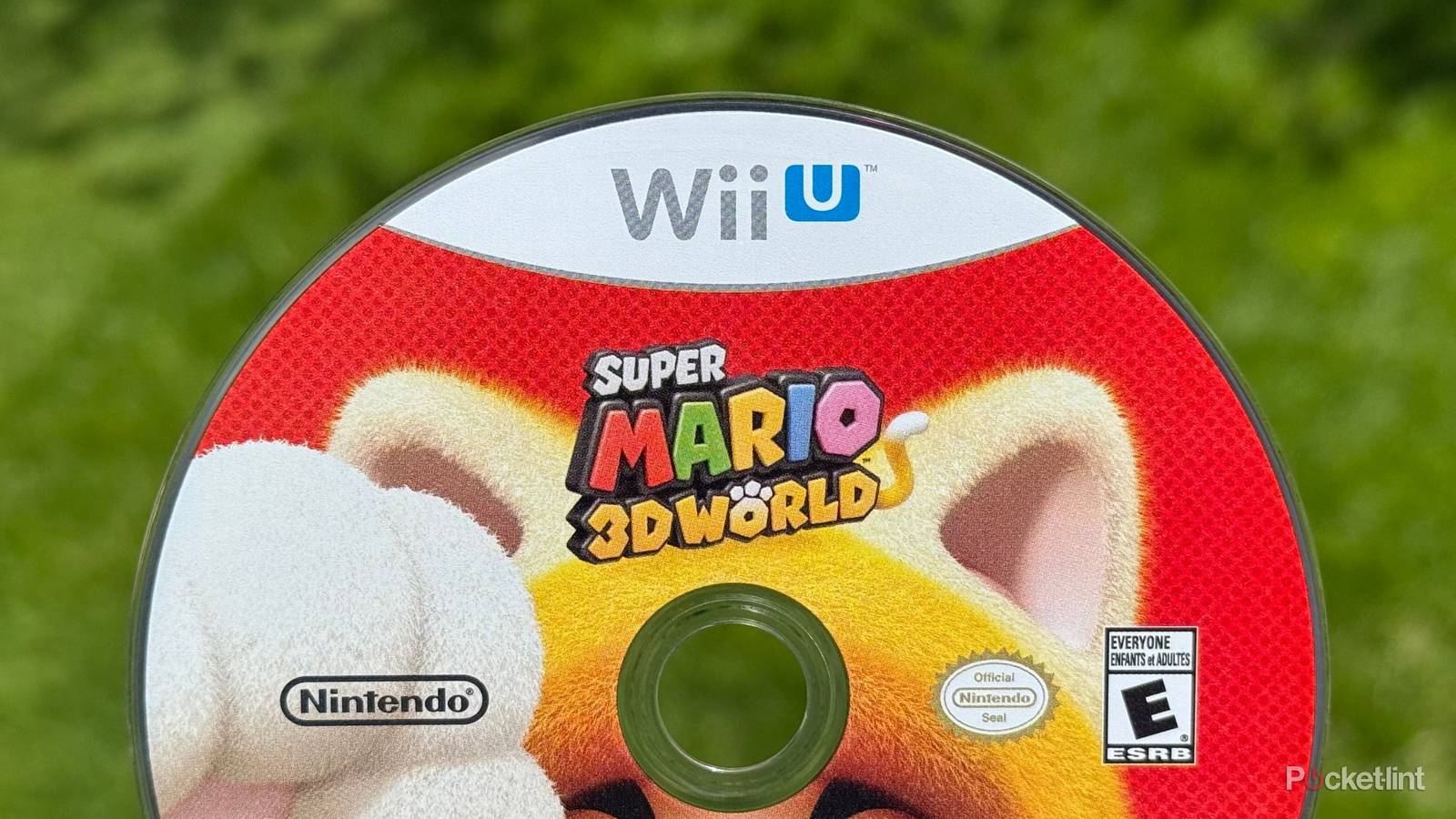
The Wii U’s discs (which were designed in partnership with Panasonic) are based on the Blu-ray format under-the-hood and can store up to 25GB of data, though they are encoded in a proprietary format that makes them incompatible with standard Blu-ray equipment. In all likelihood, this decision was made in order to both dissuade piracy and to avoid the need to pay licensing fees.
While Wii U discs share the same footprint as standard Blu-ray discs, they feature a proprietary physical trait that remains as underappreciated today as it did twelve years ago: a rounded edge design that no other manufacturer or optical disc specification has since matched the likes of.
Soft, pillow-like optical discs are superior
It’s all about those rounded-off edges

Hold a Wii U disc in your hand, and you’ll be immediately struck by how comfortable it is. Each and every disc designed for the console features a rounded-off edge, which feels both soft and luxurious to the touch. It’s a subtle design decision, but it’s also one with an outsized impact on the user experience.
Optical discs are notoriously fragile, and even though modern Blu-ray discs feature a scratch-resistant layer on top of them, they remain all too easy to smudge while handling. The Wii U’s proprietary disc solves this by flaring out the edge such that it’s easier and more comfortable to grip, all while feeling premium in the process.
I’d love for every single film and TV show I own physically to benefit from more comfortable disc handling.
If there’s ever to be a next-generation optical media format to replace Blu-ray and its 4K UHD counterpart, my number one feature request would be to see the Wii U’s disc design be standardized. Personally, I’d love for every single film and TV show I own physically to benefit from more comfortable disc handling.
While the idea of a new optical disc format sounds farfetched, today’s physical media comeback means that it’s still within the realm of possibility. The good news is that rounded optical discs have already been proven to be scalable at a mass production level, owing to the collaborative effort between Nintendo and Panasonic for use on the Wii U. The Wii U itself may have been a commercial failure, but that doesn’t mean the technology developed for it isn’t worth revisiting or championing.