


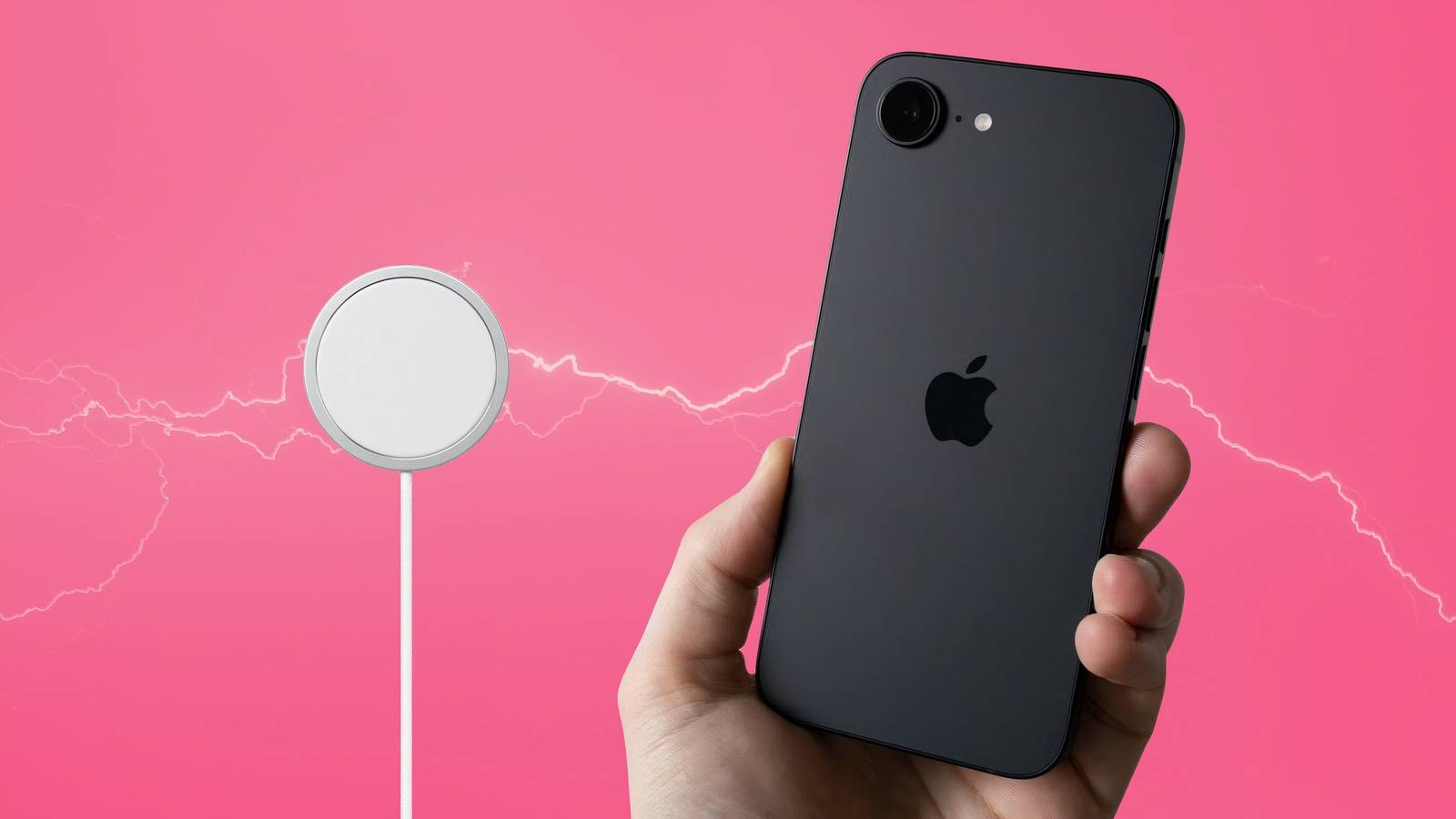
There’s a huge discrepancy in charging between smartphones designed in the US and South Korea and the ones designed in China. If you’re American or Canadian, there’s a good chance you’ve never even been aware — Apple’s iPhone and Samsung’s Galaxy phones are so dominant in the North American market that Chinese brands like OnePlus are a blip, and even Google has struggled to grow its marketshare. There isn’t much in the way of brand migration going on.
You’re really missing out, though. Consider the iPhone 17 Pro. It supports 40W wired chargers, and 25W wireless MagSafe charging. You might be really impressed by that if you’re coming from an earlier iPhone, until you realize that using specialized tech, the OnePlus 15 can handle up to 100W wired, and 50W wireless — and that’s just the scaled-back Western model. Unrestrained, the phone tops out at 120W. Even with a colossal 7,300mAh battery, that’s enough to charge from 0 to 50% in 20 minutes, and reach 100% in less than an hour.
While some Samsung, Google, and Motorola phones charge faster than iPhones, the fact remains that all of those are being beaten not just by OnePlus, but by other Chinese brands like Huawei, Oppo, Honor, and Xiaomi. So what gives? Why isn’t 100W-plus charging de facto from some of the companies that helped pioneer smartphones in the first place?
A tale of two radically different markets
A split in corporate and consumer attitudes

Ultimately, the situation can be chalked up to the very unique phone markets in North America and China. From that, a lot of consequences flow.
The key factor in North America is Apple. The iPhone was not only homegrown, but a massive hit that most of its competitors couldn’t replicate — rivals like Nokia went from leaders to being also-rans, and BlackBerry maker RIM was forced to exit the phone game entirely. In the US, Apple has reigned without any serious challenger for years. Apple controlled a full 50% of US smartphone shipments in Q3 2025, according to Counterpoint Research. Samsung came a distant second at 24% — only achieving that position because it was one of the earliest Android phone makers, and arguably the first to provide a meaningful alternative to the iPhone. In 2026, if you’re not buying an iPhone as an American, you’re probably buying a Samung Galaxy device.
Conversely, the Chinese market has long been Android-centric. The iPhone didn’t reach the country (officially) until October 2009, and local phone brands were naturally going to latch onto a readymade platform they could adopt at zero cost.
There’s strong incentive for Chinese firms to spend more on faster charging and better battery tech, whereas the North American market lacks much competition, and is relatively stagnant.
This might not sound like it has anything to do with charging yet, except that Android makes it very easy for a person to switch brands on a whim. The same apps and services are available from just about any company, so to attract or simply hold onto customers, Chinese phone makers have to compete on either price or hardware specs. There’s strong incentive to spend more on faster charging and better battery tech, whereas the North American market lacks much competition, and is relatively stagnant. Apple, Samsung, and others do have to offer reasons to upgrade from older devices — but they know you’re probably going to stay in their respective ecosystems. Even Google is likely counting on repeat customers, given how many Android features are Pixel-exclusive.
There’s more going on, though. The Chinese tech industry is seemingly more wiling to take risks, which is something I know well from another interest of mine, electric unicycles. To keep things on topic, though, it’s not just about increased heat from higher charging speeds. They’ve also developed proprietary charging systems, and more recently, begun incorporating silicon-carbon batteries. These are a variation on lithium-ion packs that offer better energy density, but with the need to account for increased expansion while they’re in use. Apple, Samsung, Google, and Motorola may all be worried about their image if something goes wrong, given some infamous incidents in the past, like battery fires with the Galaxy Note 7. Lawsuits, recalls, and bad publicity could prove devastating in Western markets — especially for a company like Apple, which touts itself as a “premium” smartphone brand.
There are also raw economics at play. Chinese companies don’t have the same overhead as ones from America, or even South Korea, which makes it more practical to use advanced components. Many international firms do, of course, rely on Chinese manufacturing — but if you also have to pay for expensive American offices with higher labor standards, that eats into profit margins, albeit in a way most people would probably support.
This point is more speculative, but US and Korean companies seem to gravitate more towards universal charging standards. Yes, they have tried standards that encourage buying first-party accessories, but you don’t need a custom wall adapter or cable to get the most wattage. By sticking to relatively standard tech, there’s no need to bundle a lot of accessories or spend resources developing it. Never mind how much you and I might miss the days when an adapter always came in the box.
Is there any hope for the US and Korea to catch up?
Possibly, maybe, hopefully

I suspect it’ll happen eventually. Apple, Samsung and others have been making progress, just gradually. The Galaxy S26 Ultra, for instance, can handle up to 60W, which is probably more than enough for most situations, unless you’re the sort who regularly forgets to charge until 20 minutes before you head out the door. Flexibility is the real benefit of charging and battery upgrades. They make a quick top-up meaningful, so your phone can fit into your habits rather than the other way around.
Within the next few years, smartphone makers are expected to adopt solid-state batteries, which are even better than silicon-carbon in terms of speed and density.
On China’s end, there are probably physical limits to high wattage can go. You’re not going to see a device like the OnePlus 15 maintain 120W or even 100W the entire time you’re charging — it’s just meant to accelerate part of the process. Sustaining that level of power in a smartphone requires cooling, and there’s only so much you can achieve with heat sinks and vapor chambers. Speaking of electric unicycles, the stock charger for my Veteran Patton is so powerful that the charger itself requires fans to keep temperatures in check. That’s acceptable for a PEV, yet I’m not sure anyone would put up with that on a OnePlus 20 or iPhone 20 Pro. It’s odd enough that my iPhone’s nightstand charger has a tiny fan.
I’m hesistant to predict things too far out. Breakthroughs could rapidly alter the story. Within the next few years, in fact, smartphone makers are expected to adopt solid-state batteries, which are even better than silicon-carbon in terms of speed and density. Who knows — it’s possible that Apple, Samsung, and Google will skip silicon-carbon entirely. By 2030, the notion that there was any charging gap could become a distant memory.