


Some films entertain us for an evening; others quietly rearrange the furniture of our minds. Dead Poets Society belongs firmly to the latter category. Peter Weir’s 1989 drama, set in the autumn of 1959 at the fictional Welton Academy, introduces us to a world of polished shoes, imposing corridors, inherited expectations, and young men being prepared for futures that have already been chosen for them. Into this carefully ordered universe walks John Keating, an English teacher with an unconventional understanding of education and an almost mischievous faith in the possibilities of the human spirit.
Starring Robin Williams as Keating, alongside Robert Sean Leonard as Neil Perry and Ethan Hawke as Todd Anderson, the film is ostensibly about a group of schoolboys discovering poetry. Yet its concerns stretch well beyond the classroom. It asks what it means to live deliberately, whether obedience is always a virtue, how much of ourselves we surrender to satisfy others, and why art remains necessary even when the world insists that it is impractical.
Its emotional power has not diminished with time because the questions at its heart have not disappeared. We may have left Welton Academy, but many of us are still trying to find the courage to stand on the desk.
1. John Keating: The Teacher We Still Need
While humans have an innate tendency to always gravitate towards the negative, we also have the innate ability to seek the purpose of our lives. And John Keating is unmistakably the one who helped us then and helps us today to look for the same. When he arrives at Welton Academy, he does not simply introduce his students to poetry; he invites them to reconsider the very purpose of learning. In an institution built around tradition, discipline, honour, and excellence, Keating offers something far less measurable: curiosity, independent thought, and the freedom to discover what makes life meaningful.
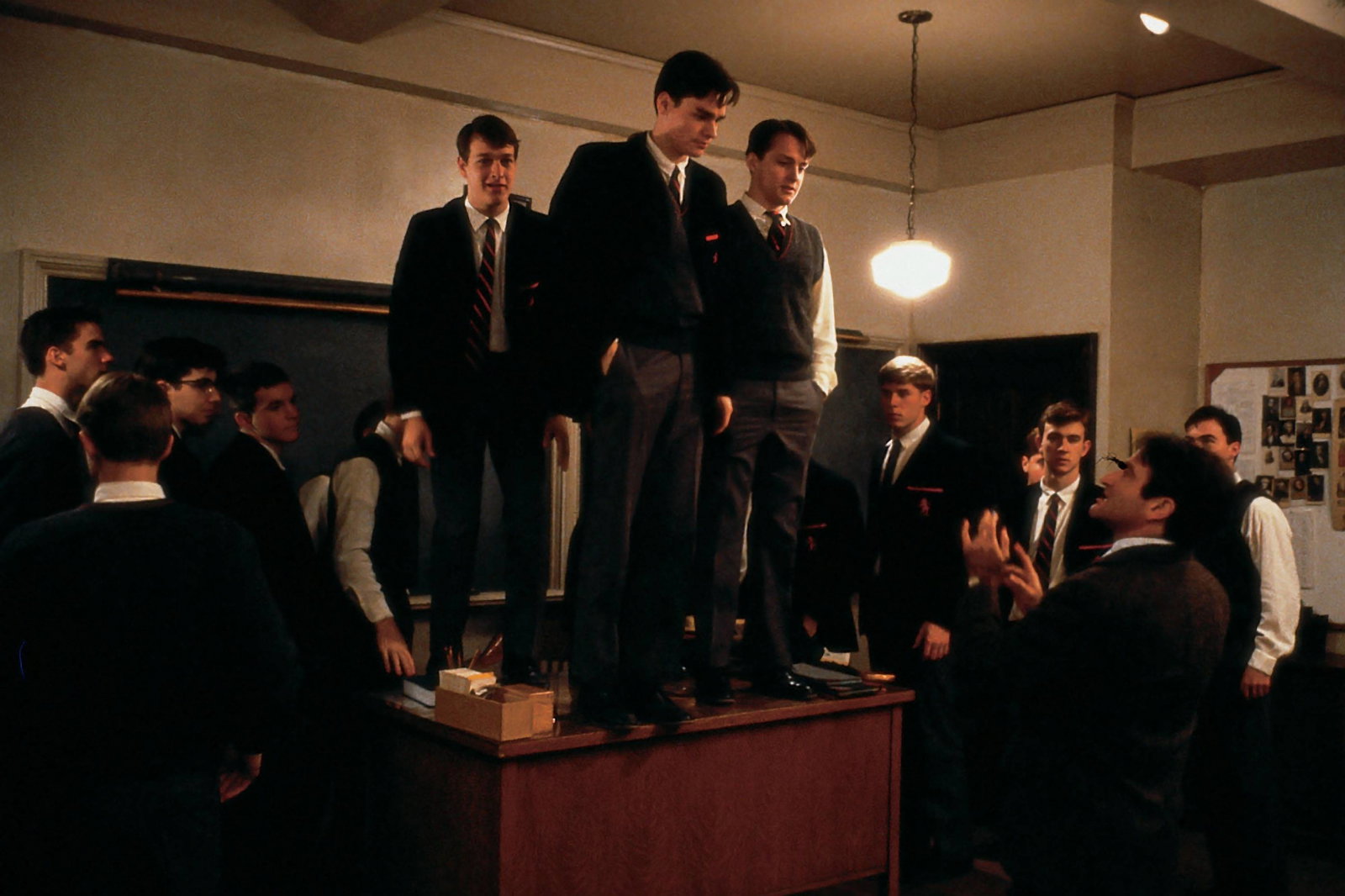
His methods are theatrical, occasionally absurd, and wonderfully memorable. He takes the boys out of the classroom, asks them to look at old photographs, encourages them to stand on their desks, and famously instructs them to tear out the introduction to their poetry textbook.
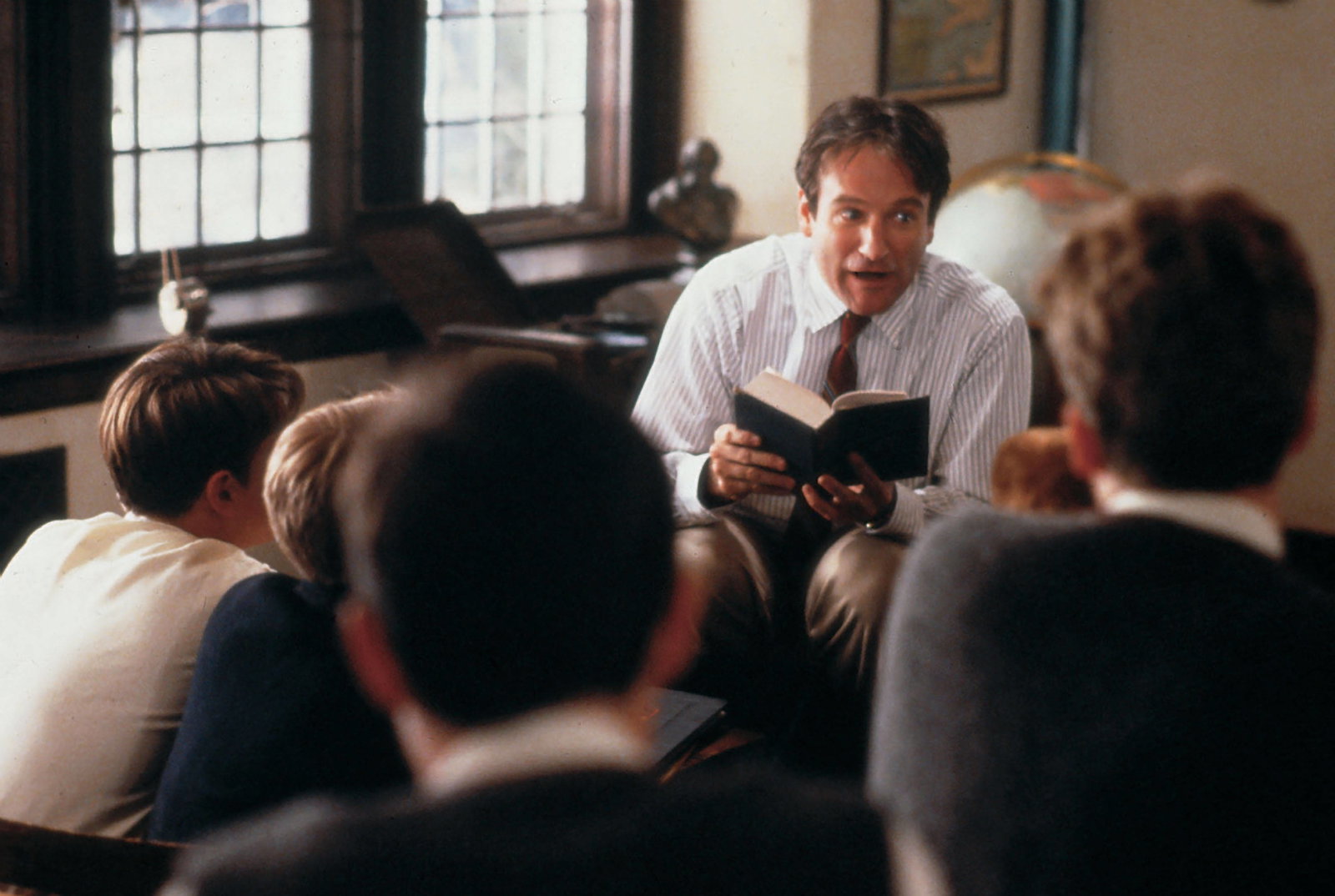
What makes Williams’ performance so enduring is the balance he finds between playfulness and conviction. Keating can be funny without becoming frivolous, profound without sounding self-important. His enthusiasm is infectious, but it is never simply about being liked by his students. He wants them to develop minds of their own, even if that eventually means disagreeing with him.
Even after all these years, Keating is still that English teacher we have all had whose encouragement, support, and understanding pushed us to take leaps we never even would have thought of.
Keating remains a compelling reminder that education should also cultivate imagination, empathy, and intellectual independence. The best teachers do not merely prepare us to pass examinations; they help us ask better questions about the lives we intend to lead.
2. The Timelessness of Carpe Diem
“Carpe diem. Seize the day.” Few cinematic phrases have travelled as far beyond their original story as Keating’s invitation to make life extraordinary. It is easy to understand why. The Latin expression is compact, memorable, and deceptively simple, but in Dead Poets Society, it carries the weight of an entire philosophy.
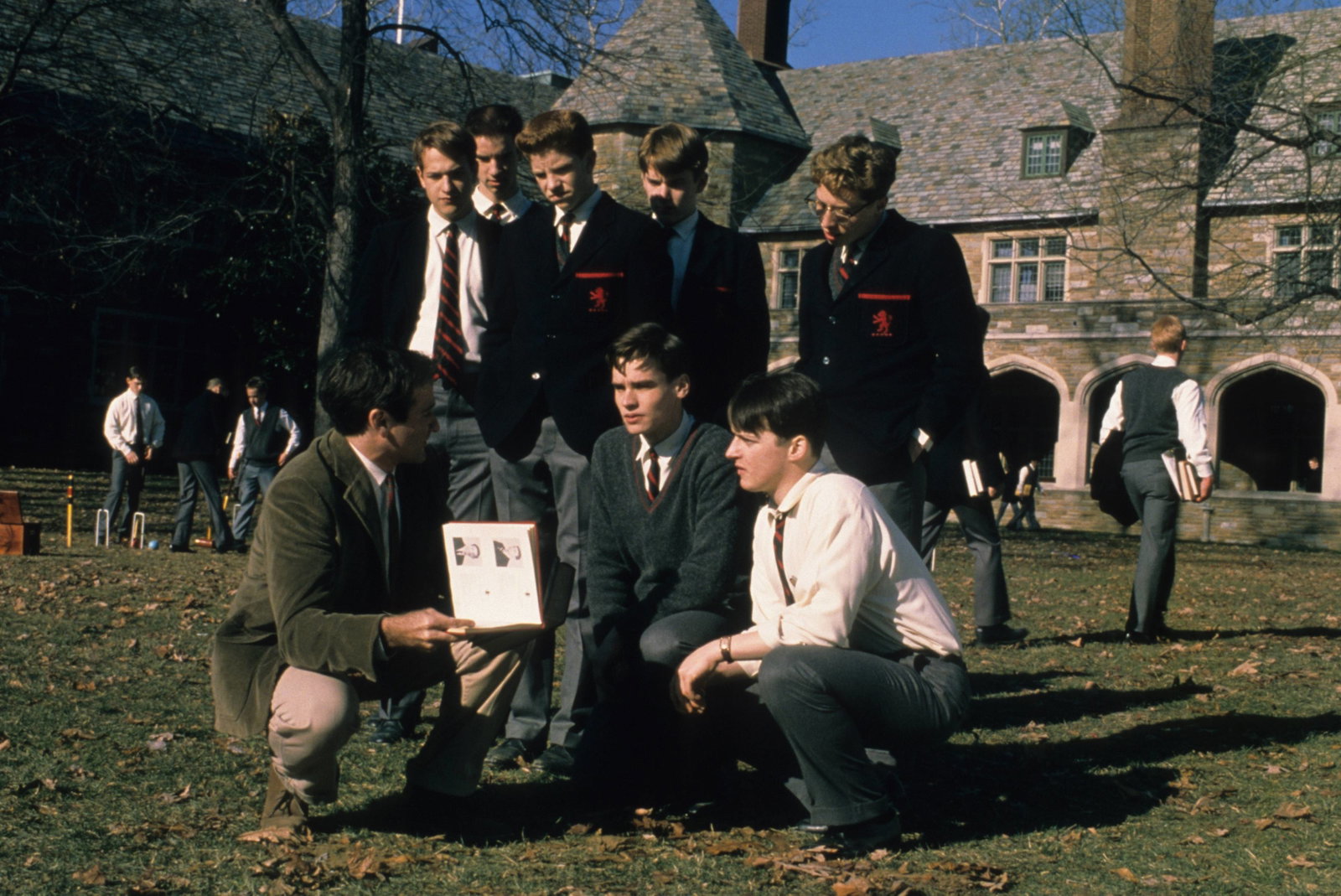
Keating introduces the phrase while showing his students photographs of former Welton boys. Their youthful faces, now belonging to people long dead, become a sobering reminder of life’s brevity. The lesson is not that the future is meaningless or that every passing impulse deserves to be followed. Rather, it is that time is finite, and postponing life indefinitely in the name of some imagined perfect moment can become its own quiet tragedy.
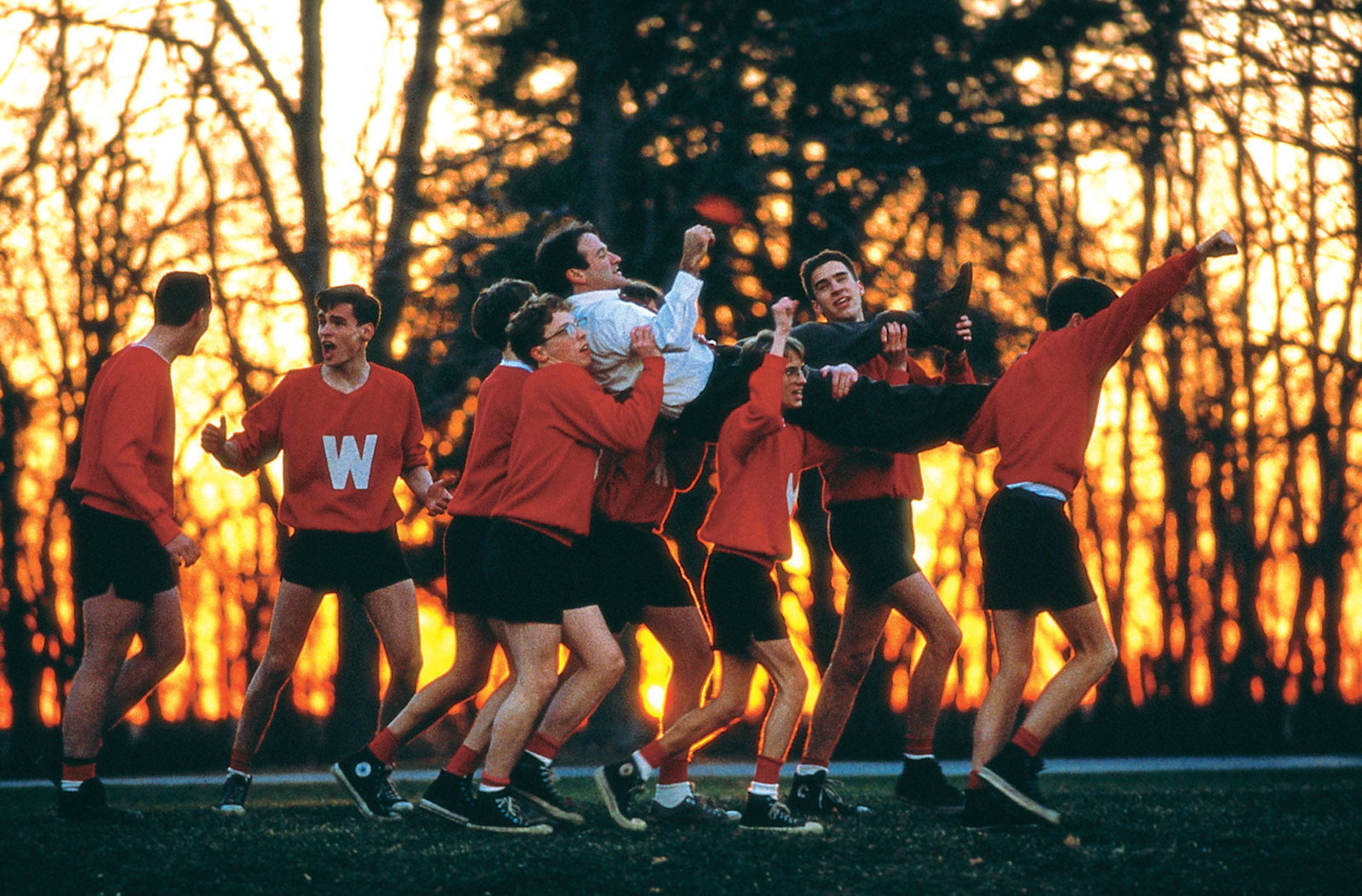
This is what gives the film’s understanding of carpe diem its lasting relevance. The boys are being trained to think in terms of distant rewards: prestigious universities, respectable professions, parental approval, and the social standing that comes with achievement. Keating asks them to consider what happens in the meantime. What becomes of the person who spends so long preparing to live that they forget to live at all?
The phrase also acquires different meanings through the students’ individual journeys. For Knox Overstreet, it becomes the courage to pursue a romantic interest. For Todd Anderson, it gradually becomes the ability to speak with confidence and trust his own imagination. For Neil Perry, the discovery of a passion for acting offers a glimpse of a life that feels genuinely his. Their interpretations are not identical, and the film is careful to show that the freedom to choose can carry consequences.
Indeed, Dead Poets Society does not present seizing the day as a magical solution to every problem. Its tragedy makes that interpretation impossible. Instead, it asks us to recognise that a meaningful life requires more than following a predetermined route. It requires attention, courage, and an awareness that opportunities are not endlessly renewable. In an age of perpetual planning, comparison, and the pressure to optimise every hour, Keating’s message feels less like an old classroom slogan and more like a necessary interruption. Life is not simply the destination waiting after all our responsibilities have been fulfilled. It is happening while we are making those plans.
3. The Courage to Find Your Own Voice
At the centre of Dead Poets Society is a deceptively difficult undertaking: becoming an individual in a world that has already decided who you should be. Welton’s students wear the same uniforms, follow the same rules, and are encouraged to pursue the same narrow understanding of success. Their personalities, however, are anything but uniform. The film’s emotional richness comes from watching them gradually recognise the distance between the people they are expected to become and the people they might actually wish to be.
Todd Anderson provides one of the most affecting examples. Quiet, self-conscious, and overshadowed by the reputation of his academically accomplished older brother, Todd struggles to believe that his thoughts deserve to be heard. His journey is not a conventional transformation from shyness to swagger. It is something gentler and more difficult: learning to trust his own voice. Keating recognises the imagination beneath Todd’s hesitation and gives him the space to express it, particularly in the classroom exercise that culminates in Todd’s spontaneous poem.
Neil Perry’s story, by contrast, is more painful. His discovery of acting awakens a part of him that has little room to exist within his father’s carefully designed vision of his future. Onstage, Neil experiences a sense of freedom and fulfilment that his academic life cannot provide. His passion is not a passing distraction; it is an expression of identity. Yet the conflict between his desires and his father’s authority becomes increasingly suffocating.
These two journeys reveal different dimensions of finding one’s voice. Todd needs encouragement to speak; Neil needs the freedom to pursue what he has discovered. Neither journey is presented as effortless. The film understands that individuality can be frightening, particularly when belonging, approval, and security appear to depend on conformity.
Its famous final classroom scene brings this theme into sharp focus. As Keating leaves Welton, Todd is the first to stand on his desk and address him as “O Captain! My Captain!” Others follow. The gesture is small in physical terms, but enormous in emotional significance. The boys cannot undo what has happened, nor can they instantly transform the institution that has constrained them. They can, however, make a choice about what they believe and whom they are willing to stand behind.
Finding your voice does not always mean making a grand declaration or defying every authority. Sometimes it begins with a poem, an honest conversation, or the decision to stop measuring your worth against somebody else’s expectations. The film’s enduring insight is that a life without self-expression may look orderly from the outside, but it can leave its owner feeling like a stranger within it.
4. Parental Expectations and Academic Pressure
Welton Academy is not the only force shaping its students. The expectations they carry from home are just as influential, and sometimes considerably more difficult to escape. The film’s portrayal of parental pressure is particularly resonant because it understands that control does not always arrive wearing the face of cruelty. It can present itself as concern, ambition, sacrifice, or the belief that parents simply know what is best.
Neil Perry’s relationship with his father is the clearest and most devastating example. Mr. Perry has mapped out a respectable future for his son, one in which academic achievement and professional success take precedence over personal interests. Neil’s involvement in extracurricular activities is treated as a distraction, and his desire to act is dismissed rather than understood. His father sees a promising future that must be protected; Neil sees a life in which he has very little say.
The tragedy lies partly in the absence of meaningful dialogue between them. Neil is unable to make his father understand what acting means to him, while his father cannot recognise that his son’s aspirations are not an act of rebellion for rebellion’s sake. They are a genuine expression of who Neil is. Their conflict exposes the danger of confusing parental guidance with ownership of another person’s future.
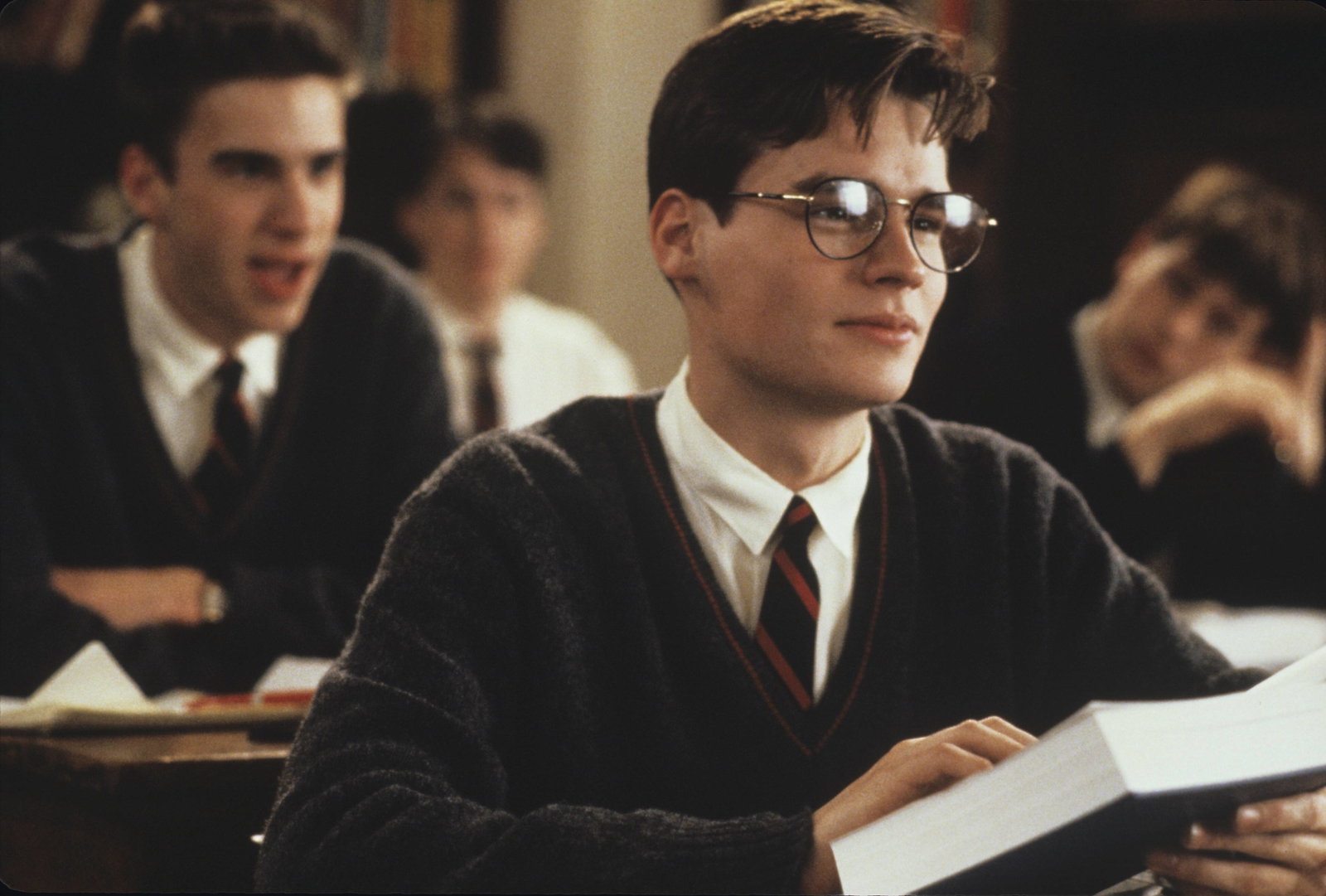
Todd’s circumstances offer a quieter variation on the same pressure. His older brother’s academic reputation casts a long shadow over him, creating an expectation that he must measure up to an established standard. No dramatic confrontation is required for that comparison to take its toll. The pressure has already become internal, shaping how Todd sees himself before he has had the opportunity to discover what he can do.
The film is not arguing that ambition, discipline, or parental involvement are inherently harmful. Nor does it suggest that young people should be insulated from responsibility or difficult choices. Its criticism is directed at a system in which achievement becomes more important than wellbeing, and a child’s individuality is treated as an inconvenience to an adult’s carefully constructed plan.
That distinction remains relevant in contemporary conversations about education and family life. Academic performance can open doors, but it cannot, on its own, tell us whether someone is fulfilled, confident, or emotionally secure. A child is not a résumé in progress, and a successful future cannot be defined entirely by the approval of others. Dead Poets Society asks parents and educators to consider a difficult but necessary question: are we helping young people build lives they can call their own, or simply preparing them to inhabit the lives we have imagined for them?
5. The Power of Poetry, Art, and Literature
Perhaps the most quietly radical idea in Dead Poets Society is that poetry matters. In Welton’s strictly organised world, literature risks becoming another subject to be mastered, analysed, and graded. Keating offers his students a different possibility. Poetry, he suggests, is not an ornamental pursuit reserved for people with too much time on their hands. It is one of the ways human beings make sense of existence.
The revival of the Dead Poets Society gives this belief a physical form. In the secrecy of a cave, away from the school’s rules and watchful authority, the boys gather to read poetry, share their thoughts, and occasionally compose their own verses. The meetings are imperfect, youthful, and sometimes mischievous, but they create something the classroom cannot: a space in which the students can experiment with language and identity without being evaluated.
The film’s affection for literature is not limited to famous lines or literary references. It is interested in what art allows people to do. A poem can give shape to an emotion that is otherwise difficult to express. A play can offer someone a chance to inhabit a different self. A story can make an unfamiliar experience feel intimate. Art does not necessarily solve the problems of the world, but it can change the way we understand them, and perhaps the way we respond.
This is also why the film’s title matters. The Dead Poets Society is not simply a club with an evocative name; it represents a conversation across generations. The boys borrow words from writers who lived before them, discover their own interpretations, and add their voices to a tradition that continues beyond any single lifetime. Literature becomes a meeting place between the past and the present, the individual and the collective.
There is a lovely contradiction at the heart of this idea. Poetry is often considered impractical, yet the film suggests that it speaks to some of life’s most practical necessities: the need to communicate, to imagine, to feel, and to understand ourselves and others. In a culture that frequently asks what a piece of art can produce, sell, or achieve, Dead Poets Society makes a persuasive case for what it can awaken.
The film does not ask everyone to become a poet. It asks us not to become indifferent to poetry, or to the wider world of art and literature. It reminds us that a life measured only by utility can become terribly small. Sometimes we need a book, a painting, a performance, or a few lines of verse to remind us that being alive is not merely a matter of functioning. It is also a matter of feeling.
And perhaps that is why the final image of the boys standing on their desks remains so affecting. They are not declaring that the world has changed overnight. They are acknowledging that something within them has. Keating’s lessons have outlasted his time at Welton because they were never really about a classroom, a textbook, or even a particular teacher. They were about the possibility of looking at the world differently.
More than a story about rebellious schoolboys, Dead Poets Society is a tender argument for intellectual freedom, emotional honesty, and the indispensable place of art in human life. Its questions remain unsettled, which is precisely why the film continues to matter. We still have expectations to negotiate, voices to discover, and days to seize. And somewhere, in a classroom that may not look anything like Welton, there is still a desk worth standing on.
What lesson do you carry from Dead Poets Society even today? Let us know in the comments.


