


In addition to my usual sermon, I’ve got something really special to give away, so keep reading. Or skip to the bottom to get to the good stuff.
I was 16 years old when I got my hands on my first super-telephoto lens. It was a used Soligor 400mm, and if my memory is even close to correct, it was an f/6.3. It was really dark and really slow, though that is partly my fault because I insisted on using my 2x teleconverter all the time. An 800/12.6 is not on anyone’s list of highly desirable lenses, but I was young and still under the impression that bigger was always better. My pictures from that time tell you more about my obsession with the longest lens possible than any particular concern with subject or story. I wish I could tell you I got over that as a teenager.
Fast forward a million years. I was 50 years old when I got my longest/fastest lens: a Sony 600/4.0. This lens retails for close to 20,000 Canadian dollars, and though I bought it used from a friend, it was not inexpensive. But what a lens! Sharp! Fast! All the things! I took it everywhere, and people were very impressed. “Your pictures must be very good,” they all said, when they weren’t doubling their entendres and winking and mumbling about compensating for something.
In both circumstances, as a young man and later when I should have known better, the lenses had an unintended effect: they blinded me to everything that was not a 600mm or 800mm photograph. When you’re a hammer, they tell me, everything becomes a nail, and because I had spent so much money on the hammer—oops, I mean the long lens—and I liked using it and felt like a real photographer when I did, it was what I reached for. Every time. And why not? Wildlife photographers use long lenses, right? The longer the better, right?
It’s not just wildlife photographers. As a younger cultural photographer, I went through a phase with an 85mm lens that had a maximum aperture of f/1.2. A sexy lens to be sure, but that wide aperture and “dreamy” depth of field had me so seduced that I shot everything at f/1.2; during that period, my portfolio was mostly portraits with such thin focus that eyes were razor sharp and noses were just a blur. Great lens, terrible decision-making on my part. The tool came first, not the results, and that was a mistake.
In 2008, Joe McNally wrote The Moment It Clicks. It was (and still is) a fantastic book and a real change in the way photography was taught in written form; Joe held nothing back and kept no trade secrets to himself. As a teacher, he is generous, honest, and self-deprecating, and if you don’t think Joe is a damn fine human being and photographer, I will fight you. Joe has years of experience, and that experience has made him very good at using off-camera flash, and he taught from that experience. At the time, the nearly universal reaction among newer photographers (and those who were just bored) was a wholesale adoption of the techniques Joe taught in the book. Every picture everywhere was being shot with off-camera flash with a warming gel, white balance set to tungsten, ambient light underexposed by a stop or two, whether it made the picture better or not.
Not long after that, HDR techniques became the next big thing, thanks in part to the popularity of Trey Ratcliff’s blog, Stuck in Customs, and suddenly every photographer had a new hammer, every scene was a nail, and every image looked like it came from Trey Ratcliff. It took us a few years to dig out from the homogeny and the ocular trauma of that one.
We can be blinded by a lot of things. I’ve written before about the way our own expectations of a place can make us see less, not more, and get in the way of our best work. I think we can be blinded by rules and the expectations of others, too. And there is such a thing as hammer-blindness. You could call it tool-blindness. It’s a problem because not everything is a nail, and to see the world as if everything needs hammering blinds us to every other possibility.
When the tool comes first, the first thing to go is your perception, but it’s followed quickly by your creativity and your voice. When the tool comes first, the photograph suffers.
When the first thing you do is reach for the 600mm rather than asking what the best tool for the job is, or what other possibilities exist in a scene, you’ll only ever see 600mm scenes, and you’ll miss, for example, the epic landscape or the chance to use a little scale. When everything needs 10 strobes, you’ll miss the beauty and subtlety of natural light. When everything needs HDR, you’ll never see the mystery and mood in the shadows.
This is not the same thing as learning a new tool. I’m all for camping out on a 600mm lens for a while and learning what that longer lens is good for and what it’s not. And it’s not the same thing as intentionally choosing a constraint to explore your creativity. What I mean is the rut into which we so easily fall when we favour a tool, a technique, or an effect over the final photograph—or, in a bigger sense, over our own voice and the stories we want to tell.
Your newest lens (or whatever) isn’t the right one for the scene just because it’s the newest. Or the sexiest, longest, fastest, or the most expensive. Sometimes the scene requires the simplest tools, other times the most complex, but it’s the scene and your vision of it that best determine that, even when that’s your older, crappy, kit lens that impresses no one. Better to impress with your photographs, I think.
Win a Signed Copy of Paul Nicklen’s new book, Reverence.
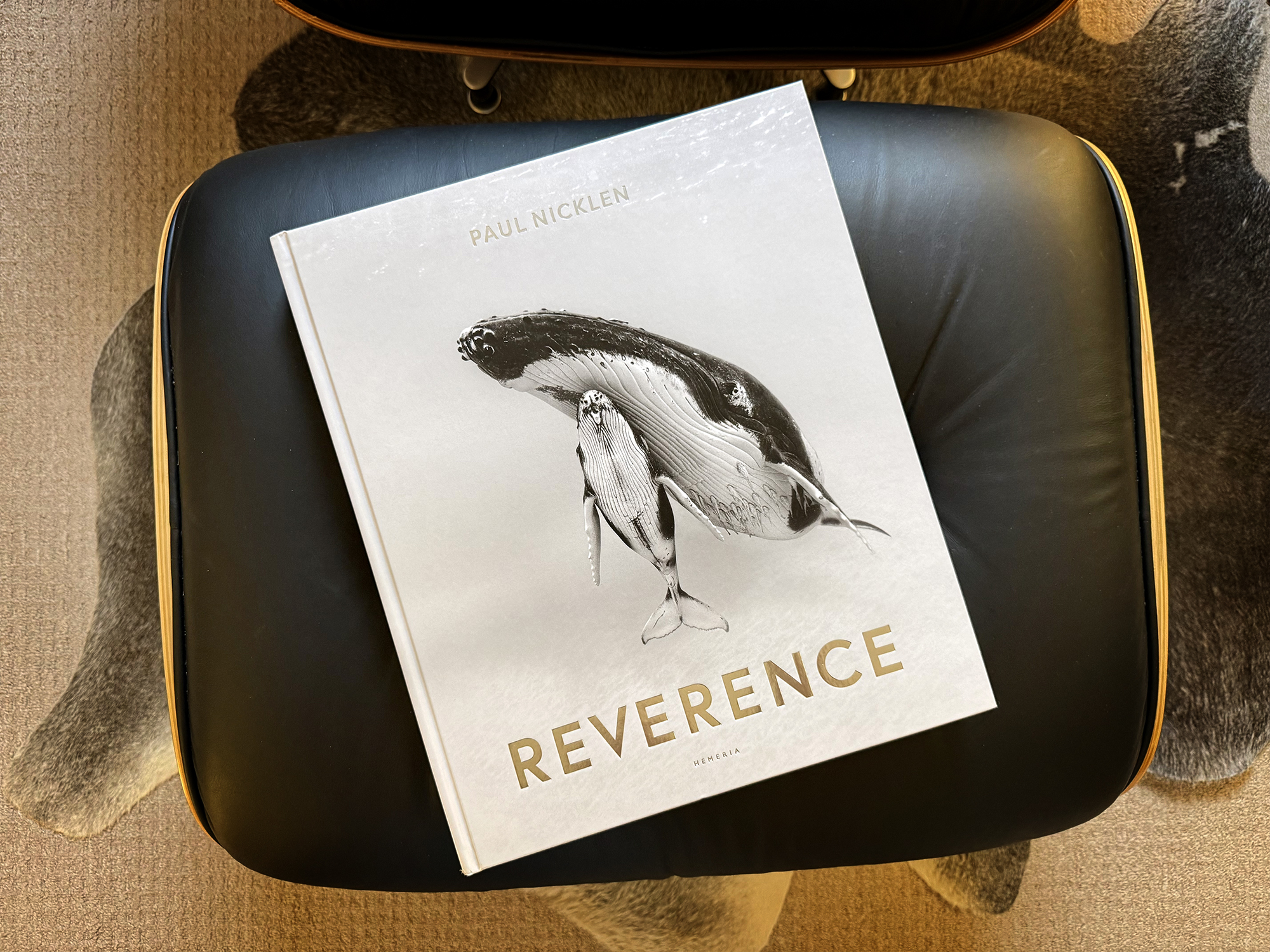
Paul Nicklen’s new book Reverence would make a gorgeous addition to your library, or for the photographer on your holiday gift list. I’ve got a signed copy for one of you. Leave a comment before December 01 and I’ll enter your name for the giveaway.
For the last month, I’ve had one book on the footstool of the lounge chair in my office. I sit with it every morning for a few minutes while my coffee cools and I centre myself for the day. Paul Nicklen’s Reverence is a thing of beauty. I’m lucky beyond words to call Paul my friend. He lives not far from me (when he’s home which isn’t often), and my copy was delivered by hand, for which I was so grateful. But I love Paul’s work so much I paid full price for a signed copy ages ago, and it’s now sitting here, waiting for a new home.
You may have noticed I don’t send out emails recommending gear. But I will recommend books often, because bang-for-buck, I think they’re one of the best investments you can make in your craft. Assuming you spend time with them, absorb them, and study them, a book of photographs will tell you more about photography as an art than 100 of my articles. Reverence is that book for me this year, each photograph a masterclass in seeing and experiencing this planet, each spread an invitation to daydream and move forward in my own craft. The book itself is a reminder that my work needs to get out into the world and be experienced by others if it’s going to have impact beyond Instagram and the small screens of the devices we use more often than not to look at photographs.
Reverence is a (really) big book: it must weigh about 10lbs, and was so obviously made with love. I know that because I know Paul, but you can feel it in the pages, the choice of paper, the thoughtful edits, and the photographs themselves. It is replete with love, for both the animals he photographs and the craft he practices. It’s the kind of book that feels like a gift, which is what the best art always does.
You can get your copy at https://hemeria.com/en-en/products/the-book-reverence. But for one of you, I’ll send a signed copy. Just leave a comment on my blog here before December 01, and I’ll do a random drawing and send it off. Only one of you can win this particular copy, but you can all get your own through the publisher here. I know I will treasure Reverence for years to come, and I hope you will, too. My highest recommendation.
For the Love of the Photograph,
David


