If you have spent any amount of time reading about shoes, listening to shoemakers, or diving into the world of proper footwear, you have probably heard the word “last” used quite often.
“The shoe is on this last.”
“That last fits narrow.”
“This last has a round toe.”
“That last is too elongated for my foot.”
But what exactly is a shoe last? If you are new to the world of proper footwear, you have probably asked yourself this very question.
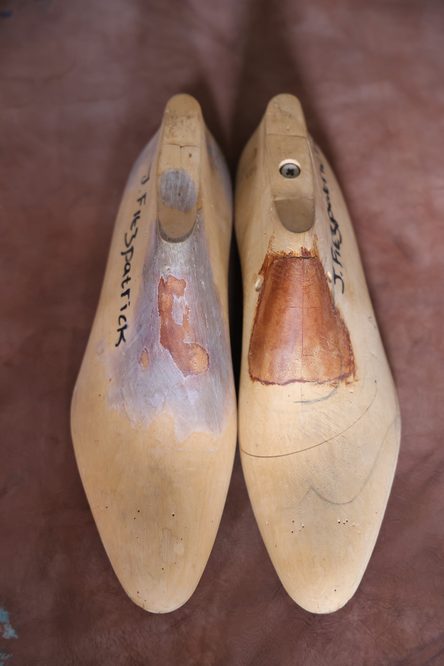
A shoe last is the form that a shoe is made around. It is the shape that gives the finished shoe its fit, volume, toe shape, proportions, and overall character. In many ways, the last is the foundation of the shoe. Without it, there is no real shape to build around.
The upper is pulled over the last. The insole is attached to it during the making process. The shoe takes its final form from it. So when people talk about the importance of lasts, they are not just talking about aesthetics. They are talking about the very thing that determines how the shoe looks and how it fits.
👉Watch/Listen to the full Youtube Video here
The Last Creates the Shoe
A shoe last is not simply a foot-shaped object. It is a carefully shaped form that represents the maker’s interpretation of the foot, style, fit, and design.
Two shoes made from two different lasts can feel completely different, even if they are the same size. One might have a fuller toe box. Another might have a narrow waist. One might have a high instep. Another might have a low-volume fit. One might be round and classic. Another might be sleek and elongated.
That is why lasts matter so much.
When you buy a shoe, you are not only buying the leather, the construction, or the sole. You are also buying the last. And if the last does not work for your foot, the rest almost does not matter.
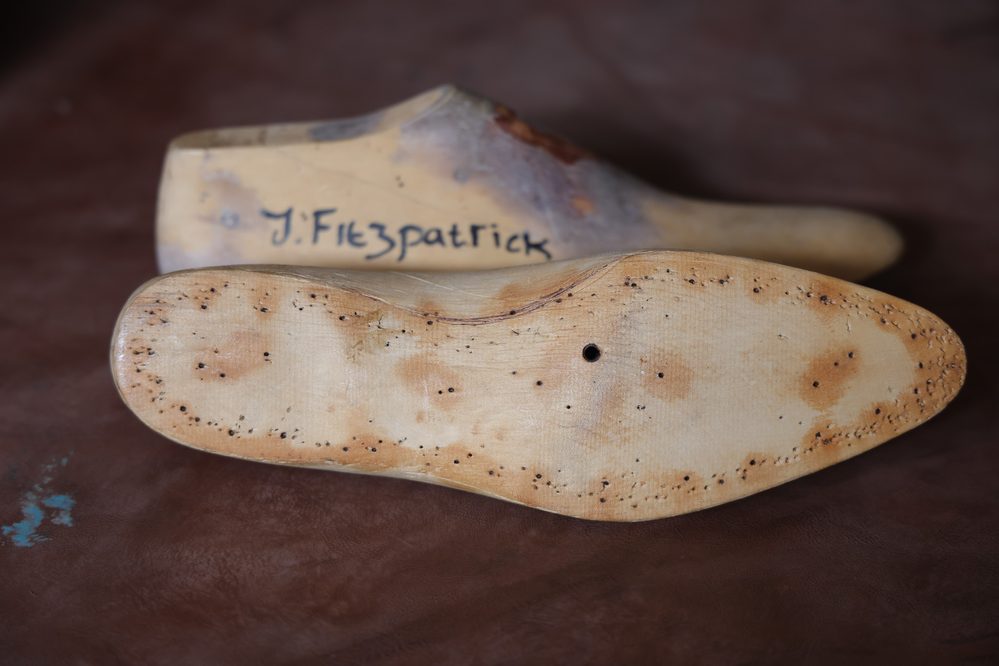
Wooden Lasts: The Traditional Form
The classic shoemaking last is made from wood.
Before mass production, machinery, and modern factory systems, wooden lasts were the standard. A shoemaker would take a client’s measurements and then shape a block of wood into the form needed to make that person’s shoes.
That is still how many bespoke shoemakers work today.
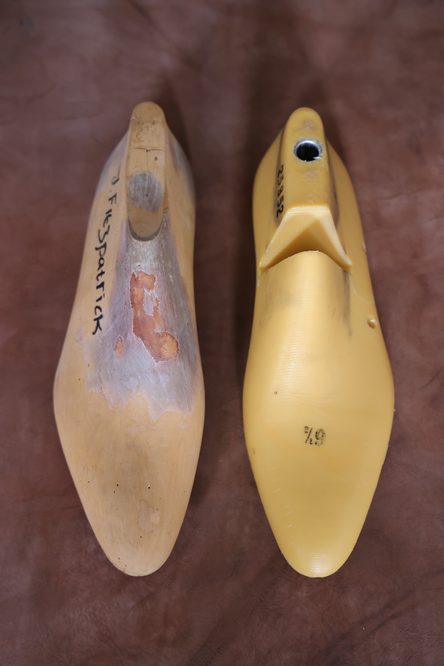
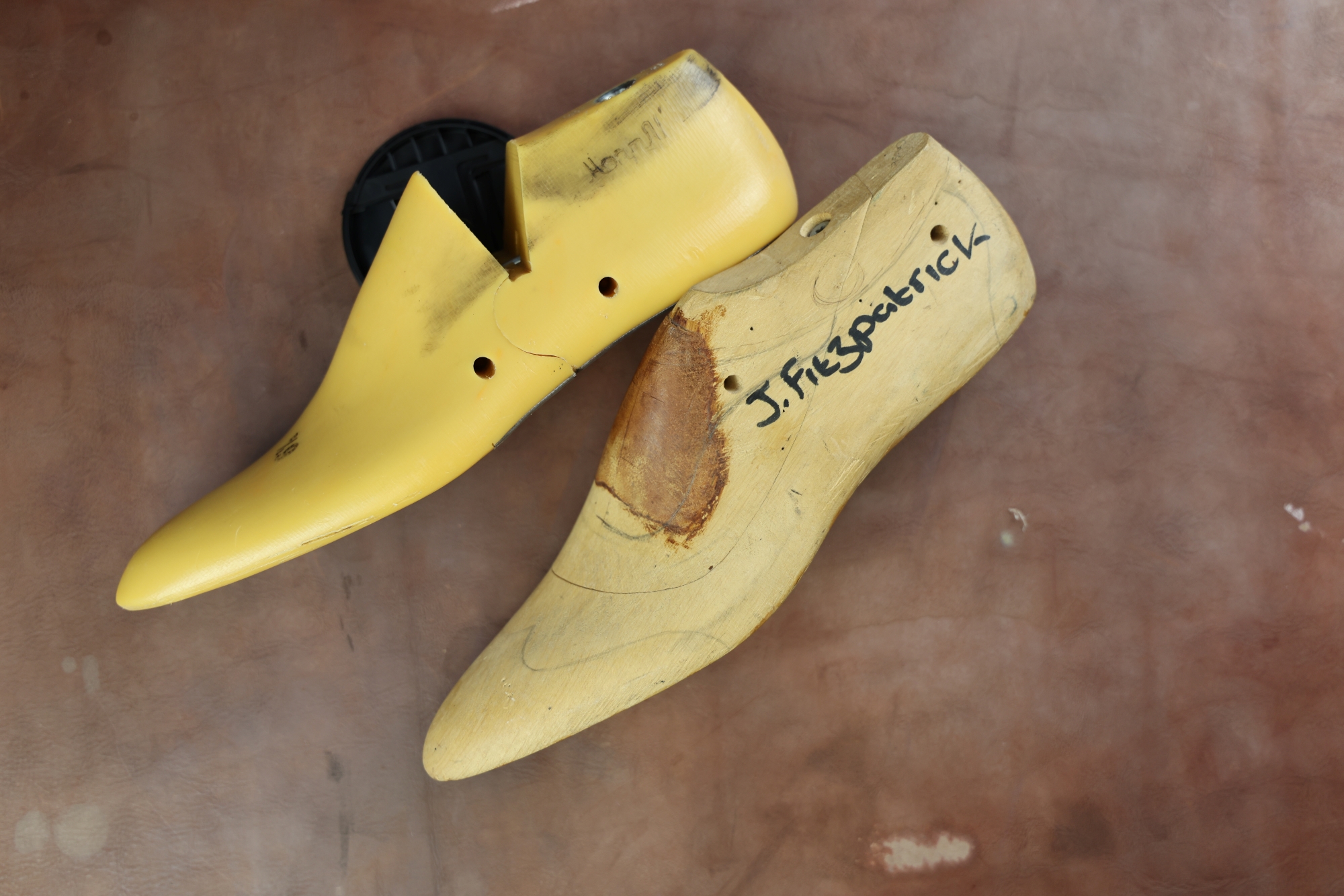
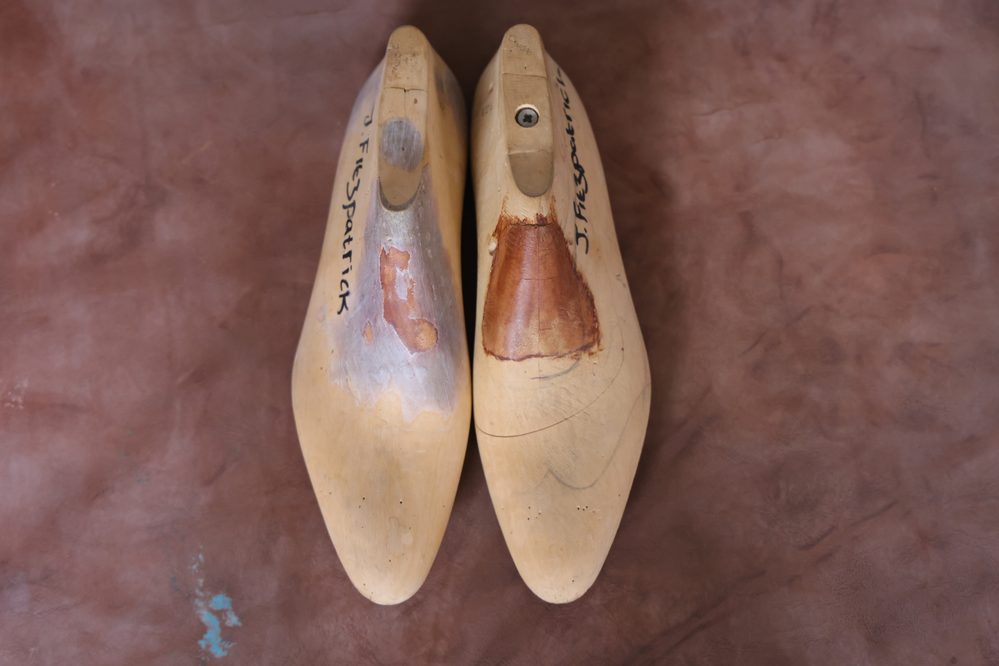
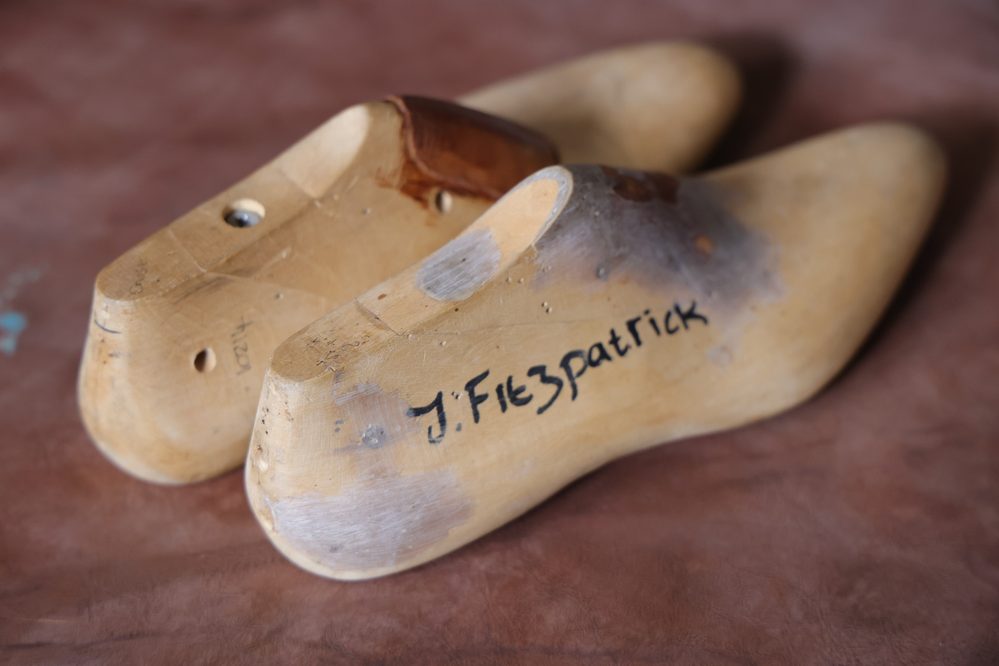
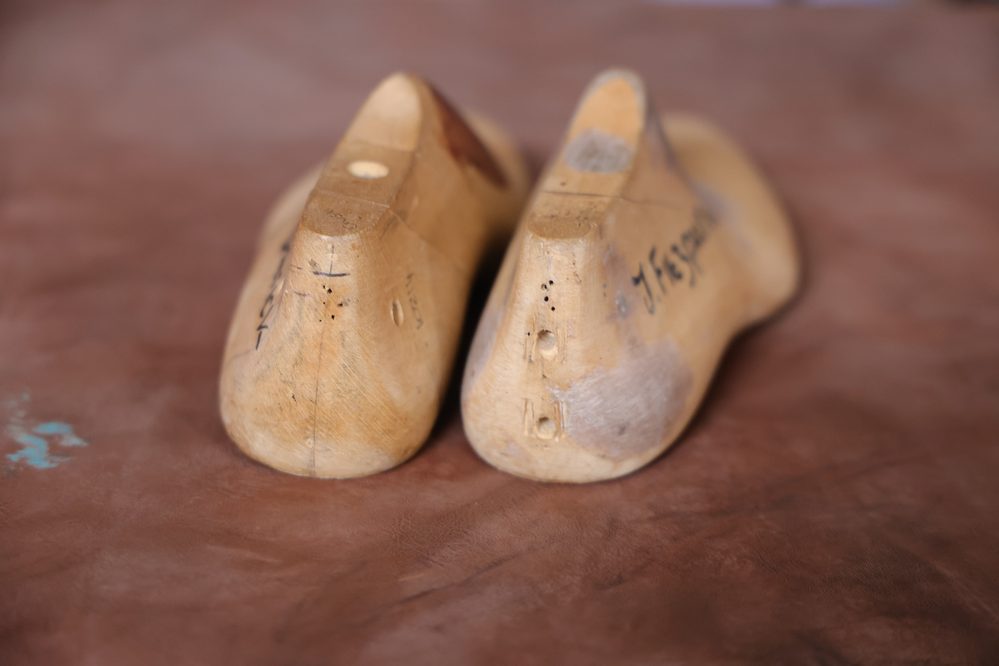
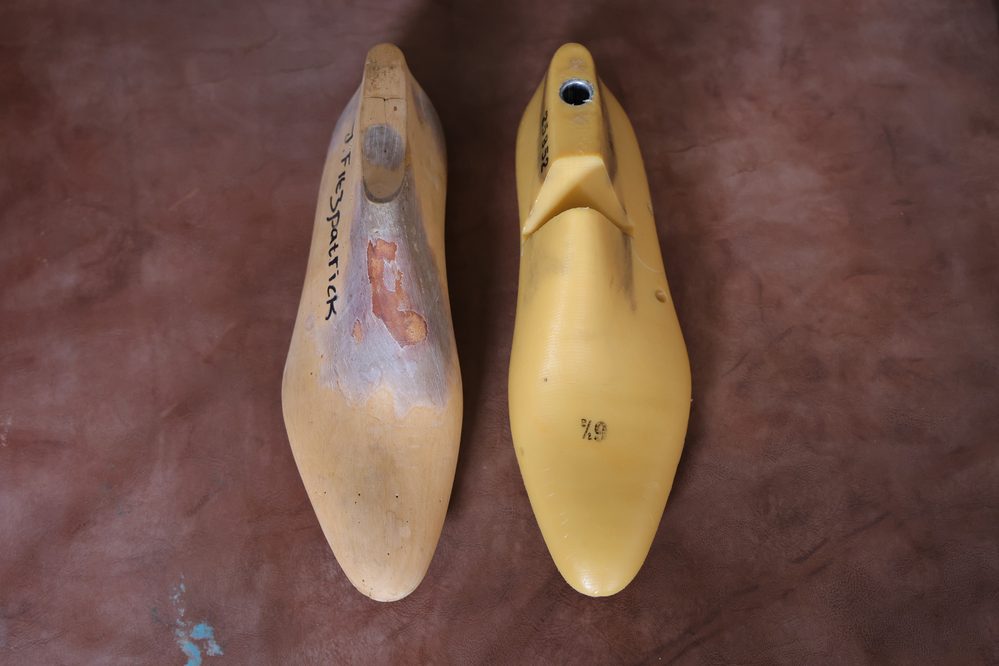
The wooden last shown in my video is a personal last that Tony Gaziano shaped for me years ago, based on my measurements. I used it to make several pairs of bespoke shoes for myself, and you can still see the marks, holes, and signs of use from the shoemaking process.
That is part of the beauty of a wooden last. It tells a story.
Wood is used in bespoke shoemaking for several reasons. First, it can be nailed into. During handmade shoemaking, nails are often used throughout the process, and wood allows the maker to work in that traditional way.
Second, wood can be adjusted. If a client gains or loses weight, if their foot changes, or if a fitting issue needs to be corrected, the shoemaker can add material to the last or take material away. That flexibility is important in bespoke work, where the last is specific to the client and can evolve over time.
This is why wooden lasts remain important in handmade and bespoke shoemaking. They are traditional, practical, adjustable, and part of the craft.
Plastic Production Lasts
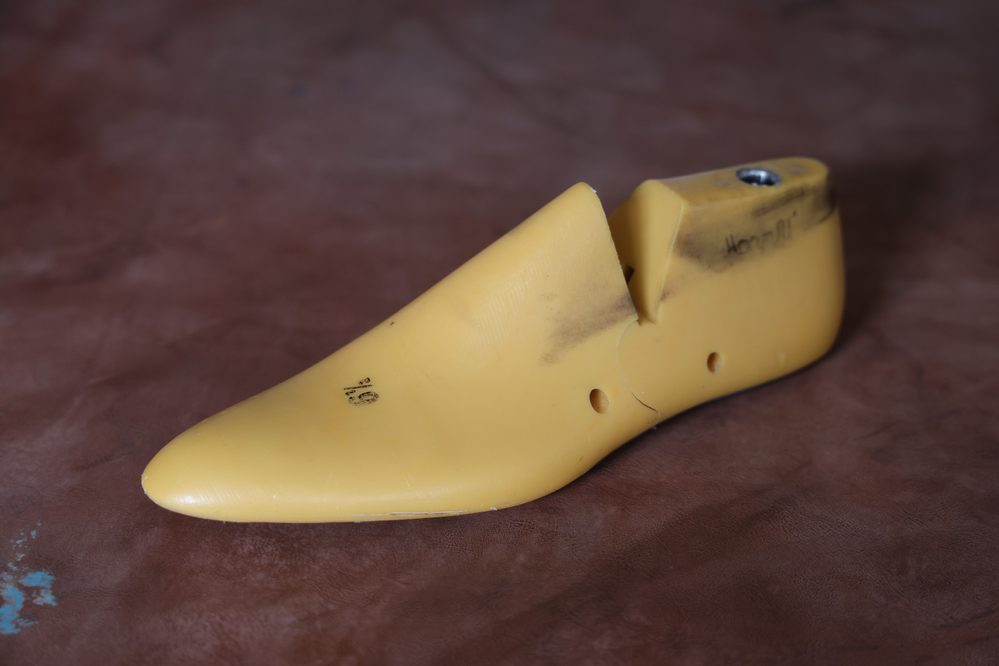
The other type of last shown in the video is a plastic production last.
This is the kind of last you typically find in factory shoemaking. It is made from a very dense, heavy plastic and is designed for repeated use in production. Unlike a wooden bespoke last, this is not shaped individually by hand for one person. It is part of a size run and used to produce shoes at scale.
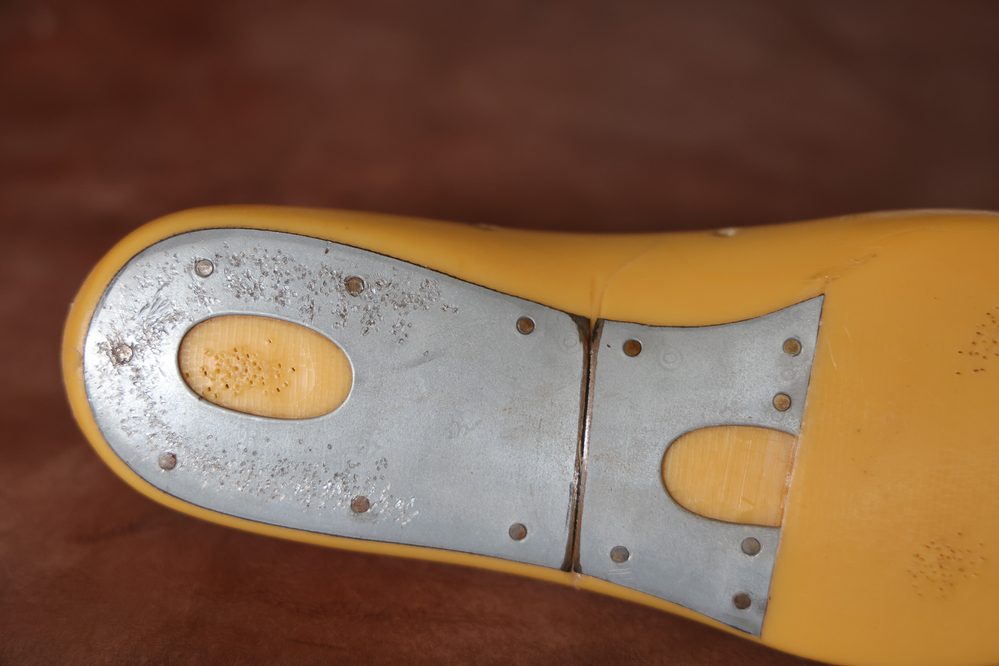
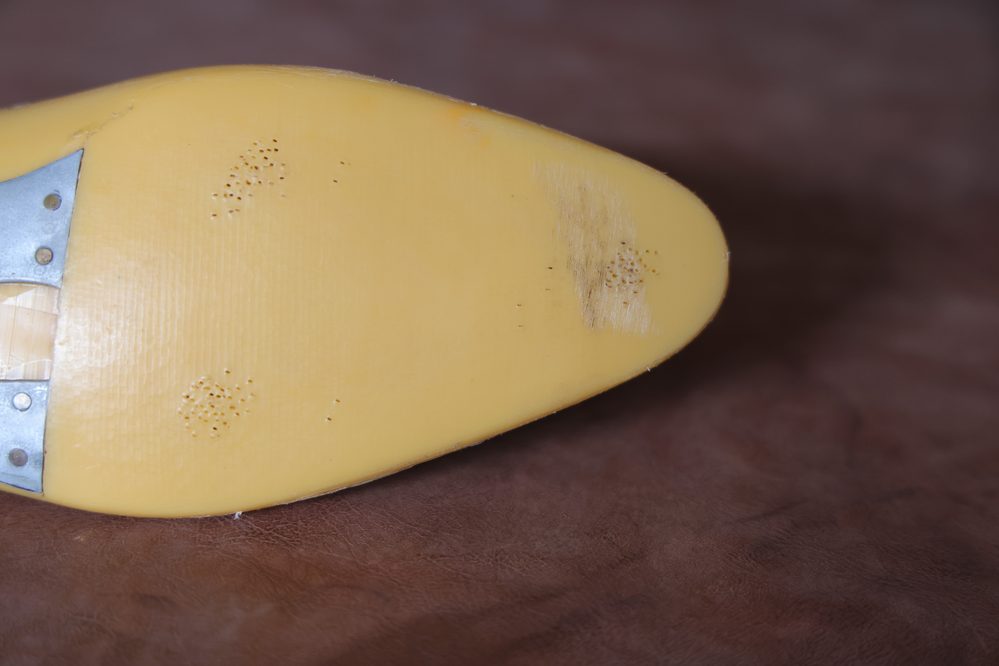
Production lasts are shaped by machines that cut and shave the material down layer by layer until the final form is created. If you look closely, you can often see subtle grooves or marks from that shaping process.
They also have design features that make them practical for factory production. One of the most important is the hinged section. On many plastic lasts, the heel area can move or bend, allowing the last to be removed from the finished shoe more easily.
That matters because once a shoe has been lasted and finished, removing the last is not always simple. A solid wooden form would be far more difficult to extract quickly and repeatedly in a factory setting. The plastic production last is built to solve that problem.
It is durable, repeatable, and suitable for machinery and higher-volume production.
Why the Material Matters
Wooden and plastic lasts both serve the same core purpose: they give the shoe its shape.
But they are used in different environments.
A wooden last is more common in bespoke and handmade shoemaking. It can be nailed into, shaped, reshaped, and modified. It is ideal when the maker is working for one individual client and needs the flexibility to adjust the form over time.
A plastic production last is made for factory use. It is durable, consistent, and easier to use in modern production systems. The hinged mechanism helps with removal, and the dense plastic stands up well to repeated use.
Neither is inherently “better” in every context. They are simply made for different types of shoemaking.
The wooden last belongs to the world of individual measurements, handwork, fittings, and bespoke adjustments.
The plastic last belongs to the world of consistency, production efficiency, size runs, and repeatable manufacturing.
The Last and Fit
One of the most important things to understand is that the last has a huge effect on fit.
People often think shoe size is the most important thing. And of course, size matters. But the last can matter just as much, if not more.
You might wear a size 9 in one brand and a size 9 in another, but that does not mean the two shoes will fit the same. If one last has a narrow toe box and the other is fuller, the experience will be completely different. If one has a higher instep and the other is lower, the same size can feel either comfortable or painfully tight.
This is why shoe people talk about lasts so much. The last is what gives a shoe its personality.
It influences the look, but it also influences the comfort.
A beautiful shoe on the wrong last is still the wrong shoe for your foot.
The Last and Style
The last also determines the style of the shoe.
A round last creates a more classic, fuller appearance. A chiseled last creates a sharper, more angular look. An elongated last can make a shoe appear more elegant, but if taken too far, it can also look exaggerated. A very wide or bulbous last can look sturdy and practical, but sometimes less refined.
This is where shoemaking becomes both technical and aesthetic.
A good last is not just about making a shoe that fits. It is about creating a shape that fits well and looks balanced. That balance is not easy to achieve.
The toe shape, waist, heel, instep, length, width, volume, and proportions all have to work together. When they do, the shoe looks natural and elegant. When they do not, something feels off, even if most people cannot immediately explain why.
Final Thoughts
So, what is a shoe last?
It is the form that a shoe is made around. It is the object that creates the shoe’s shape, fit, and character. It determines the toe shape, the volume, the proportions, and much of the overall feel of the finished shoe.
In bespoke shoemaking, that last is often made from wood and shaped to the individual client. It can be nailed into, adjusted, and reshaped as needed.
In factory production, the last is usually made from dense plastic and designed for consistency, durability, and easy removal from the finished shoe.
Both types of lasts are essential to shoemaking. They simply belong to different worlds.
And once you understand what a last is, you begin to understand shoes in a much deeper way. Because the last is not just a tool. It is the foundation of the shoe.
If you enjoy my educational posts, make sure to check them all out to learn more about the shoe industry and all of its beautiful components.
—Justin FitzPatrick, The Shoe Snob
Shop · Marketplace · Patreon