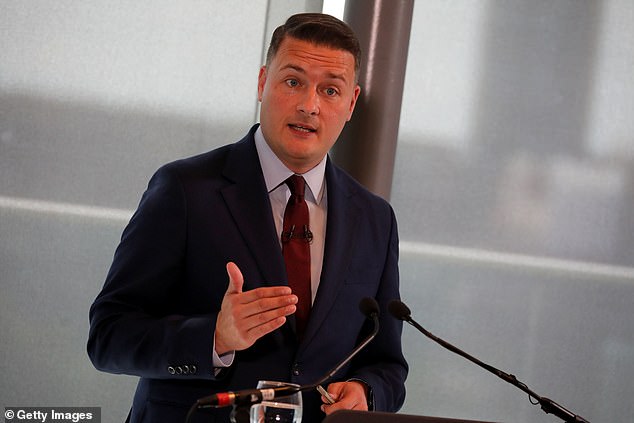
Labour should ditch Ed Miliband’s controversial green energy targets and focus on delivering ‘cheap electricity’, Wes Streeting suggested yesterday.
The would-be leadership contender used a speech on the economy to distance himself from Mr Miliband’s ‘Clean Power 2030’ target, saying high energy costs are ‘holding back businesses and households’.
‘Cheap electricity should be the organising goal of energy policy,’ he added.
The former health secretary said he supported broader efforts to meet the international goal of achieving Net Zero by 2050.
But asked if he supports Mr Miliband’s 2030 target for decarbonising the entire electricity system, he told the Daily Mail: ‘I don’t think we should stick to short-term arbitrary targets.
‘We should look at… whether there is a more credible and sustainable path to Net Zero.’
He also backed ‘pragmatic’ new drilling in the North Sea, with Mr Miliband considering a bid to exploit the Rosebank oil field despite previously describing it as ‘climate vandalism’.
Mr Streeting said: ‘The right approach is not to pretend North Sea oil and gas is the future, or to treat every remaining project as a moral catastrophe.

Labour should ditch Ed Miliband’s controversial green energy targets and focus on delivering ‘cheap electricity’, Wes Streeting suggested yesterday

He also backed new drilling in the North Sea, with Mr Miliband (pictured) considering a bid to exploit the Rosebank oil field despite previously describing it as ‘climate vandalism’
‘It is to manage decline responsibly, apply strict climate tests and channel proceeds to projects that will cut bills and emissions.’
He also took several swipes at Andy Burnham’s Left-wing agenda. The Greater Manchester Mayor has triggered fears of a potential spending spree, saying he does not want to be ‘in hock’ to bond markets.
But Mr Streeting insisted Labour could grow the economy without abandoning its fiscal discipline. ‘Bond markets are not Bond villains, and fiscal rules matter,’ he said.
‘The choice is not between helplessness and recklessness. Markets are rational actors. Give them a plan for growth they can have confidence in, and we’ll see the benefits in gilt yields coming down and minimise wasteful spend on debt interest.’
Mr Streeting said the tax burden had grown ‘too high’ under Labour, indicating he would act to cut taxes on work – initially funded by higher levies on capital gains.
He also rejected Mr Burnham’s complaint that Britain suffered from ‘40 years of neoliberalism’, a claim that appears to encompass the legacy of both Margaret Thatcher and the last Labour government.
‘It’s more complicated than that,’ he said, adding that low inflation and ‘open markets’ had made Britain a ‘magnet for investment’ but also left too many people feeling they did not get their fair share.
‘It bequeathed real, enduring assets… but when crises came they exposed deep weaknesses: low productivity, inequality, unaffordable housing and too many people working harder without getting on,’ he said.
He even backed reforms enacted by Tory chancellor Nigel Lawson: ‘We should return to the system he created by equalising capital gains and income tax while being more generous to genuine investment.’