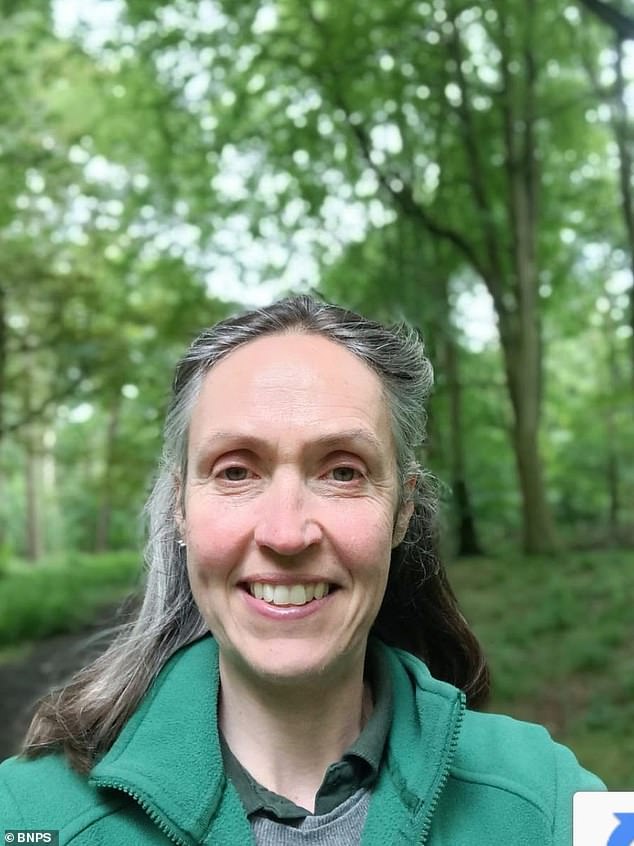
A woman who suffered a bad back injury during a year-long Buddhist retreat took her own life because she could no longer live with the pain, an inquest has heard.
Wellness teacher Claire Rodway, 52, had been fit and active before she went to stay at the remote monastery.
The challenging retreat involved her performing 650 prostrations – a bowing motion that involves fully extending the body on the floor – every day.
It was said that this ritual ultimately left her in debilitating pain.
She also endured a disrupted sleep patter as many teachings took place remotely from Nepal at 2am, an inquest into her death heard.
After five months the former nurse left the Kagyu Samye Ling Monastery on the Holy Isle, an island off Scotland’s west coast.
Ms Rodway, a from Christchurch, Dorset, was diagnosed with fibromyalgia a few months later, which caused her unbearable pain and meant she was unable to volunteer or work.
Ms Rodway was found drowned in the River Avon on October 2 2025.
She had left notes for friends and family describing how the condition had ‘destroyed my life’.
Her family claimed the retreat put vulnerable people’s lives in danger as no risk assessments on participants’ health were carried out when they joined.
The inquest in Bournemouth heard Ms Rodway joining the religious refuge in October 2024.
Her close friend Rosemarie Roberts, who met Ms Rodway when they volunteered for a Buddhist centre in Scarborough, East Yorks, said she had warned her the intense retreat would be ‘very difficult and challenging’.
Ms Rodway said she was confident she could deal with the challenge, but later told Ms Roberts she regretted going to the Holy Isle.
During her stay, Ms Rodway wrote to Ms Roberts to say she was ‘feeling lost’, that her pain ‘was worse’.
As well as the prostrations the retreat also involved evenings spent in complete silence for several hours.

Wellness teacher Claire Rodway, 52, had been fit and active before she went to stay at the remote monastery and performed hundreds of prostrations a day

Senior Buddhist nun Elise Jacobsen, known as Lama Zangmo, told the Bournemouth inquest adjustments were made to address Ms Rodway’s back pain

Ms Rodway, from Christchurch, Dorset, was diagnosed with fibromyalgia a few months later, which caused her unbearable pain and meant she was unable to volunteer or work
Senior Buddhist nun Elise Jacobsen, known as Lama Zangmo, told the Bournemouth inquest that adjustments were made to address Ms Rodway’s back pain.
She was given advice that the prostrations could be modified, such as to a kneeling or sitting position, but said Ms Rodway preferred to do the full-length pose.
She said Ms Rodway had completed 100,000 prostrations in five months, but others had taken years to do them, adding: ‘It’s not a numbers game’.
After leaving the retreat on February 16 2025, Ms Rodway stayed elsewhere on the island until April 2. She went to see her GP about the back pain two weeks later.
By June the pain was so debilitating she had to move in with her mother Christine and was then diagnosed with fibromyalgia on July 3.
Her doctor said she was really struggling with the pain. She was put on strong painkillers and antidepressants and given referrals to the mental health and pain management teams.
She was on a six-week waiting list for pain management when her family reported her missing on October 2 and her body was found on the same day.
A post-mortem examination confirmed the cause of death as drowning.
The inquest heard police officers searched her bedroom and found closed letters addressed to family and friends.
They read: ‘Fibromyalgia has destroyed my life. I have fought it and tried many things to improve it.
‘I have taken many medications to help but it just slowly robs me of more and more.
‘The pain is unbearable by the end of the day, it never goes away from first thing onwards. I feel I already have poor quality of life. I have nothing to give – I can’t volunteer or work.’
Ms Rodway’s family raised concerns about a lack of risk assessment and evaluation of potential participants at the retreat by medical professionals.
Ellen Robertson, counsel for the family, said: ‘It’s a remote island with no medical facilities available.
‘A great deal of people on the retreat will have taken vows of silence, people are undergoing a huge change in their environment.
‘These retreats will always, by their nature, involve a risk of attracting vulnerable people and make people more vulnerable when they are there.
‘The way in which this organisation is operating is not safe.
‘Lama Zangmo said there were no major risks. That as a belief is horrifying, that culture is one that puts people in danger.’
But Helen Richardson, a trustee of the ROKPA Trust, who ran the monastery, said they had a consistent high safety record for their longer retreats.
She said in over 30 years only 6 per cent of retreatants had left early and there were no known occasions of them leaving early due to physical complications relating to the ngondro procedure.
Assistant coroner Richard Middleton gave a conclusion of suicide and said he did not believe Ms Rodway’s death was preventable.
He said he was satisfied the monastery had taken appropriate action to address issues when they arose and doctors had made clinical decisions and appropriate referrals.
Mr Middleton said: ‘I do not believe I can establish a causal link between her time at the retreat and her death.
‘Ms Roberts gave evidence following her meeting with Ms Rodway in June 2025 she described how she had pain throughout her body and fear for the future as she knew it was getting worse and she would not be able to do things that gave her life meaning.
‘She also described the debilitating nature of her condition in notes of intent left immediately prior to her death.
‘Dr Mukherjee said it is difficult to diagnose what may trigger the onset of fibromyalgia.
‘It may not be a single event. it may be events over months or years. It may be possible to isolate a moment in time someone starts to suffer – for example Covid, menopause or the break up of a serious relationship.
‘It may be the boom and bust experience from some sort of strenuous task.
‘Ms Robertson suggested on behalf of the family the unearthing of trauma, the potential one is completing 650 prostrations a day for six months and a fairly disrupted sleep pattern, those three elements could have caused the onset.
‘He said he was unable to say but common sense will say it is possible those three elements could have worsened the fibromyalgia.’
But Mr Middleton said he would not make a preventing future deaths report as the trust had carried out investigations and reviews since Ms Rodway’s death which had ‘raised the bar’ for their rules, principles and standards.