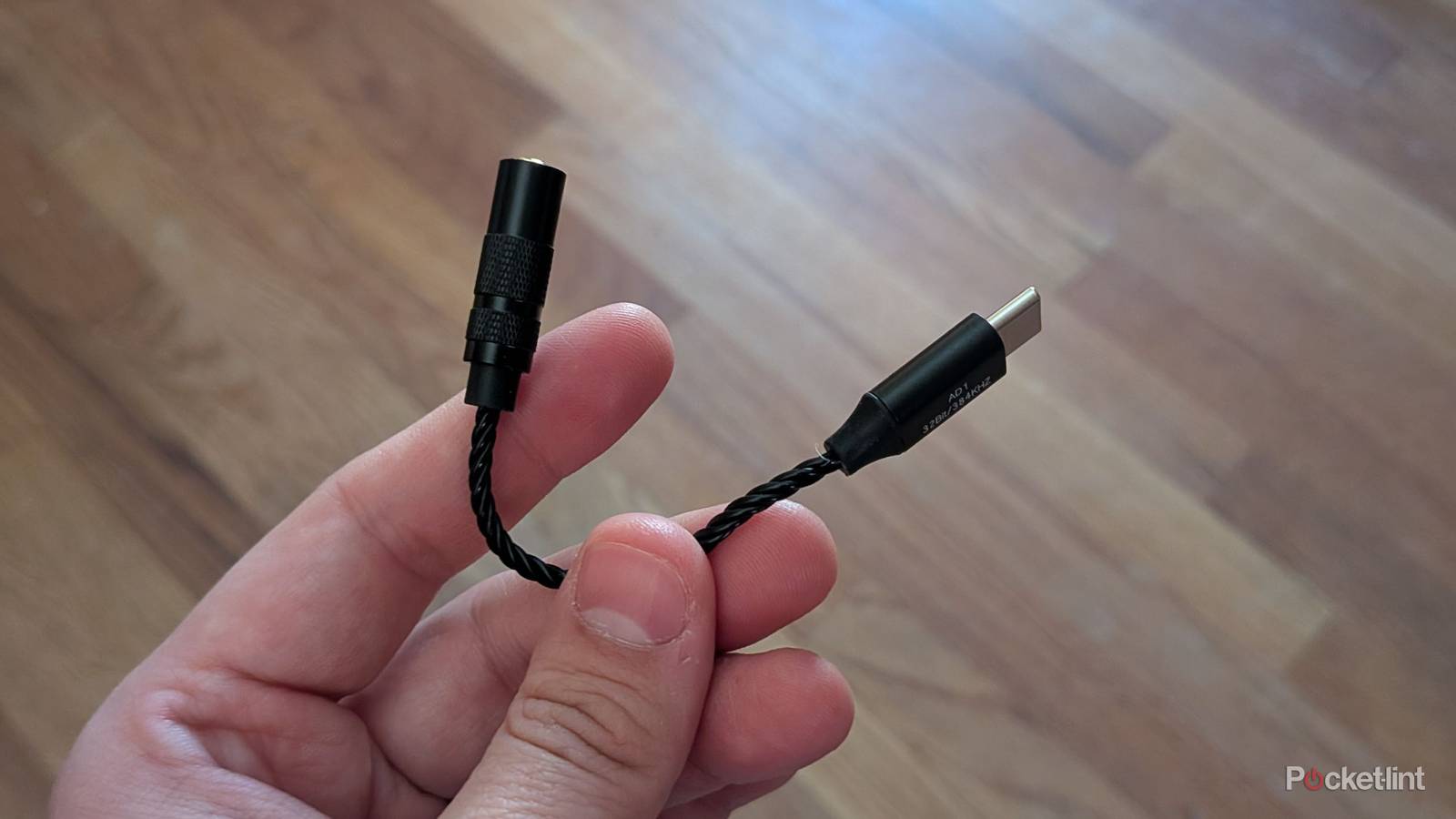
After spending hardly any time doing research, I settled on the Linsoul Kiwi Ears AD1 cable that lets me plug in my headphones. For just $15, I figured there was nothing to lose. What I learned was that even if there is superior sound to be found by using a wired connection paired with a standalone digital audio converter, I just don’t think it’s worth the trouble in most use cases.
Bluetooth is staying with me
USB-C cables can rest

A lot of people like to talk about the death of the headphone jack, and yes, I would agree that it’s annoying to lose it. It makes it so you have to go out and get an extra dongle to continue using your earbuds if you don’t want to get wireless ones. For my specific situation, I wanted a more analog setup where I deliberately choose to do things. That’s what made me gravitate toward the RG Rotate. To me, it helped create a bridge of feeling modern thanks to the Android operating system, but since it didn’t have a constant internet connection once I took it out of my Wi-Fi network, it let me stay offline like the old days. I actually took it on a backpacking trip over the course of the weekend, where the intention was to download a bunch of different podcasts to listen to on my hike. This is what made me realize how annoying the wires were.
Strangely enough, I didn’t end up using the RG Rotate, but I still used my headphones with my phone. My pack has a slot on the strap for my phone, but the only way for it to comfortably have a cable coming out of its USB-C port was to put it in upside down, but that wasn’t much of an issue. I got my phone snug in its pocket, but then I had to funnel that headphone cable through the loops on my backpack strap just to ensure I didn’t have a bunch of extra cable dangling. I wanted to avoid the chance of it snagging on a plant I brushed by, so this seemed like an important step. In hindsight, I didn’t hike a treacherous trail, so I could’ve skipped this step.
All this ended up being a major headache for me. Any time I took off my backpack, which was more often than I would’ve liked since this was my first trip, I had to take my earbuds out and carefully place them in my hip pouch so they didn’t swing around everywhere. After a few times of that, I got careless and let them swing freely, and ended up losing one of the rubber tips to the trail.
Bluetooth would’ve been a lot easier to use in this case. I could’ve certainly been more careful with my wired connection, but in the case of a hike, it feels like it would’ve been a lot easier to just pack a pair of wireless earbuds. Since I was listening ot podcasts, it didn’t matter if I was getting theoretically better audio through a wired connection. The big thing is convenience, and that’s what Bluetooth offers over a wired connection.
USB-C headphone connections still have their place
Maybe don’t go hiking with one

For around-the-house use, I actually don’t mind using wired headphones. The length of the cable isn’t an issue at all for me on the couch. Let me also quell any fears you have about the dongle, too. The dongle itself is rather small, and you can just leave your earbuds permanently attached to it, so it just adds a bit of length to your cable. There’s nothing to worry about losing if you just keep them connected all the time. With the way phones and other devices are omitting headphone jacks, there’s really no reason not to do this.
My RG Rotate has a single speaker that’s placed on the back of the device, so the sound fires away from me during use. A baffling design decision like that means you need to use earbuds — wired or wireless — to get the best audio. I think simple situations like this are where a wired connection still thrives. You can still get the best audio available while not compromising your comfort. It’s time when you’ll be moving around, where Bluetooth pulls ahead. For runners and hikers, it doesn’t make as much sense to use a wired connection. It’s much easier to have your phone tucked away in a pocket while it transmits an audio signal instead of having a wire climb up your body and get in the way.
I really don’t fault anybody for wanting to go back to the old ways, especially since it feels comfy for some reason. The good news is that dedicated audio devices, complete with wired connections, are still around. The issue is that many of these devices are things you have to know about or hear from other people. Sony still makes them, but they certainly are known as mainstream devices. Outside of the big companies, the Snowsky Echo is a cheap MP3 player that does just one thing, and that’s play music. This is a great option for people who still want to listen to music but not have the distraction of their smartphone. There are even cheaper options like the Luqeeg MP3 player, a device that resembles an iPod. Pairing one of these devices with a set of wired headphones is a nostalgia trip for anybody who grew up on devices such as this. What’s nice is that you get the benefit of the modern audio advancements paired with an old-school feeling, so it’s a win-win for everybody. Maybe don’t take it on a hike, though.

- Brand
-
Luqeeg
- Storage
-
64 GB (SD card not included)
- Bluetooth
-
Yes
- Weight
-
33.3g
- Dimensions
-
9x4x0.5cm
- Ports
-
microUSB, 3.5mm