

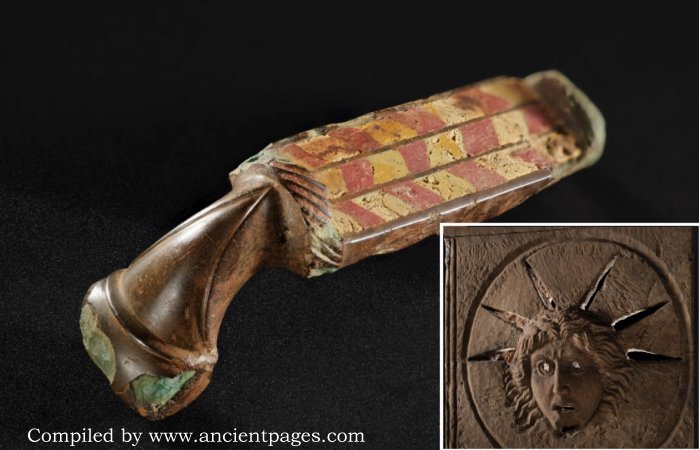
Conny Waters – AncientPages.com – A rare Roman brooch found by a metal detectorist in Midlothian will be displayed for the first time in a new exhibition.
Archaeologists call the bronze brooch a “miniature masterpiece” unique to Roman Britain. It combines local and Roman design, showing off impressive craftsmanship. The brooch is only 6cm long and has bright enamel and smooth, curved metalwork.
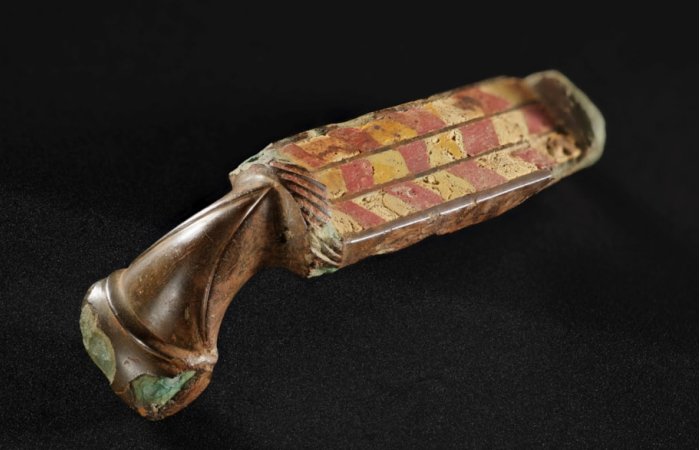
Credit: National Museums Scotland
The enamel is set in small blocks that make red and yellow zig-zag patterns. Scientists found that the surface was once covered with tin, which gave it a silvery shine and made the colors stand out. The design at the top of the brooch is inspired by older Celtic art.
The brooch was found in 2022 near Pathhead in Midlothian, but it was probably made in northern England. Local craftspeople changed Roman brooch designs to include their own styles and tastes. This shows how people kept their traditions while adapting to Roman rule.
Other archaeological finds indicate an Iron Age settlement in the area, with evidence of contact with Rome. A brooch this rare and valuable was probably not something you could buy or trade. It was likely given as a special gift from the Romans to a local leader, showing status and favor under the new rulers.
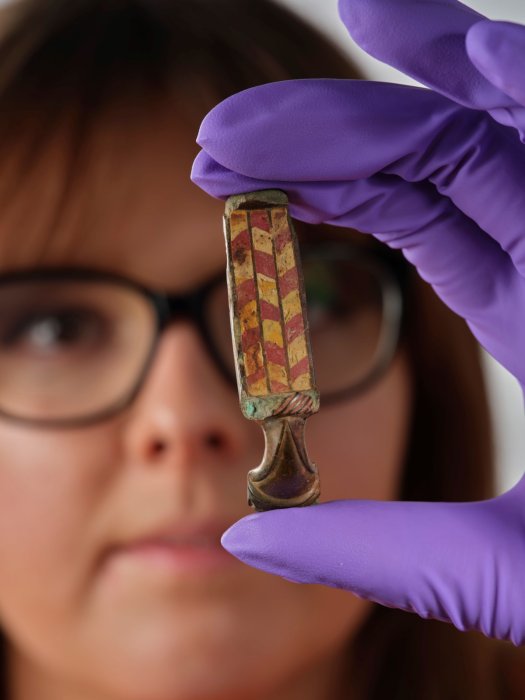
Assistant Curator Bethany Simpson with the Pathhead brooch. Credit: National Museums Scotland
“The Pathhead brooch is a miniature masterpiece of craftworking and the details are exquisite. Fancy Roman pieces like this were unusual even at the time and were used to show off in local society. Whoever wore it would have been out to impress, and I’m sure visitors will be dazzled by it when they see it up close in Roman Scotland: Life on the Edge of Empire,” Dr Fraser Hunter, Principal Curator of Prehistory and Roman Archaeology at National Museums Scotland, said.
There’s more exciting news. Two impressive stone altars from a Roman fort near Edinburgh have been added to the National Collection just in time for a major exhibition at the National Museum of Scotland. These rare carvings are some of the best examples of Roman British sculpture and will be shown for the first time in Roman Scotland: Life on the Edge of Empire.
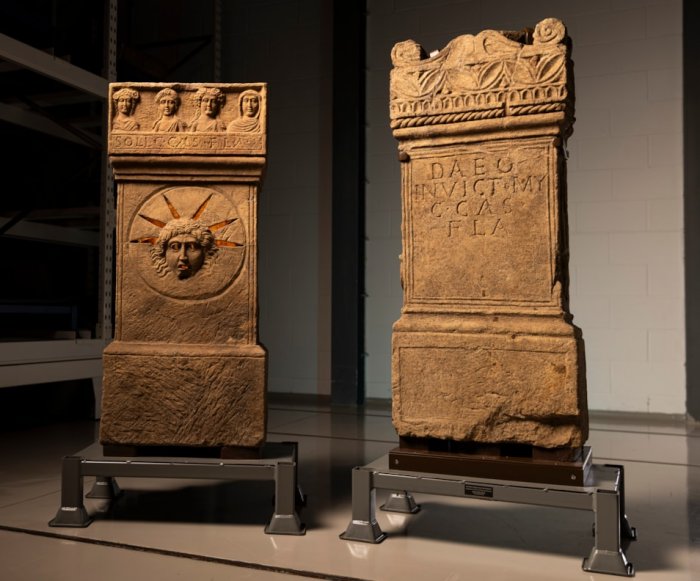
The Roman altars at the National Museums Collection Center, Edinburgh. Credit: Duncan McGlynn
These altars were once the centerpiece of the northernmost known temple to the god Mithras in the Roman Empire. They were found at Inveresk in East Lothian and are the only ones of their kind discovered in Scotland. Dating back to the 140s, when southern Scotland was retaken under Antoninus Pius, they offer new insights into the lives and beliefs of soldiers on the frontier.
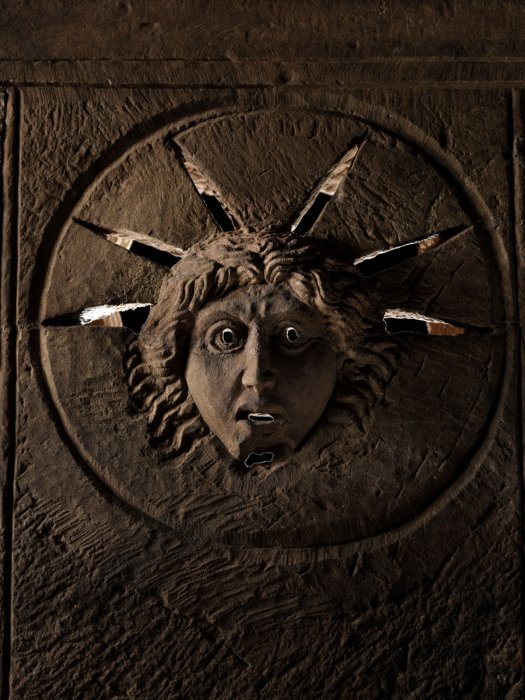
Altar to Sol, Inveresk. Credit: National Museums Scotland
Mithras was a secretive religion for men that celebrated the victory of good over evil and light over darkness. The altars would have stood out as a dramatic centerpiece in the underground Mithraeum.
One altar shows the face of the sun god Sol, designed to be lit from behind so that in the dim temple, worshippers would see his eyes, mouth, and the rays of his crown glowing. It also features carvings of the four seasons depicted as female deities, symbolizing the passage of time, another important theme in the Mithras cult.
The second altar is dedicated to Mithras and decorated with carvings connected to Apollo, another god of light. These include a griffin, a lyre, a plectrum, and two ravens, which often appear in Mithraic art.
A legionary centurion, whose name appears as G CAS FLA on the altars—likely Gaius Cassius Flavianus—dedicated both pieces. He was probably in charge of the fort’s garrison at the time. Most evidence for Mithras in Britannia comes from the third century, but these earlier altars show that his cult was already thriving in the army by the mid-second century, just as it was elsewhere in the empire.
The altars broke into pieces during their long time underground, so they needed extensive conservation work to put them back together and prepare them for display. While working on them, conservators found traces of paint on the carvings, showing that the altars were once painted in bright colors.
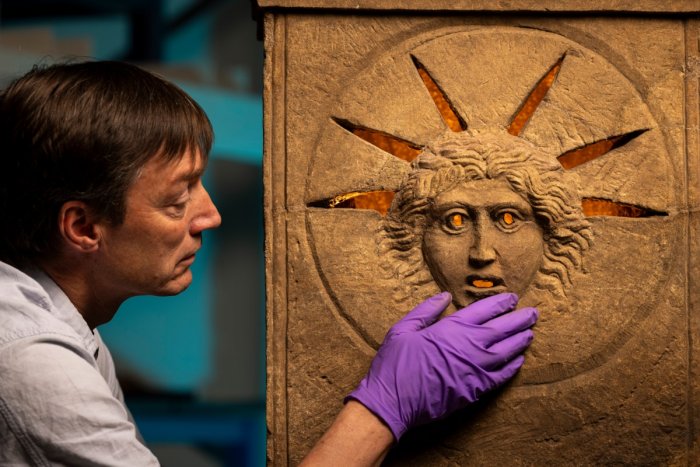
Curator Dr Fraser Hunter examines the Roman altars. Credit: Duncan McGlynn
“These stunning altars really bring the beliefs of the Roman frontier to life. The quality of the carving, traces of paint and dramatic lighting effects show they were impressive and expensive monuments. The cult of Mithras represented the triumph of good over evil and gave soldiers a sense of purpose in their world and of a life after death. I’m sure visitors will be amazed by them when they can see them up close in our new exhibition, Roman Scotland: Life on the Edge of Empire,” Dr. Hunter said.
Roman Scotland: Life on the Edge of Empire challenges the idea that the Romans never went past Hadrian’s Wall. While many people see this landmark as the Empire’s northern limit in Britain, the Romans actually pushed further north three times, reaching Scotland’s central belt and even the north-east.
The Antonine Wall stretched across the narrowest part of Scotland, from the Forth to the Clyde, with more forts built along the east and west coasts. Inveresk was one of these forts and eventually became a major center with a large population.
See also: More Archaeology News
Recent digs at Inveresk have changed what we know about the site and shown how important it was in Roman Scotland. For the first time, finds from Inveresk will be displayed together, offering new insights into the Roman presence in Scotland. The exhibition will also show how this frontier outpost was supplied from across the Empire and how the occupation affected local people.
This exhibition is made possible by the support of the Roman Scotland Exhibition Supporters Circle.
The National Museum of Scotland will host Roman Scotland: Life on the Edge of Empire from 14 November 2026 to 28 April 2027.
Source: National Museums Scotland
Written by Conny Waters – AncientPages.com Staff Writer