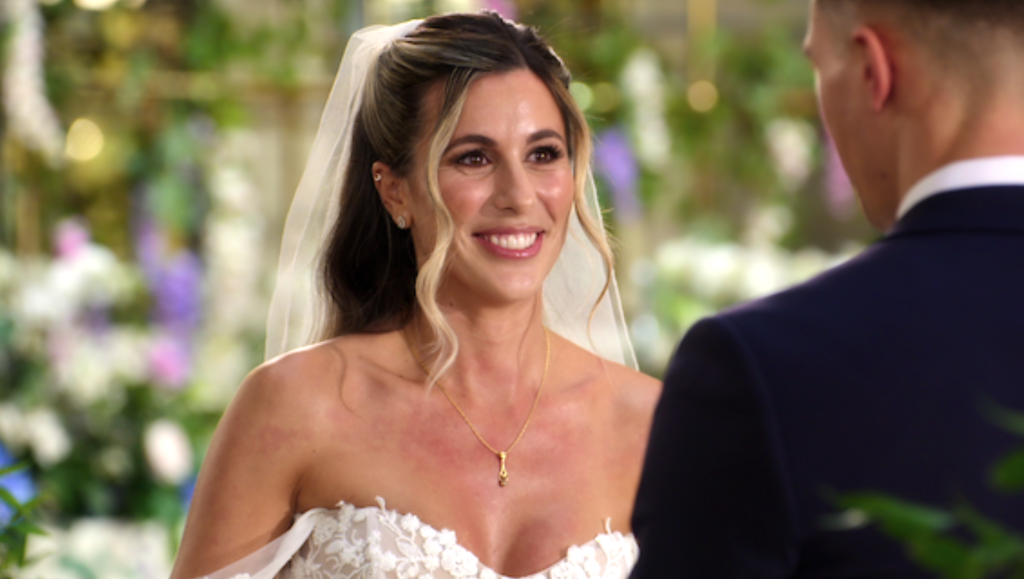
EXCLUSIVE: Love is Blind: UK stars have complained that welfare workers on the Netflix series are not sufficiently independent from producers to act in the best interests of participants.
Catherine Richards and Jake Singleton-Hill, who both featured in Season 1 of Love is Blind: UK, raised questions about their experience, adding to a growing conversation in Britain about reality TV welfare standards following a Married at First Sight scandal.
BBC News reported last week that two women on the UK version of Married at First Sight (MAFS) alleged that they were raped while making the Channel 4 show, with a third claiming she was the victim of a non-consensual sex act.
Channel 4 has defended welfare standards on the hit series, but has ordered two reviews to re-examine its procedures. All the men accused denied wrongdoing. MAFS is produced by CPL Productions, the UK company that also makes Love is Blind: UK.
Richards watched the BBC’s MAFS documentary and felt compelled to speak out. She alleged that welfare workers on Love is Blind divulged confidential details about her experience to the show’s producers. These details, she said, were later used to power potential storylines on the Netflix series — sometimes against her wishes.
“We’re puppets to them,” Richards told Deadline. “They say [there is] welfare, but it’s not welfare. They work for production, and they need storylines.”
Netflix and CPL’s position is that Love is Blind participants are told before filming that the welfare team will flag issues to producers. Therapy is also available to participants during production, providing a confidential space to reflect on their experience.
“Our rigorous welfare and psychological care processes were clearly communicated to all contributors in advance and adhered to rigorously throughout the production,” said a CPL spokesperson. “A strict distinction was maintained between production welfare, which escalates concerns when necessary, and fully confidential, independent psychological support.”
Richards complained that she confided in welfare about an argument she had with her on-screen partner, Freddie Powell, and “within minutes” cameras turned up at their accommodation in Camden, London.
She explained: “I remember standing on the canal at Camden … they would ask me questions, and I was like, ‘I refuse to talk because I know you’re trying to get a storyline out of me. I just went to the welfare team because I just wanted to talk, and now this is a storyline that will create hate when this comes out on TV.’”
Netflix and CPL’s position is that cameras visited Richards the day after her conversation with welfare, and only did so with her permission. Richards stood by her recollection of events, telling Deadline: “I know the truth, so that is all that matters.”

Jake Singleton-Hill
Singleton-Hill, the other Love is Blind Season 1 star, who is now in a relationship with Richards, added: “My experience of welfare was that they make you feel like it’s a safe space, but they use it as ammunition. It’s a really toxic environment … they don’t have your best interests at heart, they just want to make the best dramatic show they can.”
Richards argued that welfare teams on reality series should be independent from production, meaning participants can share how they’re feeling during filming without worrying about how it might be used as content.
Asked if Netflix would re-examine welfare procedures on Love is Blind, a spokesperson for the streamer said: “The physical and psychological well-being of all contributors is paramount. We are confident that the most robust and comprehensive protocols are in place and that we act promptly and appropriately whenever concerns are raised.
“On any new or returning series, we constantly review and, where necessary, improve the procedures we have in place to ensure the utmost care is being taken of our contributors.”
‘Love is Blind’ Aftercare
Richards was rejected by her partner, Powell, at the altar and was visibly shaken. The jilting was depicted in episode 11 in the first Love is Blind season, with Richards explaining on camera: “I feel numb, I just feel really unwanted. I don’t know what to do, I just feel so embarrassed.”
The Love is Blind star raised questions about the aftercare she received following her rejection. Richards said she was left “distraught” for months and “couldn’t see the light of day.”
She was able to access regular online therapy provided through the show, but alleged that they were not “deep” conversations. She argued that it felt like producers were “just ticking a checklist,” and no one visited her in person. Richards said she ultimately paid for private therapy to overcome her experience. Singleton-Hill also felt compelled to seek private therapy.
Richards also said she received death threats on social media, but did not feel reassured by production. “They would just sit there and be like, ‘It will die down,’” she recalled.
A CPL spokesperson said: “Comprehensive safeguarding was implemented at every stage, including pre-filming background and psychological checks, daily on-set welfare monitoring, consent-led filming, and ongoing access to support both during and after broadcast. This provision is standard industry practice, funded within the production budget, independently delivered, and consistently applied in line with established duty-of-care protocols.”
A Netflix spokesperson added: “Contributors receive regular, proactive check-ins from a dedicated welfare team and independent psychologists throughout the process, including after the show has aired. They are also given guidance and support that escalates depending on the severity of any threats received.”
‘Stranded on Honeymoon Island’ Experience
Richards and Singleton-Hill were not alone in expressing their views about the independence of welfare. Taniae Wong, a contestant on CPL-produced BBC reality series Stranded on Honeymoon Island, said she struggled to trust anyone during production, including the welfare support.
Taniae Wong (left) on ‘Stranded on Honeymoon Island’
“They’re getting paid [by production] from the beginning,” she told Deadline. “Anyone smart would be like, ‘Be careful with what you’re walking into, right? You know you’re being used as a pawn.’”
Sharon Gaffka, a former Love Island contestant, wrote about the issue in The Guardian newspaper.
“Welfare teams are still embedded within production structures. They sit within the same ecosystem as the people responsible for delivering storylines, ratings and ‘successful television.’ Even where individuals within welfare teams genuinely care deeply about contestants, there is still an unavoidable conflict built into the structure itself,” she said.
“If reality TV, more specifically dating formats, is going to continue existing … then safeguarding needs to become entirely independent from production and commissioning. It should not simply be a department within a show. It should be its own specialist entity with real authority.”
Wong said she suffered a mental health breakdown and felt suicidal after filming Stranded on Honeymoon Island. CPL ultimately funded therapy with a specialist in Harley Street, a renowned private healthcare district in London.
Wong said she had to “really fight for the support,” but once production realized the severity of her situation, she “could not fault” the aftercare. Wong said she has recovered from her experience, but wanted to speak about the mental strain of participating in a reality TV show.