Wherever you are in your reading journey, regardless of the genres you read, and however you choose to enjoy your stories, there’s one thing everyone should be able to agree on when it comes to books: Goodreads isn’t good.
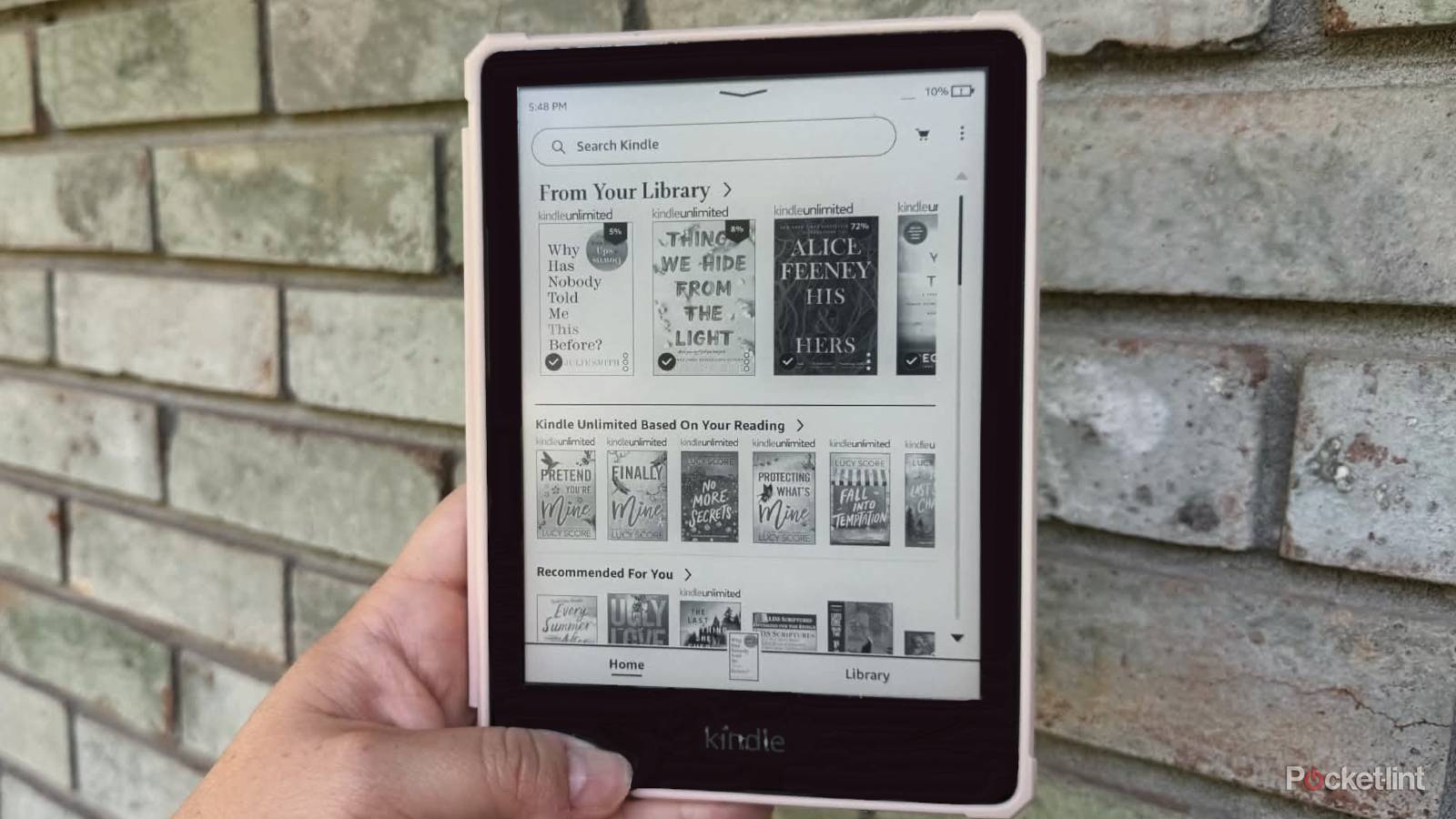
For the unfamiliar, Goodreads is a companion reading app owned and operated by Amazon that functions as a social community, tracking system, and marketplace. It allows you to catalog your readings, rate stories, and purchase books for your e-reader. There are myriad factors that contribute to it being a frustrating app. Even if you use a Kindle, you don’t need to use Goodreads. And you shouldn’t. Here’s why.
Goodreads isn’t a good app for book lovers
Alternatives provide better tracking and community

Perhaps the best reason to ditch Goodreads as soon as possible is that it is not very good at its main function: tracking your reading habits. When Goodreads first launched, before Amazon acquired it over 10 years ago, the goal was to support readers in documenting what books they’ve read and helping them discover new books through community.
When you finish a book, you can log your read dates, give the book a rating, and share your thoughts with authors. The app serves as both a retrospective and a catalog on your reading journey and a place where you can find inspiration for your next reads.
If you have a lengthy tracking history on Goodreads, don’t worry! You can export your data and upload it to most other tracking apps in order to maintain your data.
Unfortunately, Amazon has invested very little in updating the app: The interface looks old and dated, and you can’t give half-stars to books. Other options are far superior. StoryGraph, for example, is better at tracking, allowing users to give more specific star reviews while also enjoying a more detailed summary of your reading. Unlike Goodreads, StoryGraph provides plenty of colorful charts for you to reflect on and more detailed tags and descriptions of books to better identify your habits and interests. Literal, meanwhile, is another modern tracking app that allows you to scan barcodes of physical books for more convenient cataloging.
Apps like Fable and Bookship emphasize positive community and help support people who want to connect with others. Goodreads struggles with all these aspects, and it’s mainly because they aren’t a priority. Money is.
Goodreads focuses on selling books
Purchases are more important than reading and connection

Another reason to uninstall Goodreads is that the focus isn’t on tracking reading or connecting readers but instead on getting you to buy as many books from the Amazon Marketplace as possible. If you use Prime Video, you’re likely familiar with this experience. Prime Video, Amazon’s streaming service, and Goodreads, share a lot of similarities in that they are hard to navigate, poorly organized, and don’t really know the user that well. They are both designed to point you towards purchases, whether that’s renting a title or buying one.
You can also be sure that you’re not going to be shown stories that you might enjoy. You’ll be shown stories that serve Amazon, whether they are books they want you to read or books that help them make more money. Just about every app is interested in making money, of course, but Amazon is so huge and so calculating that it doesn’t have to provide a positive user experience or hide the fact it’s pushing its own content.
In pushing for purchases, Amazon doesn’t just let down its users. It also fails authors.
Goodreads doesn’t support authors
App lacks safety nets and integrity

Goodreads, like the most popular of social media apps, is rife with bad actors and antagonistic users. So much so that it can be dangerous for authors. There are stories of users trying to extort debut authors, threatening to review bomb their novels unless they pay a certain sum of money. The reason scammers try this is that Goodreads has positioned itself as an authority in the reading marketplace, and for it to promote books, there needs to be lots of reviews.
So Goodreads sets up a system where it requires authors to engage and solicit reviews in order for there to be a potential for any kind of success, but like Instagram and Facebook, that activity opens the door for people to harass authors. Goodreads is so popular that it forces some authors to use it, but it can be to their detriment.
It doesn’t help, of course, that reviews can be made by people who haven’t read the book they’re reviewing. In some cases, people have review-bombed books before they’ve even become available to the public. Goodreads doesn’t support authors. It just wants engagement, whether that engagement is illegitimate or problematic.
Goodreads is filled with Amazon advertisements
Don’t hand over your personal information

Every streaming and social media service wants to promote ads and sell you other products and services. It can make for a very clunky and annoying experience. Companies make so much money off of selling you advertisements that it makes ad-support subscriptions cheap and ad-free options prohibitively expensive. So, when you’re using a free program like Goodreads, you’re going to get a lot of ads. And they’re not even for books; Amazon is going to promote its other products and services to you.
You also don’t want to be letting Goodreads and Amazon know about your reading habits. Because, just like your viewing habits, what you read can create a pretty accurate profile of who you are, from your age to ethnicity, political beliefs to medical background. If you read a lot of books about divorce or parenting or really any topic, Goodreads can figure out who you are and where you are in life.
And that information is used to sell you more products and services. And, of course, that information can be hacked or leaked or sold off and that just doesn’t seem like a good thing for anyone. Seek out more secure and less aggressive platforms to share your reading habits.
Hold on to physical copies of your favorite stories

There are plenty of reasons why using an e-reader is convenient and even necessary for some. Digital copies as well as audiobooks offer better accessibility for certain individuals. However, Goodreads is more than happy to push you towards cheap copies of digital books because it has no interest in supporting local book stories or libraries.
And the threat of digital media has never been greater. Sony, for example, announced it would be discontinuing physical discs for new PlayStation games in 2028, while AI companies are buying up books and destroying them to teach their machine. Streaming services like Netflix provide access to a library of titles, but users don’t own any of these movies or shows. They just have acces to them while they pay a subscription.
All of this in totality creates a disconnect between the user and the stories. People don’t own anything anymore, and that’s going to be a problem. Goodreads normalizes this relationship in order to support a future where no one owns any media. They just borrow it. And the people who own the stories can alter them or destroy them as they wish.