We’ve been charging our phones for decades now, and I’d say we’ve actually come a long way. It used to take what felt like hours to charge a phone from dead to full battery, but the introduction of quick charging has put that to an end. I love fast charging, and there’s something special about seeing my battery go from 10% to 50% in a matter of minutes. It’s one of those things that felt magical when I first saw it, and it still feels like that today.
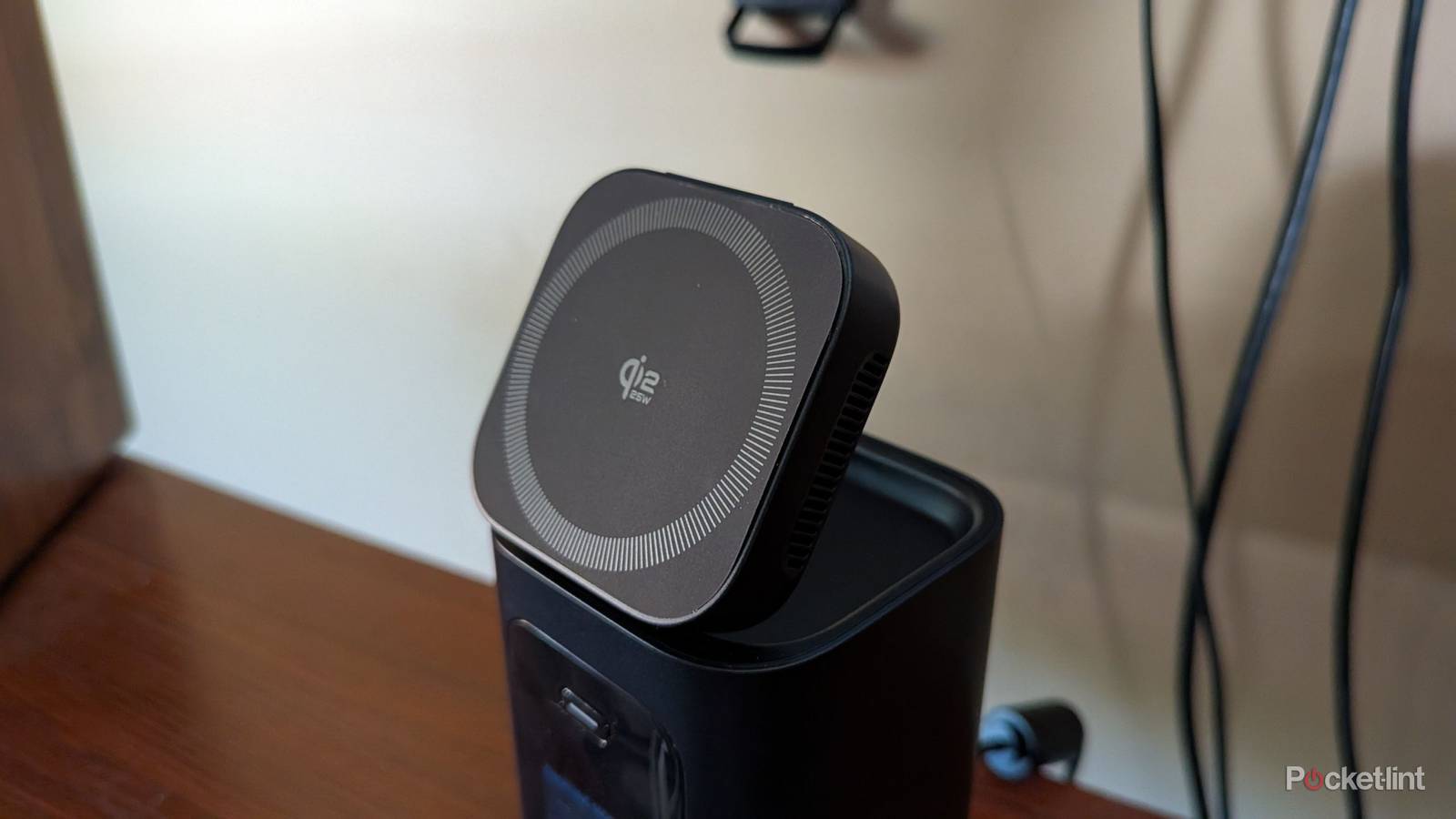
Something that also caught my attention is wireless charging. Obviously, the next frontier is ditching cables entirely, and we’ve seen that becoming a thing more and more each year. Bluetooth has almost replaced wires in my house, at least when it comes to game controllers and headphones, so why can’t charging be next? Well, it could be next, but it doesn’t look like my devices are ready to play ball yet. I have a Baseus Spacemate RD1 Pro hub that comes with a Qi2 wireless charging pad on top that can charge my Google Pixel 9a. However, it only took me about two charges for me to decide that I’m going to stick with my trusty USB-C cable.

- No. of ports
-
2 HDMI, 2 USB-C 10Gbps, 4 data-only USB-A, SD/TF slots, Ethernet, 2 USB-C (PD 100W Max.), USB-C host, Qi Wireless Charging
- Power output
-
160W
- Display modes
-
2
Wireless charging isn’t there for me yet
A few roadblocks

The main drawback I have right now is that my Google Pixel 9a doesn’t support the Qi2 charging. For whatever reason, it just has the standard charging, and that means it caps out at 7.5W. This charges my phone, but it’s so slow that I just don’t see the point in doing it this way versus just plugging it into a cable. We’re talking about a 2025 phone here, so I’m not sure why it doesn’t support the newer format. Even if it did support the faster charging, I still don’t know if I’d end up using it in the long haul. There are plenty of ways to prolong a phone’s battery life, and common knowledge would say to avoid getting too hot. As it turns out, leaving my Pixel on top of a wireless charging pad makes it very hot to the touch. Against my own advice, I do use my phone while it’s charging more than I’d like, but it never compares to how hot it gets on the pad.
The reason for this is that energy is lost in the transfer, so it’s not nearly as efficient as it would be while charging from a wire. There’s also the downside that wireless charging means I can’t use my device and charge it at the same time. That’s fine for people leaving their phone on a charger overnight, but I’d still have concerns about it sitting on what’s essentially a hot pad through the night. It just doesn’t feel like I’m quite ready to be a wireless charging convert at the moment, but maybe things could change in the coming years. I think these heat issues really need to be dialed in for me to really move over. I would also need to see more widespread support for Qi2. It’s always a bummer to see a format like this offering a lot of performance, just for my relatively new phone to not take advantage of it. It really might boil down to my Pixel 9a being a budget option, so corners had to be cut somewhere.
Another problem is that wireless pads aren’t exactly known for their portability. Sure, I could take this Baseus hub into other rooms, but it’s far easier to just bring a USB-C cable into another room and plug it in. I also have cables in what feels like every room already, so it’s not even an inconvenience. I’m sure other people are in different boats, and to that, I say more power to you. For my specific needs, wireless charging isn’t ready for prime time, but that doesn’t mean I’m not excited about its future. If I had a phone that charged much faster on the pad, a big complaint of mine would be wiped out. I’m just not trying to leave my Pixel on a pad for hours just to have it overheat the entire time.
I’ll stick with USB-C
Still some improvements to be made

For what it’s worth, I’m perfectly happy with the strides that the USB-C format has made in recent years. It finally feels like we’re putting together a cohesive ecosystem where one cable can be used for everything. I’ve compared it to how HDMI operates, and I’m a big fan of it, even if it comes with its own can of worms. No format can be perfect, but USB-C is good enough to where I don’t have much to complain about. I currently use the same cable to charge my laptop, my phone, my Odin 2 Portal, and my tablet. It’s a really good situation, and I don’t have to worry about the cable pushing too much wattage into my phone because my phone just takes what it needs.
I’ve also noticed that some of the cheaper USB-C cables have durability problems. Obviously, no cable is immune to this, but since I use one cable to do it all, my USB-C cables go through much more wear and tear than something like my HDMI cables do. My solution to this was to find durable, braided cables. These don’t cost an arm and a leg more than your regular cables, so I don’t see any downside to bulking up your most-used cables. The laptop cable I use in my living room is very durable, and I don’t have to worry about any fraying happening near the end of the cable. That’s been my biggest problem with USB-C cables, really, and I was kicking myself after finding out how easy it is to avoid.
Another problem is that it’s difficult to tell the speed of a cable just by looking at it. Different devices need different power. I wouldn’t try to charge up my laptop using the same cable that came with my phone, but it’s an easy mistake to make since there’s nothing really indicating a speed difference on the cable itself. Thankfully, it’s easy to find out if your cable isn’t up to snuff. My laptop will let me know immediately if my cable isn’t good enough as there’d be some type of warning saying it’s a slow charge. Aside from these two nitpicks, I’m generally happy with USB-C’s performance, and I’m excited to see how it continues to grow. I’m also excited to see what wireless charging is ready to cook up. It would be nice to enter a fully wireless world, but I’m not ready for it yet.