For a very long time, you could safely assume that any TV you bought would have a 3.5mm stereo jack. It was the default wired option if you didn’t want to use built-in speakers. Better options have been around for decades, but not everyone was willing (or able) to shell out for, say, an optical-based Dolby Pro Logic system fed through a receiver.
In 2026, 3.5mm jacks are a dying breed. While my Hisense U68KM has one, many TVs no longer do, and it’s not hard to imagine the technology being phased out by 2036, if not 2030. This might come as a shock, especially if you’re still using a 3.5mm port somewhere — but progress has already left 3.5mm audio in the dust. You’ll see why.
The deal with the 3.5mm stereo jack on your TV
Why it can’t keep up with your home theater

The persistence of the 3.5mm jack on TVs can be attributed to the fact that in the 1980s, it became standard on many audio products, led by the popularity of the Sony Walkman. It’s simply a miniaturized version of the quarter-inch jacks you might’ve found on products like guitars and studio headphones. By adding 3.5mm to a TV, you ensured that people could connect a wide range of speakers and headphones using a cable they already had.
And really, it’s hard to complain too much about 3.5mm’s quality if all you care about is the substance of your media. Without any interference or damage, 3.5mm is reasonably clear, and you can even simulate surround sound using some deft software processing. Certainly it was good enough that until 2016, Apple kept a 3.5mm port on all its iPhones, despite having Bluetooth and USB/Lightning as alternatives.
When it comes to modern audio on your TV or otherwise, the overriding issue with 3.5mm is that it’s analog. While digital data can be converted, it has to be reduced to a form vulnerable to all kinds of interference, from nearby magnetic fields to the quality of the materials it passes through. This is where the idea of needing gold-plated connectors was born. In some cases, spinning a 3.5mm cable in its port can be enough to cause disruptions.
More significant than reliability is the amount of data that can be conveyed. Short of those software tricks I mentioned, the best you can get out of 3.5mm is two channels, i.e. stereo. If you try to pump a Dolby Atmos or 5.1 mix through 3.5mm, it inevitably has to be flattened in a way that merges all that channel info into a stereo stream. Most positional information is lost. That’s why I used the word “simulate” when talking about that software processing trick — what your device is actually doing is analyzing the signal, then using psychology-based tricks to convince you that a sound is coming from more than two directions.
Digital audio connections are better in every way. Using the right codecs, even low-power Bluetooth can produce better fidelity (or at least reliability), as long as you’re in range and competing wireless signals don’t hijack things. Optical carries enough bandwidth to handle native 5.1-channel Dolby Digital, and HDMI 2.1 enables lossless Dolby Atmos or DTS:X when paired with compatible eARC speakers. There’s virtually no limit to what can be carried over Wi-Fi — the only real issues with it are lag and band congestion, and those can be compensated for. USB takes those two thorns out of the equation.
There might still be some motivation to keep 3.5mm available if the transition to digital were recent, but it’s not. Optical dates back to the 1980s. HDMI 1.0 carried audio in 2002, and high-quality Bluetooth has been available since the 2010s. When smartphones started dropping 3.5mm, the entire electronics industry underwent a massive shift, as there was a sudden chasm in the speaker and headphone markets. Today, the vast majority of consumer playback devices are designed around Bluetooth, HDMI, USB, or Wi-Fi.
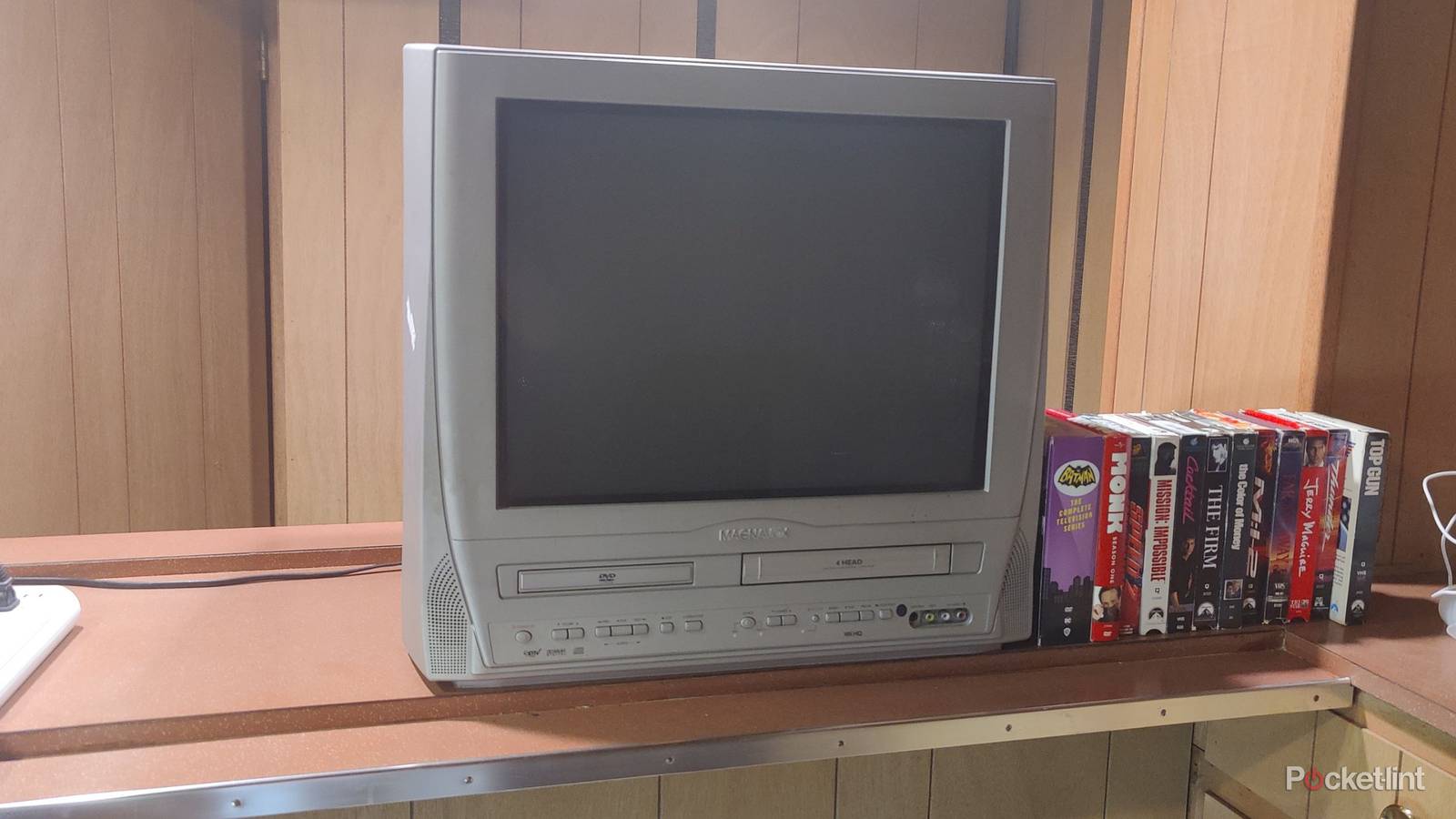
Why haven’t we seen 3.5mm disappear entirely already, then? The answer is legacy. A 3.5mm port is cheap to manufacture, and so many compatible speakers and headphones have been produced over the decades that it can be a handy fallback. But that’s as much as it’s worth these days, given that almost all the media you’re consuming is digital, whether it’s from a streaming service, a Blu-ray disc, or a PC or console game. Few of you are spending most of your time watching VHS tapes or LaserDiscs.


5/5