
May 19, 2026
2 min read

The last 12 months in the U.S. were the hottest on record
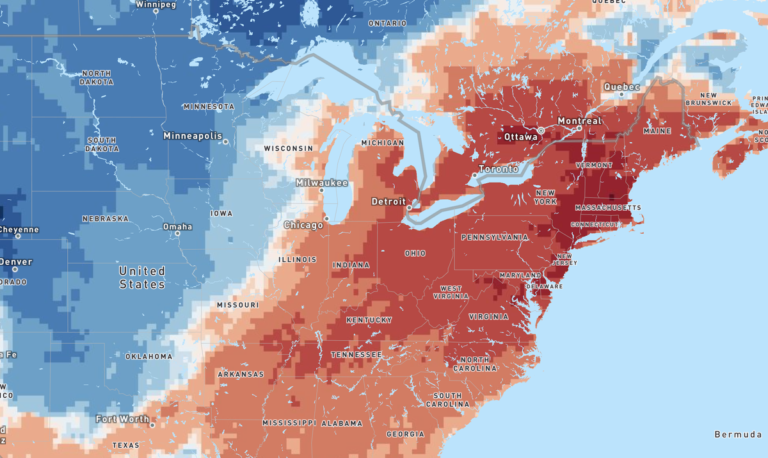
March was a scorching 9.35 degrees Fahrenheit hotter than the 20th-century average for the month, capping the hottest 12-month stretch for the U.S. since records began in 1895
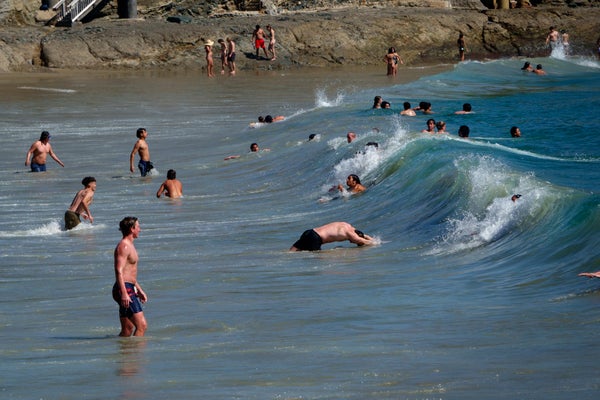
Photo by Kevin Carter/Getty Images
In the U.S., March was a marquee month for warming—capping the hottest 12 months since official records began in 1895, according to data from the National Oceanic and Atmospheric Administration (NOAA).
In March the average temperature in the contiguous U.S. was about 50.9 degrees Fahrenheit (10.5 degrees Celsius)—9.35 degrees F higher than the 20th-century average for the month. It marks the first time any month’s average has been nine degrees F higher than the 20th-century baseline, NOAA said in a statement. The warmer temperatures were particularly pronounced during the daytime, coming in at 11.4 degrees F higher than the last century’s average. The average of these maximum daytime temperatures was so warm that it not only exceeded the average temperature for that month but was almost a degree F warmer than the 20th-century average for April—a month that tends to be hotter as well.
Ten U.S. states, including Arizona, California, Colorado, Idaho, Nevada and Texas, had their warmest recorded March. Alaska was the sole outlier state, with an average temperature of 0.6 degree F, making it the fourth coldest March there since Alaska’s records began in 1925.
On supporting science journalism
If you’re enjoying this article, consider supporting our award-winning journalism by subscribing. By purchasing a subscription you are helping to ensure the future of impactful stories about the discoveries and ideas shaping our world today.

And in March the World Meteorological Organization found that the period from 2015 to 2025 represented the 11 hottest years on record globally.
Paired with the record heat in the continental U.S. was an unusual lack of rain or snow. The average total precipitation for the month was 1.83 inches—0.68 inch below the 20th-century average. January and February were also extraordinarily dry, making the first three months of 2026 the driest on record. As a result, almost 60 percent of the country was classified as being in drought conditions on March 31, up from 55 percent at the beginning of the month.
The contiguous U.S. also experienced its third-warmest April on record, with above-average temperatures in much of the country. The Southeast had its most extensive drought ever recorded; nearly 100 percent of the region had drought conditions at one point in mid-April.
The combination of extreme heat and widespread drought could add up to a higher-than-average risk of wildfire, especially in the Southwest, Southern Plains and Central High Plains, as well as the Deep South and Southeast. Last year wildfires led to dozens of deaths in the U.S. and destroyed more than 18,300 buildings and five million acres of land.
It’s Time to Stand Up for Science
If you enjoyed this article, I’d like to ask for your support. Scientific American has served as an advocate for science and industry for 180 years, and right now may be the most critical moment in that two-century history.
I’ve been a Scientific American subscriber since I was 12 years old, and it helped shape the way I look at the world. SciAm always educates and delights me, and inspires a sense of awe for our vast, beautiful universe. I hope it does that for you, too.
If you subscribe to Scientific American, you help ensure that our coverage is centered on meaningful research and discovery; that we have the resources to report on the decisions that threaten labs across the U.S.; and that we support both budding and working scientists at a time when the value of science itself too often goes unrecognized.
In return, you get essential news, captivating podcasts, brilliant infographics, can’t-miss newsletters, must-watch videos, challenging games, and the science world’s best writing and reporting. You can even gift someone a subscription.
There has never been a more important time for us to stand up and show why science matters. I hope you’ll support us in that mission.