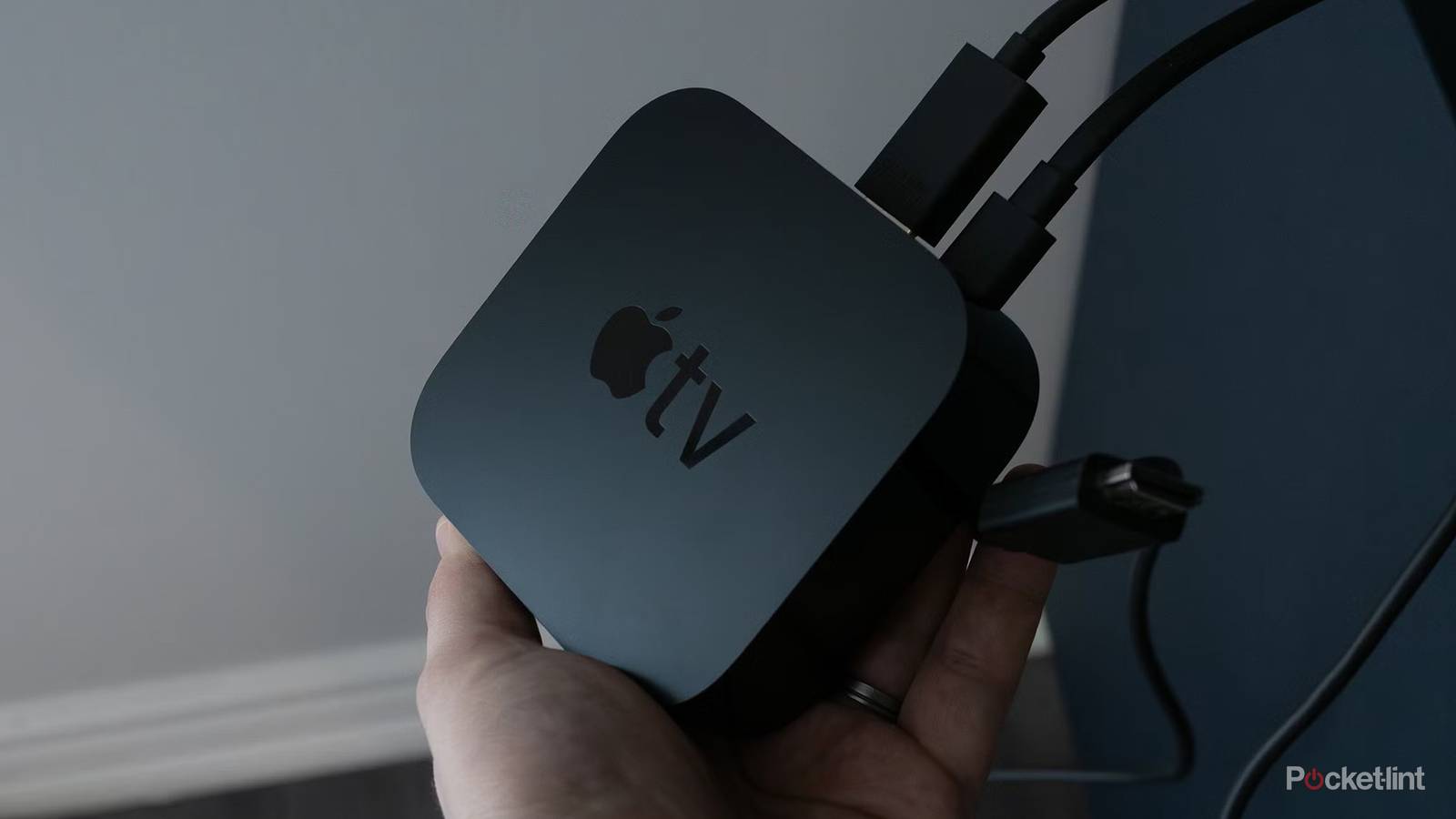
The Apple TV 4K is hands down one of my favorite streaming devices. Even though the latest third-gen model came out in 2022, it’s still one of the most powerful streamers you can buy in 2026, easily outpacing other set-top streamers like the Roku Ultra and the Google TV Streamer in performance.
It also packs a robust feature set, including Dolby Vision, Dolby Atmos, Wi-Fi 6, and AirPlay support, making it effortless to cast content from your iPhone, iPad, or Mac directly to your Apple TV 4K.
But one of my favorite features of the Apple TV 4K — specifically the $149 128GB model — is its Ethernet port, which lets you connect it directly to your router for a faster, more reliable internet connection. So if your Wi-Fi is spotty at times, or you just want to avoid any potential connection hiccups while streaming, Ethernet can be an extremely valuable upgrade, and I think paying the extra $20 for the Ethernet-equipped Apple TV 4K is well worth it.
That said, while an Ethernet port itself isn’t unique to the Apple TV 4K — streamers like the Roku Ultra and Fire TV Cube also include one — what makes the Apple TV 4K’s Ethernet port stand out is the rare upgrade it brings. It’s an upgrade that, in my view, actually makes the Ethernet port on the Apple TV 4K worth using, compared to the Ethernet ports you’ll find on most streamers and pretty much every smart TV.

- Brand
-
Apple
- Bluetooth codecs
-
5.0
- Wi-Fi
-
6
- Ethernet
-
Gigabit (128GB model only)
Apple’s third-generation 4K set-top box ships with an A15 Bionic chipset, HDR10+ and Dolby Vision support, and a rechargeable USB-C Siri Remote. The 128GB model includes a Gigabit Ethernet port.
The Apple TV 4K’s Ethernet port is actually fast
It’s all thanks to Gigabit

While most smart TVs and set-top streamers include an Ethernet port, many are severely underpowered. In other words, they’re quite slow.
How can this be? Well, on many smart TVs and set-top streamers, the Ethernet port maxes out at just 100 Mbps. This is often referred to as 10/100 Ethernet or “Fast Ethernet,” which, in actuality, isn’t all that fast anymore.
However, the Apple TV 4K is an outlier in this case, as it features a Gigabit Ethernet port, which is 10x faster than 10/100 Ethernet, offering speeds up to 1 Gbps (1,000 Mbps).
…the Apple TV 4K’s Ethernet port is actually worth using because it’s Gigabit.
This means the Apple TV 4K’s Gigabit Ethernet port delivers a noticeably smoother streaming experience compared to the relic that is 10/100 Ethernet. Naturally, this 10x-faster Ethernet port on the Apple TV 4K makes a difference: whether you’re downloading apps, streaming, or pulling content from a home media server like Plex or Jellyfin, the extra bandwidth is game-changing.
Put simply, the Apple TV 4K’s Ethernet port is actually worth using because it’s Gigabit. I really can’t say the same for any device with a 10/100 Ethernet port, mainly because newer Wi-Fi standards, such as Wi-Fi 6, Wi-Fi 6E, and Wi-Fi 7, can easily outperform a 10/100 Ethernet port in terms of speed, provided your router and the connection you get from your ISP are good enough.
Why is Gigabit Ethernet rare on streamers?
It’s an easy corner to cut, unfortunately

Despite being around for more than 25 years, Gigabit Ethernet is still surprisingly rare on streaming devices and practically nonexistent on smart TVs. Outside of the Apple TV 4K, only a handful of streamers actually include it, such as the Google TV Streamer and the Nvidia Shield TV Pro.
So the big question is: if Gigabit Ethernet is 10x faster than 10/100 Ethernet, and has existed for over two decades, why do so few streaming devices support it?
In my view, there are two main reasons. First, it’s an easy cost-cutting measure. Since most people now rely on Wi-Fi, manufacturers know many users may never plug in an Ethernet cable at all, making the port an easy place to cut corners to save money. Second, there’s the argument that 100 Mbps Ethernet is “good enough,” since most streaming services only need about 25 Mbps for 4K streaming.
Personally, I don’t really buy either argument.
If I’m spending over $500 on a smart TV or more than $100 on a streamer, I don’t think Gigabit Ethernet is asking for much. It’s a standard that’s been around for a quarter of a century, and nearly every modern PC and game console already has it. There’s no good reason higher-end TVs and streaming devices shouldn’t have Gigabit as well.
…it’s 2026, and Gigabit Ethernet really should already be the standard on streaming devices and smart TVs.
And while it’s true that 100 Mbps is technically enough for Netflix or Disney+, that completely ignores how some people use these devices today. Apps like Plex and Jellyfin can easily exceed 100 Mbps when streaming large, high-bitrate 4K files from a home server. Cloud gaming is also becoming more common thanks to services like Nvidia GeForce Now and Xbox Cloud Gaming, and a faster Gigabit Ethernet connection absolutely helps deliver a smoother experience there, too.
At the end of the day, it’s 2026, and Gigabit Ethernet really should already be the standard on streaming devices and smart TVs. It’s significantly faster and more reliable, and it better future-proofs the hardware people are likely to use for years. I’m glad Apple recognized that with the Apple TV 4K, including Gigabit Ethernet on the 128GB model.
A new Apple TV 4K is coming
It’s shaping up to be worth the wait

One last thing worth mentioning is that a new Apple TV 4K is expected to launch later this year, with rumors pointing to upgraded hardware and new Apple Intelligence features. So if you’ve been holding off on picking up an Apple TV 4K, this refreshed model might be the one worth waiting for. As for timing, reports suggest it could land in the fall, after Apple rolls out its revamped Siri with iOS 27.