If you’ve been putting off replacing your streaming stick that’s currently living in the spare room, the window for doing it cheaply is closing even as you read this. Roku raised the list price of every player it sells at the end of July, in some cases by 50%, and not one of those devices gained a feature in exchange. Apple had already raised the price of the Apple TV 4K from $129 to $199, of course, and Walmart doubled the price of its entry-level Onn stick without so much as an official announcement.
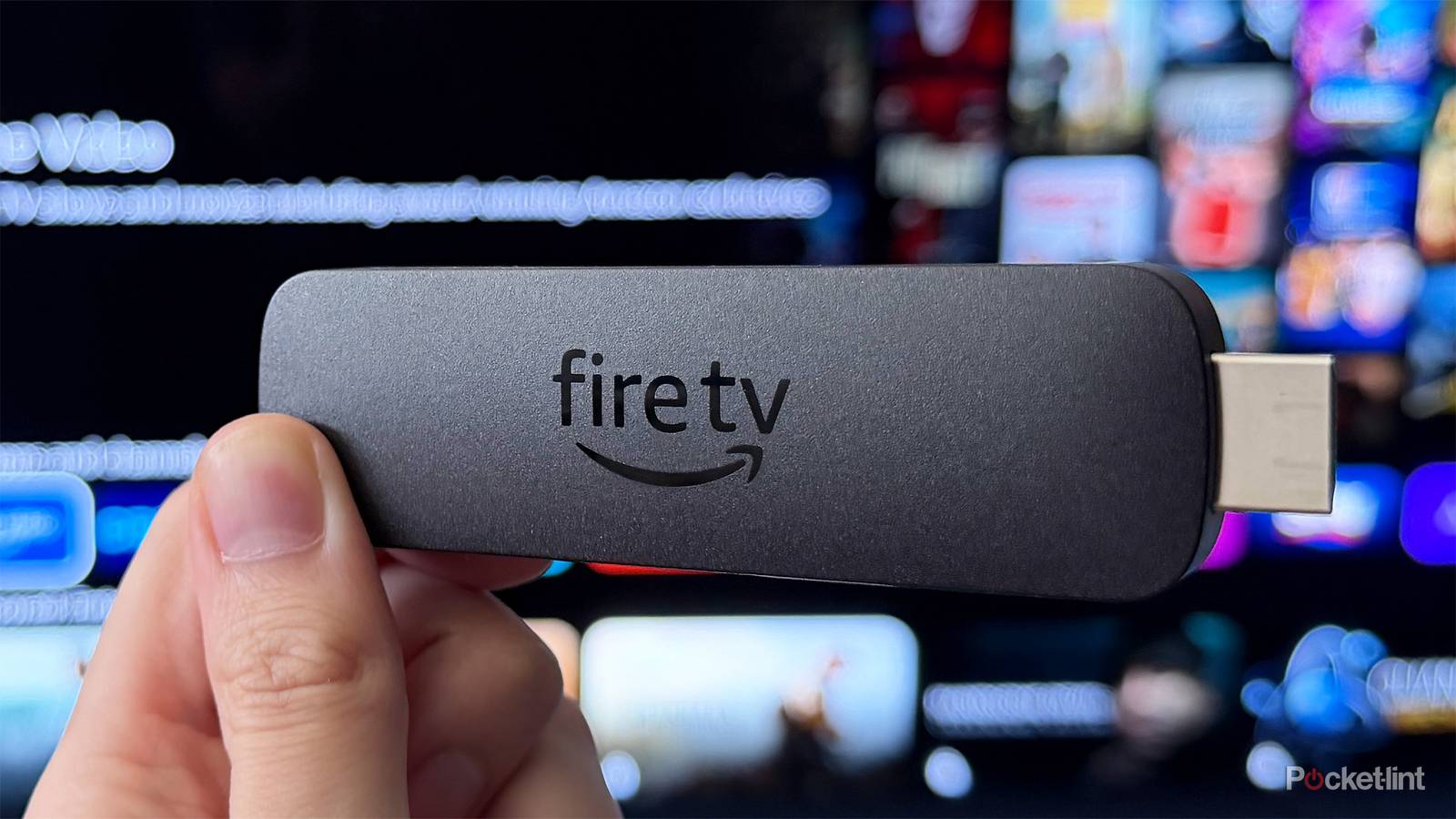
The one big name that hasn’t yet raised its prices is Amazon, maker of the uber-popular Fire TV sticks and boxes, but what it did instead should have alarm bells ringing about what’s to come.

Roku streaming devices
Trivia challenge
From its humble beginnings to your living room — how well do you really know Roku?
HistoryHardwareFeaturesStreamingFounders
In what year was Roku founded?
Correct! Roku was founded in 2008 by Anthony Wood, who had previously founded ReplayTV. The company launched its first streaming player the same year it was founded, making it a pivotal moment in streaming history.
Not quite. Roku was founded in 2008 by Anthony Wood. It launched its very first streaming device that same year, just months after the company was formed, which was remarkably fast for a hardware startup.
Who is the founder and CEO of Roku?
Correct! Anthony Wood founded Roku in 2008 and has served as its CEO ever since. Before Roku, he founded ReplayTV, one of the first digital video recorder companies, giving him deep roots in home entertainment technology.
Not quite. The answer is Anthony Wood. He founded Roku in 2008 after previously founding ReplayTV. Reed Hastings is associated with Netflix, while Tony Fadell is known as a key figure behind the iPod and Nest.
Roku was originally spun off from which major streaming company?
Correct! Roku started as an internal project at Netflix, which invested in the company and helped shape its early direction. Netflix ultimately decided to spin it off as a separate company to avoid competing with other device manufacturers who might not want to carry a Netflix-branded box.
Not quite. Roku was actually spun off from Netflix. Netflix funded and incubated the project before deciding it was better to keep the streaming device market open and neutral rather than launch a Netflix-branded player that might alienate other hardware partners.
What was the name of Roku’s very first streaming device, launched in 2008?
Correct! The Roku DVP N1000, also known as the Roku Digital Video Player, was the company’s debut product. It launched in May 2008 at a price of $99 and could stream Netflix content directly to your TV — a genuinely groundbreaking feature at the time.
Not quite. The first Roku device was the Roku DVP N1000, launched in May 2008. Priced at $99, it was primarily designed to stream Netflix and helped pioneer the idea of a dedicated, affordable streaming box for the living room.
What is the name of Roku’s free, ad-supported streaming channel built directly into its platform?
Correct! The Roku Channel launched in 2017 and offers thousands of free, ad-supported movies and TV shows. It has since become one of the most-watched channels on the Roku platform and is also available on other devices and the web.
Not quite. The correct answer is The Roku Channel, which launched in 2017. It provides free, ad-supported content and has grown into a major part of Roku’s business strategy, helping the company earn revenue beyond just hardware sales.
Roku’s business model relies heavily on which of the following revenue streams?
Correct! While Roku does sell hardware, its primary revenue engine is its platform business, which includes advertising, revenue sharing with streaming partners, and The Roku Channel. This platform-first approach is what makes Roku more than just a device maker.
Not quite. Roku makes the majority of its money from its platform business, which includes advertising and revenue-sharing arrangements with streaming services. Hardware sales are actually sold at low margins, with the real profit coming from keeping users engaged on the platform.
Which of the following form factors did Roku introduce to make streaming even more portable and discreet?
Correct! Roku introduced the Roku Streaming Stick, a compact dongle that plugs directly into a TV’s HDMI port. It was a game-changer for portability, making it easy to turn any modern TV into a smart TV without a bulky box sitting on your shelf.
Not quite. Roku launched the Roku Streaming Stick, a small dongle that plugs straight into an HDMI port. This compact form factor made Roku devices far more discreet and portable, competing directly with Amazon’s Fire TV Stick.
In which year did Roku go public on the Nasdaq stock exchange?
Correct! Roku went public on September 28, 2017, trading on the Nasdaq under the ticker symbol ROKU. Its IPO was considered a major success, and the stock surged significantly in the months that followed, reflecting strong investor confidence in the streaming market.
Not quite. Roku held its IPO on September 28, 2017, listing on the Nasdaq under the ticker ROKU. The offering was well-received by investors and marked a major milestone in the company’s journey from a Netflix spin-off to a publicly traded streaming powerhouse.
Your Score
/ 8
Thanks for playing!
Every streaming device got more expensive this summer
Yet the hardware inside them didn’t change

Roku’s price increases applied across the whole lineup, with the Streaming Stick going from $29.99 to $39.99, the Streaming Stick Plus from $39.99 to $59.99, the Streaming Stick 4K from $49.99 to $79.99, and both the Roku Ultra and the Streambar SE from $99.99 to $149.99. As a way of reasoning (via The Desk), the company pointed to component costs, specifically the global memory shortage driven by AI data center buildout, when it confirmed the rises.
Apple’s move in June was steeper in percentage terms, with the 64GB Apple TV 4K going from $129.00 to $199.00, and the 128GB model with Ethernet from $149.00 to $249.00. That’s the same third-generation box with the same A15 Bionic chip that went on sale in late 2022, now carrying a 54% higher price for a device that’s coming up on four years old. Apple’s own statement was unusually blunt about why, too, describing an unprecedented surge in demand for memory and storage from AI data centers and saying it had shielded customers from the increases as long as it could. You may notice a pattern here.
As mentioned, Walmart never actually made a statement, despite its Onn Full HD stick (launched at $15.00 in 2023) now sporting a price tag of around $30. Meanwhile, the Onn 4K Plus went from $29.88 to $39.88, and the 4K Pro sits at $59.88. Nvidia also appears to be adjusting its approach, seemingly ceasing production of its cheaper box, the base Shield TV. When Pocket-lint asked Nvidia directly about the apparent move, the company declined to confirm either way. We know that the $199.99 Shield TV Pro is still on sale, but the $149.99 one is not.
So that’s four companies with four different responses, but one shared reasoning. Memory is now at a premium, having become the most expensive ingredient in this cocktail, and a streaming device is mostly just a small pile of memory with an HDMI plug attached.
Amazon’s answer was to make its stick do less
Vega OS needs half the RAM, but you’ll be able to feel where it went

Amazon held its prices, which, on paper, is a good thing for consumers. However, if you read through the spec sheet, you’ll see that we’re paying in other ways.
The 4K Select, which arrived in October 2025 as the first device running Amazon’s Linux-based Vega OS, ships with 1GB of RAM, whereas the Fire OS-based Fire TV Stick 4K has double that at 2GB. The new iteration also runs Wi-Fi 5 instead of Wi-Fi 6, has 8GB of storage, doesn’t support Dolby Vision at all, and handles Dolby audio only via passthrough, with no Atmos decoding on the device. It also can’t sideload, since Vega isn’t built on Android, so Downloader, Kodi, custom launchers, and, for a long stretch, even VPN apps, simply have no route onto it. Amazon has since confirmed that every future Fire TV Stick will run Vega, and the new Fire TV Stick HD already does.
Amazon’s whole pitch for Vega is efficiency, and playing devil’s advocate, the whole point of an operating system that needs less memory is that it runs on hardware with less memory. But it’s the same shortage Roku and Apple are responding to, just answered in a different (and arguably less transparent) way. Roku and Apple are charging you more dollars for the same device, but Amazon is charging you the same amount of dollars for a device that does less. The Fire OS sticks are being phased out, meaning the more capable option now has an expiration date.
That’s before you even get to what the cheap tier has always cost consumers willing to compromise – a home screen built to sell you things.
Why I’m not waiting for prices to come back down
The forecasts aren’t hopeful enough to hold out

The instinct for most, when faced with this kind of component shortage, is to sit tight for a while, but unfortunately, that might not be the smart move here. Conventional DRAM contract prices are expected to rise another 13-18% quarter-over-quarter in Q3 2026, with NAND flash up 10-15% on top.
Those are smaller jumps than the roughly 60% recorded in Q2, but the reason for that slowdown is that manufacturers have stopped being able to absorb the cost rather than suppliers finding more capacity. Counterpoint Research has gone a step further, saying there’s no scenario in which memory prices meaningfully correct in the second half of 2027.
Prices that rise under supply pressure tend to stay up once buyers get used to the new reality, too, and Roku’s list prices are unlikely to suddenly revert in eighteen months simply because DRAM eased slightly.
The case for spending more, once
What I’d buy instead

If I were buying now, I’d go for the Google TV Streamer at $99.99, precisely because of the feature that makes everything else so expensive. Google’s device has 4GB of RAM and 32GB of storage, which is double that of any current Fire TV device and more than the 3GB in the Shield TV Pro or the Onn 4K Pro. RAM is now what determines how often apps cold-start when you jump back from settings, or whether the box still feels speedy after three years of app bloat.
Buying the device with the most memory in the year that memory itself is more expensive might sound incredibly backward, but it might be the only version of the story that gets cheaper over time. You also get Dolby Vision, HDR10+, and Dolby Atmos, plus a genuine Gigabit Ethernet port rather than the 10/100 ports the Roku Ultra and Fire TV Cube are stuck with, and Thread border router duties if you have Matter gear.
It’s not a flawless plan. You only get Wi-Fi 5 (a strange omission on a $100 device in 2026), and it costs 2.5 times as much as a Fire TV Stick 4K Select. If that’s $100 more than you want to spend on something to play Netflix, that’s an entirely reasonable position to take.
But that brings me to the option I’d actually recommend for most people: not to buy anything. If the stick you already own works, it’s not going to suddenly get worse, and the upgrades that will make the most difference to your setup right now cost almost nothing by comparison.
Run a cable to it, or turn off the motion smoothing on the TV it’s plugged into. Roku sticks, in particular, tend to last well past the point most people replace them, and replacing a working streamer in August 2026 is among the worst-timed purchases available in home entertainment. If you’re only doing it because the interface annoys you, there are much cheaper ways out of that problem.
Roku’s Device revenue fell 16% in the first quarter of 2026, while the platform business, including advertising and The Roku Channel, generated more than 90% of the company’s income. That shows the sticks were never the product, they were just the cost of getting a home screen into your living room. For about a decade, the cost was low enough to swallow.
So if you need a streamer, I’d buy the one that will still be quick in three years and be done with it, and if you don’t, I’d leave the spare-room TV running whatever it came with and put the money somewhere else.

- Dimensions
-
6.4 x 3 x 1-inch
- Connective Technology
-
Wi-Fi, Bluetooth
- Brand
-
Google
- What’s Included
-
Remote
- Bluetooth codecs
-
Bluetooth® 5.1