Oireachtas committee chairs are seeking to boost their pay by up to €10,000 a year – and it could cost the taxpayer almost €300,000 extra per annum, the Irish Daily Mail can reveal.
At present, Oireachtas committee chairs – who are nominated by party leaders – receive an additional payment of €11,329 on top of a TD’s €118,284 basic salary.
But now a group representing the 29 committee chairs wants to see recession-era cuts reversed to almost double the salary top-ups to €20,000.
The top-ups were reduced under the Financial Emergency Measures in the Public Interest (FEMPI) cuts which followed the economic crash in 2008.
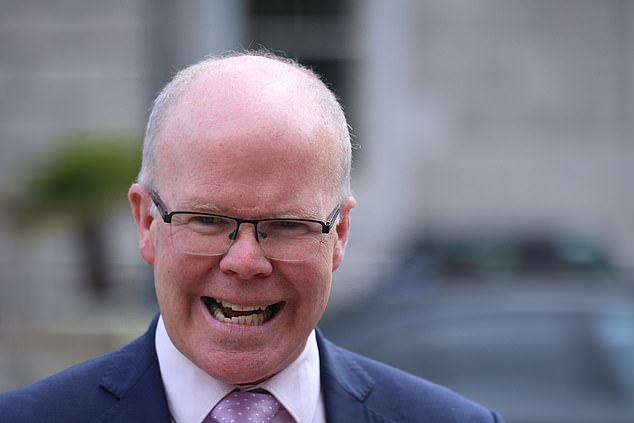
Aontú leader Peadar Tóibín called the proposed increase ‘extraordinary’.
He told the Mail: ‘That’s not acceptable at all. They already get a very high salary for being a TD.’ He added that: ‘I think this is wrong,’
The Meath West deputy said that while committee chairs do more work than normal TDs, the proposed increase is ‘not equivalent’ to their additional duties.
Minutes from an Oireachtas Commission meeting show that a group called the Working Group of Committee Cathaoirligh (WGCC) recently wrote to it outlining the need for increased allowances for the role.
The WGCC is a group composed solely of Oireachtas committee chairs, focused on how the Oireachtas committee system can operate more effectively.
It meets in public twice a year to question the Taoiseach of the day.
February minutes from the Oireachtas Commission, which oversees both the Dáil and Seanad, noted that it had received correspondence from the WGCC ‘regarding the provision of allowances and supports’ for committee cathaoirligh and related matters.
Sources on the WGCC confirmed the group wants the allowance to be restored from €11,329 to a figure closer to €20,000, as these are among the last pay cuts yet to be restored from the post-crash period.
It is also understood it is looking for an allowance for deputy chairs of committees, who often fill in when the chair is not in place.

Aontú leader Peadar Tóibín called the proposed increase ‘extraordinary’.
The Oireachtas Commission appeared to kick the matter to touch, with its minutes stating that the request regarding ‘the provision of allowances’ would ‘constitute a conflict of interest’ for the Commission.
While none of the 29 committee chairs wanted to talk on the record about the proposed payments, several were in favour of it.
The cost would be at least €290,000 per annum, not including pension entitlements, which would add around €150,000 extra in payments between the 29 committee chairs.
One committee chair said: ‘At the time of FEMPI cuts, all allowances were cut. There was a time when the chairpersons of committees were receiving €20,000 per annum, and it got cut back to around €10,000, it got halved, and all other pay grades have been reinstated except this one.’
Oireachtas committees are made up of lawmakers from the Dáil and Seanad, who scrutinise draft legislation, examine government policy and oversee public spending. Speaking of the work involved in their role, the committee chair added: ‘It has come up for discussion, because it’s fairly onerous.’
They also pointed out that the pay of councillors who chair special policy committees is essentially the same as what an Oireachtas chair receives.
Another committee chair said: ‘If you take these committees seriously, and I think most of my colleagues do, the amount of time it takes you away from constituency stuff, and the amount of time… involved in it, it’s really detailed work.
‘It’s easy to sensationalise… but there has been no movement made on it in 14-15 years.’
Several committee chairs said they had not attended the last meeting of the WGCC and were unaware of the proposed increase in their salary.
It is also understood that committee cathaoirligh want any work formally undertaken on the weekend to count as days attended at the Oireachtas for attendance purposes.
The WGCC has also asked for increased secretariat support to help them in their work.
Michael Murphy, Fine Gael TD and chair of the Oireachtas Transport Committee, said: ‘The workload has grown significantly in recent years, both in terms of legislative scrutiny and oversight responsibilities.

Oireachtas Transport Committee Chair Michael Murphy said: ‘The workload has grown significantly in recent years, both in terms of legislative
‘From an operational perspective, additional support staff would certainly be welcome. Even part-time administrative or research support can make a meaningful difference to a committee’s ability to manage its workload.’
John Lahart, Fianna Fáil TD and chair of the Foreign Affairs Committee, said: ‘Committee chairs and deputy chairs should have an additional member of staff.
This thing of committees having to share official staff between them just isn’t good enough. It’s not taking the thing seriously, you know.’
Another committee chair said: ‘Every committee has a clerk who’s like an administrator, they handle correspondence and the agendas of the meeting but nothing else.
‘Then there will be a policy adviser, but a lot of committees don’t have a policy adviser.
‘So, the Justice Committee is an example. At the moment, they have a clerk, but very soon they will not have a policy adviser, because they’re moving on to another role in public service.’

Foreign Affairs Committee Chair John Lahart said: ‘Committee chairs and deputy chairs should have an additional member of staff’
However, the Oireachtas Commission put the cost of the proposed extra staff at almost €2million and said this had not been budgeted for in this year’s spending plans.
It noted: ‘There was no scope to fund this additional expenditure.
‘The Commission referred the requests regarding the provision of allowances and crediting attendance records to the Houses of the Oireachtas Service.
‘It also requested a briefing paper on managing conflicts of interest.’