Studio Ghibli’s world is built on rules that seem almost impossible in modern animation. While much of the industry has raced toward larger teams, algorithmic workflows, and digital shortcuts, some of Ghibli’s core principles have barely changed in more than four decades. From painstaking hand-drawn frames to tiny production crews, the studio still operates like a craftsman’s workshop hidden inside a blockbuster machine.
That raises an intriguing question. What exactly are the rules that Studio Ghibli refuses to abandon? The answer is not buried in a corporate handbook, but scattered across the brushstrokes of My Neighbor Totoro, the windswept skies of Castle in the Sky, and the crashing waves of Ponyo.
Rule #1: Draw it by hand, even when technology says otherwise
ADVERTISEMENT
Article continues below this ad
There is a reason a Ghibli cloud feels different from a cloud in most animated films. It is not merely an art direction. It is labor. Hayao Miyazaki has long championed hand-drawn animation, even as computer-generated imagery became the industry standard. During the production of Ponyo on the Cliff by the Sea, producer Toshio Suzuki revealed in 2008 that Miyazaki personally drew the film’s waves because he believed the sea required a human touch.
The same philosophy appears throughout Ghibli’s history. Watch the soot sprites scamper through Spirited Away or the grass ripple beneath Totoro’s giant feet. These moments are vivid because they are not engineered for efficiency. They are drawn to capture sensation. Even when Howl’s Moving Castle experimented with CGI, Miyazaki reportedly abandoned some of it because the hand-drawn work felt more natural. In a medium obsessed with speed, Ghibli still chooses patience.
The studio’s devotion to hand-drawn detail has always gone hand in hand with another stubborn principle: staying small enough to protect the integrity of the work.
Rule #2: Stay small, no matter how big the competition gets
Most animation giants operate with armies of artists. Studio Ghibli never embraced that model. The studio has historically maintained a surprisingly compact workforce, often ranging between roughly 150 and 280 employees across the company. That number looks almost absurd beside global animation studios employing thousands.
The best recent example is The Boy and the Heron. The Academy Award-winning masterpiece was reportedly crafted by just around 60 animators. Yet the film contains some of the most intricate imagery of Miyazaki’s career, from the swirling parakeet kingdom to the dreamlike tower that bends reality itself. Ghibli prefers intimacy over scale.
Rule #3: No creative committees
Many modern blockbusters are shaped by layers of executives, focus groups, and approval chains. Studio Ghibli has spent decades resisting that approach. Toshio Suzuki has often described a creative environment centered on Hayao Miyazaki’s instincts rather than committee-driven decision making. The film grew from Miyazaki’s experiences living near the sea and his fascination with a simple story about a goldfish princess.
ADVERTISEMENT
Article continues below this ad
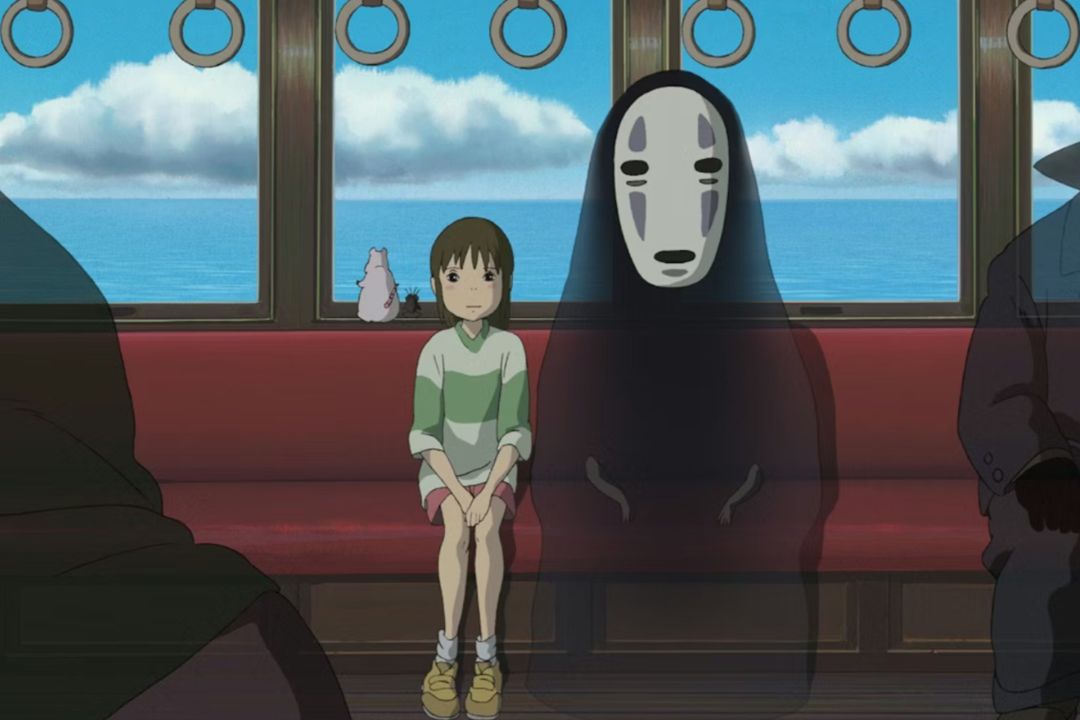
Instead of expanding the concept through endless corporate discussions, Ghibli focused on deepening its emotional expression. That freedom explains why Ghibli films often move like dreams rather than formulas. Kiki’s Delivery Service pauses to watch a girl settle into loneliness. Princess Mononoke refuses easy villains. Spirited Away lingers on a train gliding across flooded tracks. These scenes exist because no committee demanded a faster, safer alternative.
Studio Ghibli’s greatest secret may not be magic forests, flying castles, or mysterious spirits. It may be its stubborn refusal to abandon the principles that built the studio in the first place. Four decades later, those rules still shape every frame.
ADVERTISEMENT
Article continues below this ad
Which of these Studio Ghibli traditions do you think matters most? Share your thoughts and your favorite Ghibli moment in the comments.