


I’ve spent thirty years as a professional film and TV editor. My father is a retired film and TV editor. I’ve been in multimillion-dollar post-production facilities, back when they were a thing, and seen some of the best display technology the world has to offer. I’m good at what I do, and part of the reason for that is my annoying hyperfixation on details that other folks might miss. Lighting, sound, and imaging nuances, if there’s an anomaly, I’ll spot it.
Conversely, when I see something outstanding, I know it. That’s exactly what happened when TCL invited me to check out their latest ultra-premium LED display. Now, you may be asking yourselves, “Why all this buildup over an LED TV?” Well, allow me to be more specific! This is a Super Quantum Dot, or SQD-Mini LED TV, and it beats the brakes off of what is supposed to be the hottest TV tech this year, Micro RGB LED TVs.

Quiz
TV display technology through the years
Trivia challenge
From bulky CRTs to cutting-edge Mini LED — how well do you know the screens that changed television forever?
Display TechHistoryPanelsInnovationBrands
What does CRT stand for, the technology used in most televisions before flat-panel displays took over?
Correct! A Cathode Ray Tube works by firing electrons from a cathode at a phosphor-coated screen to produce images. CRT televisions dominated living rooms from the 1950s all the way through to the mid-2000s before flat panels took over.
Not quite — the answer is Cathode Ray Tube. CRTs fire beams of electrons at a phosphor screen to light up pixels, a technology that dates back to the late 19th century. They were the backbone of home television for over half a century before LCD and plasma displays replaced them.
Which display technology uses individual pixels that can produce their own light AND switch off completely to achieve perfect blacks?
Correct! OLED, or Organic Light-Emitting Diode, is unique because every pixel is its own light source and can turn off individually. This means true blacks and an essentially infinite contrast ratio, which is why OLED panels are prized for cinematic picture quality.
Not quite — the answer is OLED. Unlike LCD-based technologies that rely on a separate backlight, OLED pixels generate their own light and can switch off completely. This produces true blacks and infinite contrast, setting OLED apart from most rival display technologies.
Samsung’s SQD-Mini LED technology, found in its premium 2025 QLED TVs, combines Mini LED backlighting with which other display enhancement to boost brightness and colour?
Correct! SQD-Mini LED pairs a highly precise Mini LED backlight — featuring thousands of tiny LEDs for granular local dimming — with a quantum dot colour filter. This combination delivers exceptional peak brightness, a wider colour gamut, and improved contrast compared to standard LED LCD panels.
Not quite — the answer is a quantum dot colour filter. Samsung’s SQD-Mini LED technology layers a densely packed Mini LED backlight with quantum dot enhancement to push both brightness and colour accuracy significantly higher. It’s one of the key reasons Samsung’s high-end QLED sets can compete with OLED on HDR performance.
In roughly which year did plasma televisions first become available to consumers as large-screen flat-panel displays?
Correct! The first consumer plasma televisions appeared around 1997, pioneered largely by Fujitsu and Panasonic. They were eye-wateringly expensive at launch but represented the first realistic large-screen flat-panel option for home viewers.
Not quite — plasma TVs first reached consumers around 1997. Fujitsu and Panasonic were among the earliest brands to bring plasma panels to market, and while the screens were stunning for the time, prices were astronomical. Plasma technology remained popular until the rise of LCD and OLED eventually made it obsolete by the early 2010s.
What is the primary function of ‘local dimming’ in an LED-backlit LCD television?
Correct! Local dimming divides the LED backlight into zones that can be brightened or dimmed independently. This means dark areas of the image can be lit less intensely, dramatically improving contrast and black levels compared to a uniform backlight — especially useful during HDR content.
Not quite — local dimming allows specific zones of the backlight to dim or brighten independently of each other. Rather than lighting the whole screen uniformly, it targets darker regions of an image with less light, which noticeably improves contrast ratios. The more dimming zones a TV has, the more precise and convincing the effect.
Which Japanese company is widely credited with pioneering the first mass-market LCD television panels for home use during the late 1980s and 1990s?
Correct! Sharp was a trailblazer in LCD panel development and was the first to bring LCD televisions to a mass market. The company’s Aquos LCD TV line, launched in the early 2000s, became synonymous with the flat-panel revolution and helped make large LCD screens a mainstream household product.
Not quite — it was Sharp that led the way in mass-market LCD televisions. Sharp invested heavily in LCD research during the 1980s and eventually launched its iconic Aquos range, which brought flat-panel LCD TVs into millions of homes. The company’s Kameyama factory in Japan was once considered the world’s most advanced LCD manufacturing plant.
What does HDR stand for in the context of modern television display standards?
Correct! HDR stands for High Dynamic Range, and it refers to a display’s ability to reproduce a wider range of brightness levels — from very deep blacks to extremely bright highlights — simultaneously. HDR content, paired with a capable display, delivers a far more lifelike and immersive picture than standard dynamic range.
Not quite — HDR stands for High Dynamic Range. It describes both a content format and a display capability, allowing screens to show a much broader spectrum of brightness from shadows to highlights at the same time. Formats like HDR10, Dolby Vision, and HLG each define how that extended brightness and colour data is encoded and displayed.
MicroLED is considered a next-generation display technology — but what makes it fundamentally different from OLED?
Correct! MicroLED uses microscopic inorganic LED pixels that each produce their own light, similar in concept to OLED but without the organic material that makes OLED susceptible to burn-in and degradation over time. MicroLED promises OLED-like contrast and response times with far greater longevity and potentially higher peak brightness.
Not quite — the key difference is that MicroLED uses inorganic LED pixels, which means it avoids the burn-in and lifespan concerns associated with the organic compounds in OLED panels. Both technologies are self-emissive, meaning each pixel generates its own light without a backlight, but MicroLED’s inorganic construction makes it significantly more durable over time.
Your Score
/ 8
Thanks for playing!
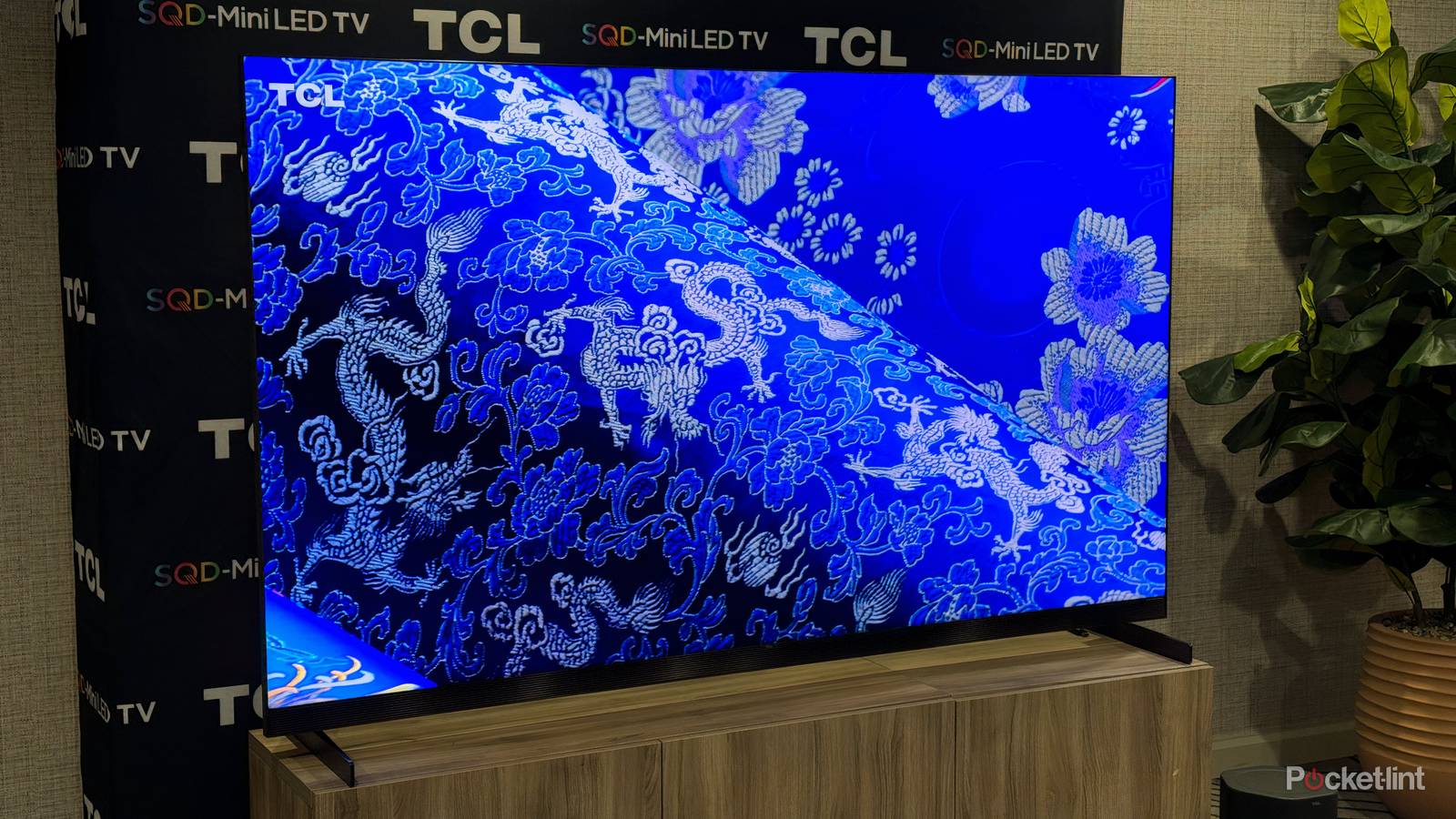
Specifically, I was able to get some hands-on time with TCL’s new SQD-Mini LED X11L flagship TV, and it’s a game-changer that alchemizes the brightness of LED TVs with the deep blacks and vibrant colors of OLED, improving upon the promise of Micro RGB LED TVs before they’ve even had a chance to build up steam in the market.
The new consumer display King?
A worthy OLED competitor

If you want deep blacks and rich, vibrant colors, and have a dimly lit room, you buy OLED. If you have a living room that also serves as your “home theater viewing area,” you’re more likely to buy some variation of LED, like one with Quantum Dot technology. If you want both, you now have the option to buy SQD-Mini LED… kind of. More on that in a bit.
Most of us don’t have dedicated home theater rooms, so we use multi-use spaces like a family room for our media consumption, which often means windows and bright daylight. OLED panels on the market today sit around 2,000 nits of brightness. Mini-LED TVs currently on the market will hit you with over 6,000 nits of brightness, meaning they’re excellent buys for watching your favorite flicks in your living room in broad daylight.
Currently, the Hisense 116UX is one of the brightest Micro RGB LED TVs you can buy, with some reviewers testing it and measuring just under 6,000 nits. TCL says its SQD-Mini LED panel can reach a maximum brightness of 10,000 nits and has over 20,000 local dimming zones, which is among the highest on any current consumer display.
Many industry analysts believe that, because of its deeper, richer colors and brightness, RGB LED technology will unseat OLED as the best display you can buy, but having now seen the X11L, I’d say they’re wrong. Let’s get into the experience!
What makes SQD-Mini LED better than Micro RGB?
The ultimate “glow up down!”

LED TVs are backlit with white lights, but RGB technology replaces those white lights with one red, one green, and one blue LED behind each pixel-sized LED, allowing more colors to be reproduced. The problem with Micro RGB is that it produces a “halo” effect, often referred to as an image “blooming.” It’s hard to control the spread of those RGB LED backlights, and though manufacturers have attempted to develop ways to mitigate light blooming, it still happens. Not quite the case with Super Quantum Dots and TCL’s enhanced Halo Control System.
When I first entered the viewing room that TCL set up for us, in a hotel in sunny Santa Monica, California, I was greeted by their 98” X11L, and it looked gorgeous. After my colleagues and I were seated, a spokesperson stepped up to tell us all about it, followed by a demo. They had a soundbar sitting in front of this premium flagship behemoth. We watched their demo video, and it was absolutely gorgeous. The audio from the soundbar was solid as well.

When the demo was done, the rep stepped up and pulled the soundbar away from the front of the TV. It wasn’t connected to the TV, and it wasn’t even plugged in! That respectable sound I heard was coming from the TV itself, and I will say that was some of the best audio I’ve ever heard coming directly from a TV that thin (0.8”!), thanks to the Bang & Olufsen speaker system built into the unit. And, it is a system!
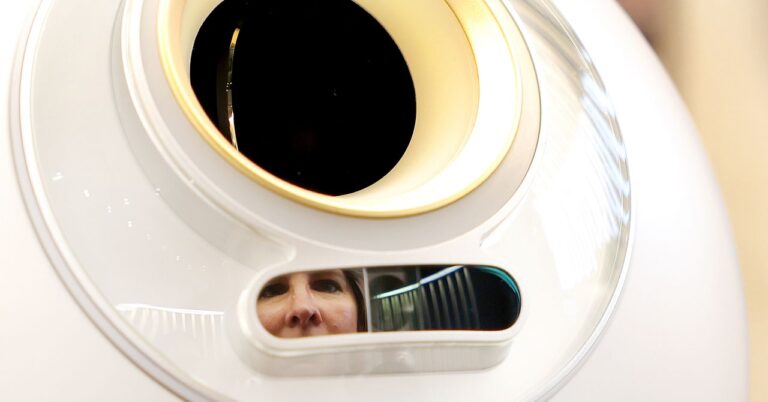
Speakers (pictured below) are built into the lower part of the chassis for the L, R, and Center channels, while two pairs of rear-mounted woofers handle low frequencies, and there are speakers that fire to the sides of the unit. You’re still going to want an external system, but if you don’t buy one right away, or have one already, there are far worse audio experiences you could have with a TV.


Next, we were taken to a dark room with three TVs front and center. They played the same video on all three TVs simultaneously, and the difference wasn’t even close! In terms of branding, the way they’d set up the units, you couldn’t tell which was which, but the X11L was brighter, blacker, and more vibrant than the other two, and there was almost no perceptible blooming when comparing to an equally elite level OLED. Usually, you’ll see that “halo” effect coming from images with lights in them, and they gave that, with some night scenes of Las Vegas, and the back lighting on the X11L was immaculate.
The amount of detail in images was outstanding as well. Motion blur, digital artifacts, and many other potential issues appeared non-existent. But they weren’t done yet.
We were then taken into another room, but this time, only two TVs were in there. After watching more videos played side by side, a rep stepped up and explained that we’d just been looking at their X11L next to an OLED panel. Again, the difference, for me, was not subtle at all. In HDR highlights, the TCL panel visibly outshone the OLED, and its contrast was excellent. One of the most impressive aspects of the images the X11L produces is the color volume. As bright as the display gets, the colors never looked washed out and maintained their saturation.
The big picture, and pricing
An overwhelming list of features, and the price to match
The X11L isn’t a premium set, it sits squarely among the elite sets, and though the price will come down in years to follow, today it’s also going to require an elite bank account with prices starting at $7000 for the smallest 75” model (75X11L), going up to $10,000 for the largest 98” model (98X11L).
For that money, you get the excellent Bang & Olufsen sound, support for multiple HDR formats, four HDMI 2.1 ports that support 4K at 144Hz (HDMI 1 is your eARC port), WiFi 6, Bluetooth 5.4, a USB 3.0 and 2.0 port, ethernet, optical audio out, and a built-in ATSC 3.0 tuner. This runs on Google TV (Android 14) with Gemini support, and the TV comes with a backlit remote that supports voice commands via its microphone button.

One of the coolest features of the remote is a rocker panel on the right side that lets you adjust the backlight brightness on the fly. A feature you don’t see too often from many competitors.
I have to say that, in my somewhat brief time with the X11L, it was the best Mini LED TV that I’ve had the opportunity to check out, and it even kept up with an OLED panel, which is quite impressive. Heck, it even appeared to exceed that OLED in some areas! Now, we wait. For what? The future to hurry up and get here because, though you can buy the TV today, most of you (and me) can’t actually buy the TV today. There is good news, though. TCL just announced its more affordable QM7L SQD-Mini LED sets, available for pre-order at the time of this writing. The prices start at a more affordable $1,199.99 for the 55″ and $3,999.99 for the 98″. Those price points are definitely a lot more affordable for us fiscally average folks.