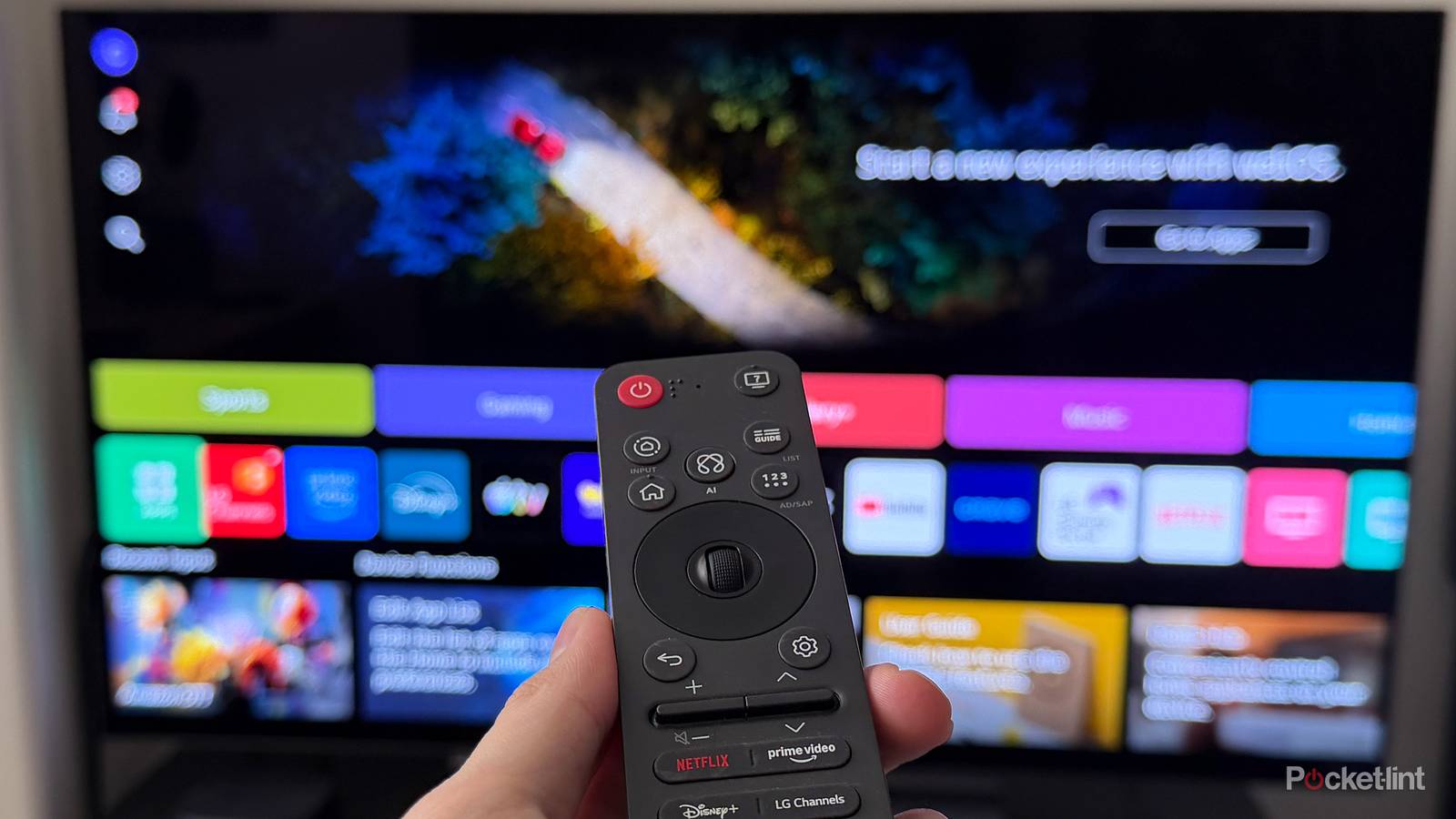
Smart TVs are great, at least when you first get them. When I first plug one in, I often wonder why I even need to pick up a streaming device. It’s not until some time passes that I realize what these sticks and boxes have to offer. For whatever reason, it feels like smart TVs get bogged down over time, and while restarting them can provide a temporary lease on life, it never feels like enough.
I never thought much about it, but I decided to look into what’s actually powering these TVs, and that’s when things started to make a little more sense. It might surprise you to hear that the chip powering many TVs is a budget processor that you might’ve seen in phones years ago. That certainly explains why a lot of these TVs leave a lot to be desired, and it also explains why budget TVs can be sold at such an affordable price.
Your smart TV is using an old phone processor
It all makes sense

I started to dig into some of the budget TVs, and I learned that the Fire TV Omni QLED, a TV I actually liked, uses a Cortex-A55 quad-core CPU, a processor that dates back to 2017. While that might not seem that old, it’s ancient as far as technology is concerned. It’s a CPU you still use in a lot of budget devices, especially cheap little emulation handhelds you see from companies like Anbernic. It’s not that there’s anything wrong with that, but it’s clear that CPUs like this have limitations. For emulation, it’s what game consoles they can run, but TVs aren’t asking as much of them.
On the surface, a CPU like the Cortex-A55 shouldn’t have any issues running streaming apps, so it seems like there’s something else bogging the performance down. Another limiting factor is RAM, and this same Fire TV has just 2.5 GB of it. RAM is essential for multitasking, and I think this low amount is why it’s important to force close your apps every so often. It’s something I have to do with my streaming sticks and boxes, even the Apple TV 4K. My first-gen Apple TV 4K has 3 GB of RAM and still experiences slowdowns, so you can only imagine how much more often it happens on a TV with less RAM and a weaker chip.
You can mitigate the issues as much as you can, but you’re always going to be dealing with the older processor and lack of RAM, so you’ll have to get used to doing these fixes over and over. Fortunately, it doesn’t take a lot of time to clear the cache or reset your device, so it’s not like you have to go out of your way to fix things. I’d rather not have to do this, but if that’s the price of keeping costs down, I suppose it’s a worthy tradeoff.
In many ways, it makes sense for TVs to use processors like this. They aren’t huge energy hogs, they don’t need to be powerful, and they are cheap. Companies look to cut costs in any way they can these days, and in the case of smart TVs, it feels like owners have felt that a little bit. I’m not happy with the speed of my smart TVs for very long after I get them, but it feels like it’s just par for the course. You can pick up a new Amazon Fire TV Stick for like $20 on any given day, so it’s not like you have to break the bank to upgrade.
 Quiz
Quiz
Smart TV trivia
The ultimate challenge
From streaming apps to display tech — find out how much you really know
about smart TVs.
BrandsTechnologyStreamingHistoryFeatures
Which company is widely credited with launching one of the first internet-connected
smart TVs for consumers, back in 2007?
Correct! HP launched the MediaSmart TV in 2007, one of the earliest
consumer televisions with built-in internet connectivity. It could stream content and sync with a home
PC, setting the stage for the smart TV era we know today.
Not quite — it was actually HP with the MediaSmart TV in 2007. While
Samsung and LG would go on to dominate the smart TV market, HP was an early pioneer in bringing internet
features to the living room television.
What is the name of Samsung’s proprietary smart TV operating system, used across its
modern television lineup?
Correct! Samsung uses Tizen OS on its smart TVs. Originally developed as
a broader mobile and embedded OS, Tizen became Samsung’s platform of choice for its televisions and
powers the interface across its entire modern TV range.
Not quite — Samsung’s smart TVs run on Tizen OS. WebOS is used by LG,
while Vidaa is Hisense’s platform. Tizen gives Samsung full control over the interface, app ecosystem,
and smart home integration on its televisions.
Which smart TV platform is developed and maintained by Roku, available both on Roku
devices and licensed to third-party TV manufacturers?
Correct! Roku OS powers both Roku’s own streaming sticks and boxes, as
well as TVs from brands like TCL and Hisense that license the platform. It’s one of the most popular
smart TV operating systems in the United States.
Not quite — Roku’s platform is called Roku OS. SmartCast is Vizio’s
system, Fire TV is Amazon’s platform, and Android TV is Google’s offering. Roku OS is notable for its
simple interface and broad app support across multiple TV brands.
What does the acronym OLED stand for in the context of premium smart TV display
technology?
Correct! OLED stands for Organic Light-Emitting Diode. Each pixel in an
OLED panel produces its own light and can switch off individually, enabling perfect black levels and
infinite contrast ratios — one of the reasons OLED TVs are prized for picture quality.
Not quite — OLED stands for Organic Light-Emitting Diode. The ‘organic’
refers to the carbon-based compounds used in the emissive layer. Unlike traditional LCD panels that rely
on a backlight, OLED pixels are self-emissive, which is what gives OLED TVs their exceptional contrast
and deep blacks.
Which smart TV feature allows a compatible smartphone screen to be wirelessly
mirrored to the television using a standard built into Android devices?
Correct! Miracast is a wireless display standard built into many Android
devices that allows screen mirroring directly to a compatible smart TV. Unlike Chromecast, which streams
content from the cloud, Miracast creates a direct peer-to-peer wireless connection between the phone and
TV.
Not quite — the answer is Miracast. AirPlay is Apple’s equivalent
technology, Chromecast casts specific content rather than mirroring the full screen, and DLNA is a media
sharing protocol. Miracast is the Wi-Fi Alliance standard that Android devices use for wireless screen
mirroring.
LG’s premium smart TV lineup, known for its OLED panels and webOS platform, uses
what brand name for its top-tier OLED series?
Correct! LG brands its premium OLED panels as OLED evo, a term
introduced to highlight improved brightness and picture processing compared to earlier OLED generations.
The evo panel is found in LG’s C, G, and Z series televisions and represents the top of the company’s
display technology.
Not quite — LG calls its premium OLED panel technology OLED evo.
NanoCell and QNED are LG’s LCD-based technologies, while LG Signature is an ultra-premium brand
umbrella. OLED evo specifically refers to the improved panel tech that delivers higher brightness than
traditional OLED displays.
Amazon’s smart TV operating system, found on its Fire TV Edition televisions and
streaming sticks, is based on which underlying platform?
Correct! Amazon’s Fire TV OS is built on a heavily modified fork of
Android. While it doesn’t include Google’s apps or the Play Store, the underlying architecture is
Android-based, which is why some Fire TV devices can sideload Android APK files.
Not quite — Fire TV OS is built on top of Android, though Amazon heavily
customises it and removes all Google services. This Android foundation means the platform shares some
compatibility with Android apps, even if access to the Google Play Store is not included by default.
What is the maximum refresh rate, in Hz, that the HDMI 2.1 specification supports at
4K resolution — a key feature for gaming on modern smart TVs?
Correct! HDMI 2.1 supports 4K resolution at up to 120Hz, which is a
significant step up from the 60Hz cap of HDMI 2.0. This makes HDMI 2.1 ports essential for gamers using
a PlayStation 5 or Xbox Series X, as both consoles can output 4K at 120 frames per second.
Not quite — HDMI 2.1 supports 4K at up to 120Hz. While HDMI 2.1 can
technically handle 144Hz and beyond at lower resolutions, the headline gaming spec for 4K is 120Hz. This
is why smart TV manufacturers specifically highlight HDMI 2.1 ports as a selling point for next-gen
console gaming.
Your Score
/ 8
Thanks for playing!
I don’t want TVs to upgrade their CPUs
Not worth the cost

While it seems like I’ve been spending the entire time complaining about how slow TVs are, I’m not sure if I’m ready for them to make any real changes. After what feels like years, 4K TVs have finally become budget-friendly. You can often find them for about $300, and while those don’t come with any fancy bells or whistles, they display an image and play audio. For a TV at that price, I’m not looking for anything else.
When you compare these budget options with high-end, it starts to make sense why they are priced the way they are. LG’s Alpha 11 processor takes advantage of several AI-powered features that let it enhance picture and sound quality, fine-tune your TV depending on your viewing conditions, and improve your voice controls. Now, the LG C6, a TV powered by this chip, costs $2,000, so there’s a gigantic gap between the Fire TV Omni QLED I mentioned earlier and this one.
Although it’s great that faster and more powerful TVs are available, I really don’t think it’s worth specifically seeking one out. I’m not saying that high-end TVs aren’t worth it, because they certainly are, but it’s not because of their processor. The thing that sets those TVs apart from the budget-friendly ones are their panels. A good OLED panel is more important than what the processor is, and that’s what you should be targeting. Mini-LED, OLED, and Micro-LED TVs are all excellent options, and the improved processor you’ll get with a high-end TV with one of those panels is just icing on the cake.
Keep in mind that a lower-end Mini-LED screen won’t necessarily have a powerful processor, but I still don’t think it’s worth losing sleep over something like that. The reality is that your processor matters, but it shouldn’t be anything that makes or breaks your purchase. I’ve had numerous TVs slow down on my over time, but I never regretted buying them. Sure, I’d like it if all smart TVs would be able to play my favorite movies and TV shows without slowing down, I’ll deal with the slowdowns if it means saving a lot of money on TVs.
What makes this easier to deal with is the fact that streaming sticks don’t cost anything at all to pick up. If you are fed up with your TV’s speed, you can get a streaming stick for about $20. This will make a huge difference in speeds as it offloads everything to the streaming stick. As long as you get a 4K stick for your 4K TV, there aren’t any downsides to this. Although, if you don’t like the Fire TV ecosystem, you should have your sights set on a Roku stick instead. I prefer the Apple interface over everything, but that would mean you need to splurge for a box that costs over $100, and that sort of defeats the purpose of saving money on a TV in the first place. Then again, I’ve been using my Apple TV 4K for years, so I’ve gotten my money’s worth.