

For a few fleeting hours on Tuesday evening, the White House put forward something resembling an actual strategy to wind down the war in Iran, not a slogan, not a lurch.
It was a four-part approach: reopen the Strait of Hormuz with a plan called ‘Project Freedom’; squeeze Iran’s economy harder than ever through sanctions and a de facto blockade; lean on China to rein in Tehran; and pursue direct negotiations through backchannels, including Special Envoy Steve Witkoff’s phone and intermediaries, including Pakistan.
It bought time. It managed risks. It signaled resolve without immediate escalation. It even carried, at least on paper, a moral coherence, as laid out by Secretary of State Marco Rubio in the White House briefing room, to safeguard global commerce while keeping the door open to diplomacy.
Oil prices fell and MAGA pundits took a victory lap.
Then, just as quickly, it unraveled.
President Trump, with little explanation, effectively pulled the plug on ‘Project Freedom’ on Wednesday morning, amid reports of yet another emerging framework for a peace deal.
This is the pattern now. Not strategy. Whiplash.
Maybe there is a master plan. Maybe Trump is on the verge of unveiling a deal that dramatically surpasses the constraints placed on Iran’s nuclear program by President Obama’s 2015 deal. Maybe the pause is tactical, a feint before a diplomatic breakthrough or a recalibration ahead of high stakes talks with China, which are set for next week.

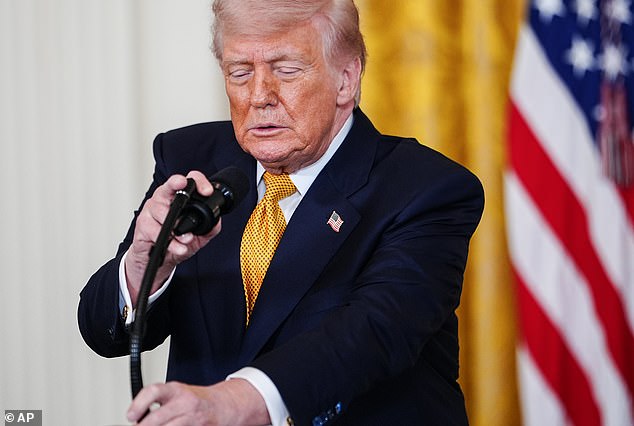
President Trump, with little explanation, effectively pulled the plug on ‘Project Freedom’ on Wednesday morning, amid reports of yet another emerging framework for a peace deal

‘Project Freedom’ carried, at least on paper, a moral coherence, as laid out by Secretary of State Marco Rubio in the White House briefing room, to safeguard global commerce while keeping the door open to diplomacy
But if that’s the case, it is invisible to everyone outside a very tight circle and possibly even to some inside it.
Senior Republican strategists, who have been loathe to admit – even privately or to themselves – that unless this conflict is resolved in short order the GOP will face a political bloodbath in the upcoming November midterm elections, are now acknowledging it.
‘Based on polls I’ve seen, if this doesn’t end fast and gas comes down quick, Democrats are winning the Senate. Which Iran would love. [Republicans] need this over fast,’ an influential party insider told me.
Well, I have bad news for Republican partisans. There is a growing sense, even among objective observers of this conflict, that the war is not wrapping up but slipping into a far darker and more intractable phase.
From the initial US-Israeli strikes, through what officials carefully called an ‘excursion,’ and now into what is unmistakably a sustained, stalemated conflict, there has been a temptation to believe that the next move, the next pressure point, the next round of talks would bring resolution closer.
Instead, each turn seems to harden positions. Iran is not behaving like a regime looking for an exit. It is behaving like one settling in for a long confrontation.
An Iranian spokesperson for the National Security and Foreign Policy Commission reacted Wednesday to reporting of a nascent framework for a deal, tweeting, in part, ‘If [the Americans] do not surrender and do not make the necessary concessions or if they themselves or their dogs try to misbehave, we will give a harsh and regrettable response.’
That doesn’t sound like a regime on the ropes. And while the President claims that Tehran is riven by competing factions, including some that seek a deal with the US, remains highly likely that they do not exist at all.
What if they’re all hardliners?
Iran is deepening ties with Pakistan, tightening coordination with Russia and relying on China not just as an economic partner but as a geopolitical counterweight to Washington.
It is exploiting what many in the region see as a vacuum, a perception that US authority, not just in the Gulf but globally, is less decisive, less predictable and less feared than it once was.

Mark Halperin is the editor-in-chief and host of the interactive live video platform 2WAY and the host of the video podcast ‘Next Up’ on the Megyn Kelly network
That matters, because Iran and its allies have no real incentive to give up control of the strait or abandon their nuclear capabilities under current conditions. Doing so would not buy them security; it would strip them of leverage and leave them more exposed to future US or Israeli action.
On the other side, Trump faces his own set of constraints. Pulling back – withdrawing carriers, Marines, or land-based air power – would not look like prudence. It would look like retreat. It would intensify political pressure at home and send a deeply unsettling signal to allies in Saudi Arabia, the UAE and Kuwait, who already feel increasingly vulnerable.
Which leads to the conclusion many are now drawing: this is not heading toward a quick resolution or even a stable stalemate. It is heading toward a prolonged conflict punctuated by bursts of escalation: strikes, tenuous talks, persistent tensions.
Trump himself underscored that volatility on Wednesday morning, returning to Truth Social with a familiar mix of warning and brinkmanship: take the deal, or face massive American retaliation. At the same time, reports suggest Israel is prepared with an expanded target list, including leadership figures and critical infrastructure.
The real question, then, is not who blinks first. It is how much damage accumulates before anyone does.
There is an old line: it is always darkest before dawn. Senator John McCain had a darker version he attributed to Chairman Mao: it is always darkest before it goes totally black.
After the last 24 hours, it is the second line that seems to be gaining traction.
Unless of course, Trump is about to pull a rabbit out of hat with a deal. But the chances that a deal achieves meaningful goals seems, to many, dark indeed.