


Deep in the Bolivian Yungas cloud forests, there stalks an utterly adorable beast: smaller than a house cat and spotted like a leopard, the creature has long been known to local communities as a tilcayo. Scientists, however, have only just formally discovered it—marking the first new wildcat species to be identified in more than a century.
The new species, Leopardus tilcayo, is a type of tiger cat, a group of small felines in the genus Leopardus that are native to South America. In a paper published on Thursday in Current Biology, the researchers identify five distinct species of tiger cats in South America, including the tilcayo.
The discovery came by accident, said the study’s co-lead author Paola Nogales-Ascarrunz to NBC News. A man had brought one of the kitties into the sanctuary that she volunteered at, and she noticed that it didn’t quite match any existing tiger cat species. After a series of genetic tests, she and her team discovered the cat must be a new species that had likely diverged from its closest tiger cat relative some 1.4 million years ago.
On supporting science journalism
If you’re enjoying this article, consider supporting our award-winning journalism by subscribing. By purchasing a subscription you are helping to ensure the future of impactful stories about the discoveries and ideas shaping our world today.
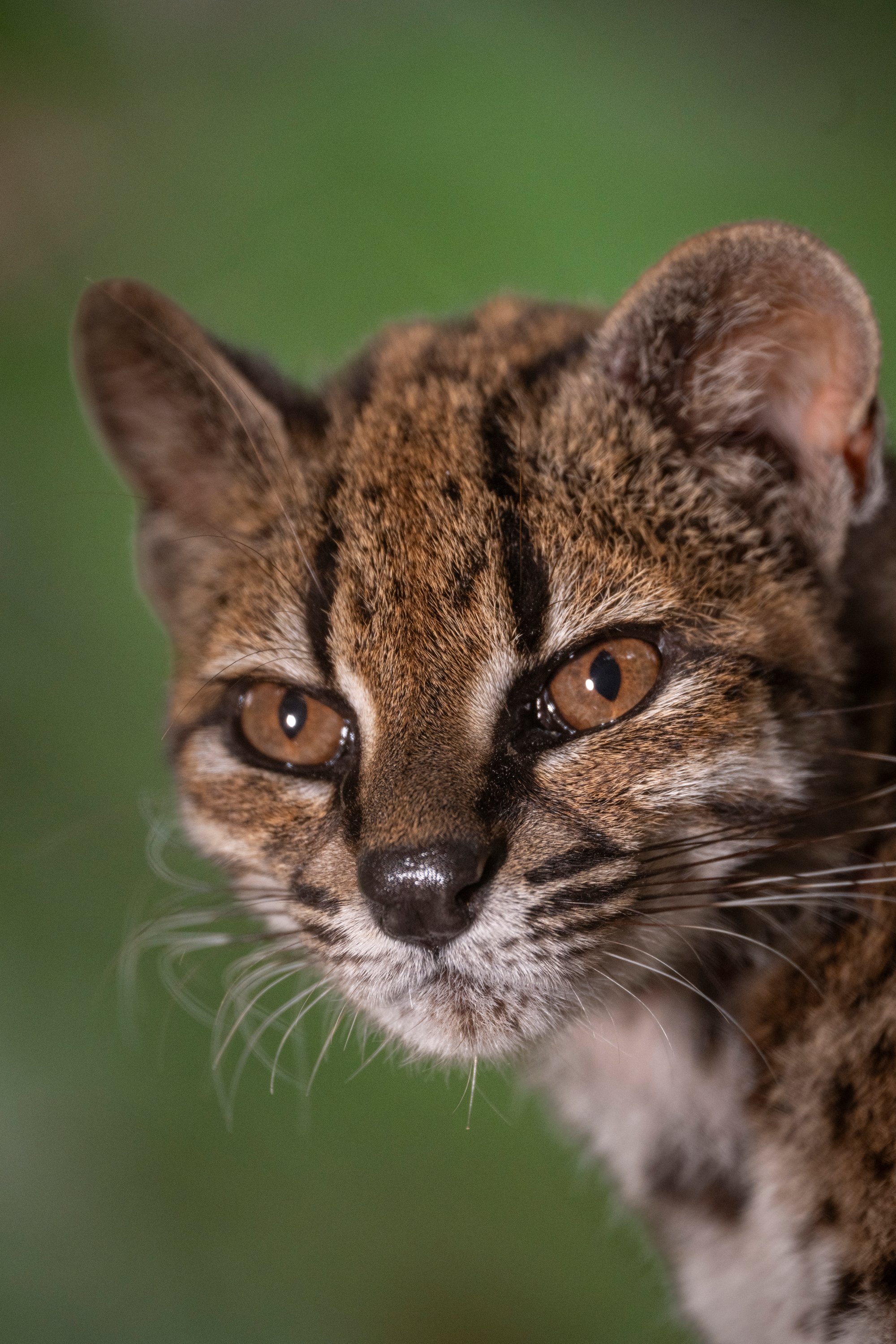
Fernando Faciole/National Geographic
The discovery of a new mammal, especially a cat, is rare. It’s even more rare to find an entirely new species rather than a variation of a known species. The study analyzed the genomes of 38 cats, including 26 Leopardus cats, comprising “the most complete genetic study yet,” said the study’s co-lead author Jonas Lescroart, an evolutionary ecologist at the University of Antwerp in Belgium, to Gizmodo.
It’s unclear how many tilcayos are out there, and the authors have said that the study should be a catalyst for intensified conservation efforts across tiger cat species.
“Describing a new cat species after more than 100 years shows how much we still have to learn about the biodiversity around us. But it also reminds us that we need to protect the Yungas forests, which are home to so many species—including some we are only beginning to understand,” Nogales-Ascarrunz said in a statement.
Subscribe to Support Independent Journalism
Great science journalism requires human expertise, time, effort and creativity. And it costs money. That’s why I and the journalists here at Scientific American hope you’ll join our community.
When you subscribe, you are supporting staff and freelance journalists who are passionate about telling science stories that are true, important and compelling. Our editors and reporters are often experts in their fields, which means they understand the nuances of big discoveries and can untangle the breakthroughs from the hype. With a subscription, you are also supporting rigorous fact-checking to ensure the words we publish are precise and accurate. And you’re supporting original illustrations, graphics and photos that bring you closer to an advanced laboratory, an ice sheet in Antarctica or a space mission in orbit. You’re helping us craft other types of high-quality journalism as well: Our newsletters are carefully written, edited and curated by staffers you have or will come to know and love. Our Science Quickly podcast is based on original reporting, collaboration with editors and scientists and exacting production.
Subscriptions keep this engine running so we can continue to deliver thoughtful, rigorous and independent science journalism to you. In an era of viral misinformation, this work is crucial. If you value what we do, I hope you’ll consider joining us as a subscriber

