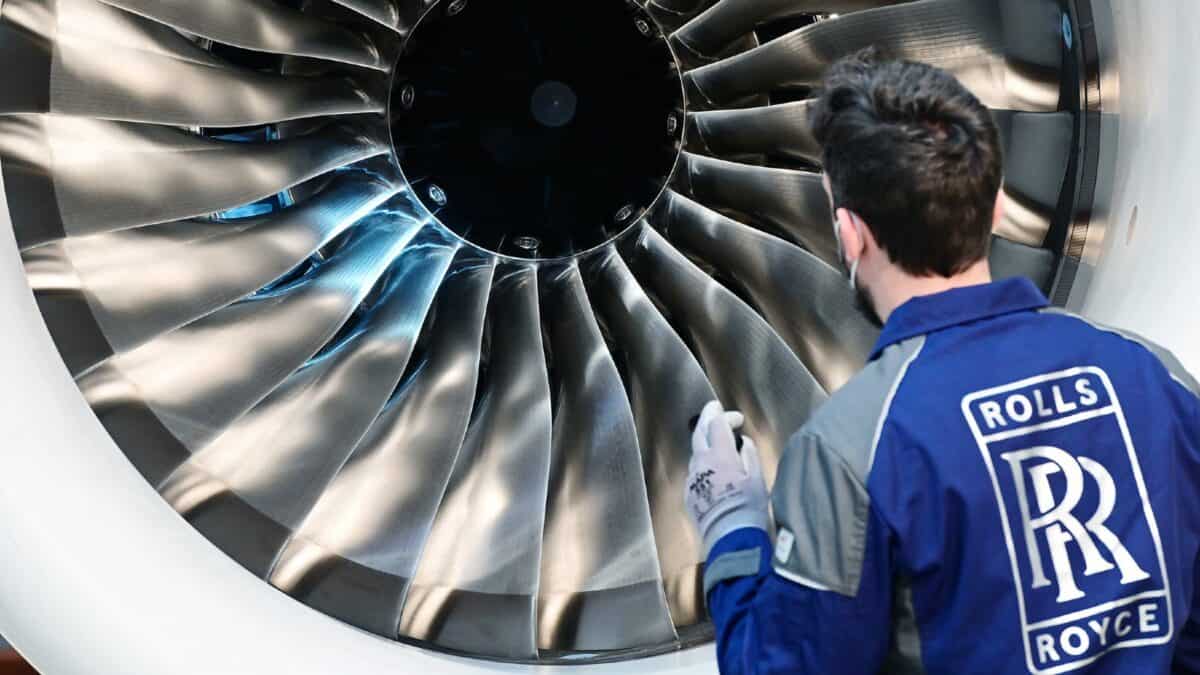

Image source: Rolls-Royce plc
Over the past three years, Rolls-Royce (LSE: RR.) has gone from recovery story to one of the FTSE 100’s standout performers. Operating profit is up fivefold, margins have hit targets years ahead of schedule, and the company has launched the largest share buyback programme in its history.
Much of that progress is already reflected in the share price. Investors could reasonably think the easy gains have now been made.
But CEO Tufan Erginbilgiç takes a different view. In the latest update, he argued that many of the improvements already delivered have not yet fully flowed through into cash generation.
If that proves correct, the next phase for Rolls-Royce could look very different from the turnaround story that drove the shares higher.
Best still come
The key message from FY25 results was less to do with what the company achieved. Instead, it was about the benefits still to come from changes made over the past three years.
A major focus was the company’s long-term service agreements (LTSAs). These contracts generate recurring revenue from maintaining aircraft engines after they have been sold.
According to Erginbilgiç, improvements to these contracts and operational changes are helping engines stay in service for longer between maintenance visits. These changes are expected to drive significantly higher cash generation in the years ahead. As he put it, “the majority of the LTSA cash benefits are still to come.“
In other words he argues that much of the financial benefit from its transformation has yet to flow through.
Is the CEO right?
On the face of it, there is strong evidence to support the CEO’s optimism. Group operating profit has increased roughly five-fold since 2022, while margins have expanded to 17.3% across all divisions. Return on capital has also risen sharply to around 19%, with management now targeting up to 26% by 2028.
Crucially, cash generation is still improving, with free cash flow up significantly as higher profits and LTSA contract growth feed through the business. The newly announced £7bn-£9bn buyback programme for 2026-28 further reinforces confidence that this improvement is not a one-off.
Taken together, the numbers point to a highly cash generative business.
What could go wrong?
The main risk is that much of this optimism is already well understood. Rolls-Royce shares have re-rated sharply in recent years, and the market may already be pricing in a significant amount of the expected LTSA cash flow recovery and margin expansion.
That creates a higher bar for delivery. If improvements in engine durability, maintenance cycles, or contract terms take longer to feed through than expected, the timing of cash generation could slip — even if the long-term direction remains correct.
Similarly, execution risk remains across multiple programmes, from Civil Aerospace aftermarket performance through to new growth areas in Power Systems.
There’s also the simple risk that expectations have moved ahead of fundamentals after such a strong share price run.
Bottom line
The share price has started to stall more recently, which may suggest sentiment is already fully stretched.
While the long-term story still looks compelling, I think much of the optimism is now reflected in the valuation. For that reason, I see it as one to consider — but only with a degree of caution.
Should you invest £5,000 in Rolls-Royce Plc right now?
When investing expert Mark Rogers and his team have a stock tip, it can pay to listen. After all, the flagship Twelfth Magpie Share Advisor newsletter he has run for nearly a decade has provided thousands of paying members with top stock recommendations from the UK and US markets.
And right now, Mark thinks there are 6 standout stocks that investors should consider buying. Want to see if Rolls-Royce Plc made the list?
Andrew Mackie does not hold any positions in the companies mentioned.