Dear Matt,
Welcome to the BBC. Director general should be one of the best jobs in the world and plenty of people will be rooting for you to prove that it is.
But there’s no use pretending that your inheritance is not one of the most difficult facing any new director general.
Even on your first day in office, you’ll be dealing with comments made by Fran Unsworth, the talented director of BBC News from 2018 to 2022, who says she was driven out of her role by gender ideologues at the corporation.
She says her division had become ‘increasingly unmanageable’ because of the extreme positions of activists in her teams. ‘It wasn’t just the trans issue,’ she said. ‘There was lots of bullying going on about all sorts of things: people didn’t want to hear from certain points of views. They’d ‘no platform’ them.’
To spell that out: junior BBC staff decreed that the opinions of some people who paid their wages were not acceptable on the national airwaves.
So let’s start there. It is only the latest in a string of incidents that have left viewers with the impression that the Corporation has fallen under the sway of activists.
One particularly low moment came in 2021, when the distinguished scientist Robert Winston remarked on Question Time that ‘you cannot change your sex’, only for Fiona Bruce to add: ‘Many people would vehemently disagree with you.’
And perhaps it is time, too, to absolve presenters Justin Webb and Martine Croxall, both of whom found themselves subject to upheld complaints from the politically-correct zealots within your own bureaucracy.

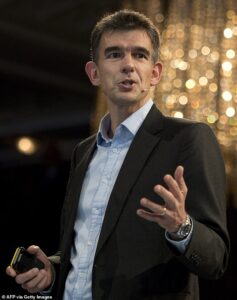
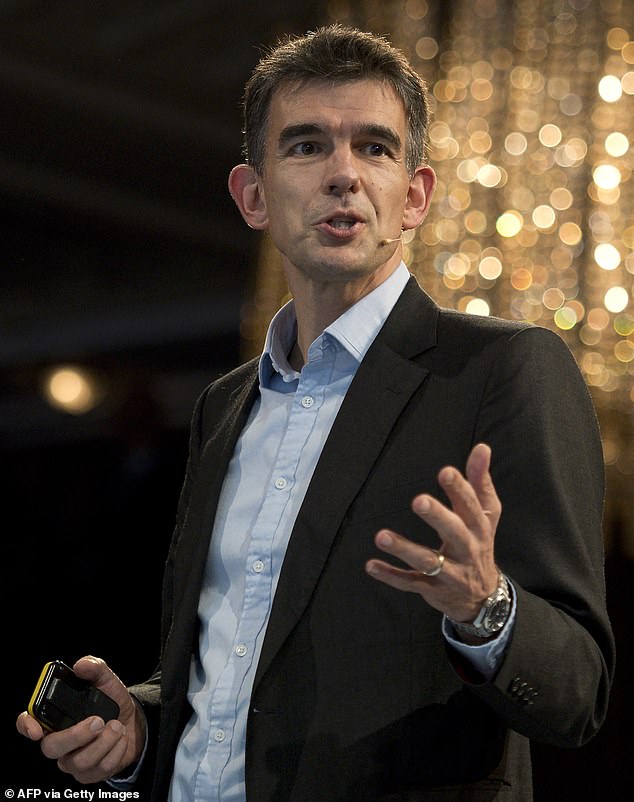
Matt Brittin takes over from Tim Davie, who stepped down as director general after a series of scandals

Roger Mosey says one of Matt’s toughest jobs will be to ensure the BBC’s commitment to impartiality is upheld
You then need to read the riot act (again) to the staff who don’t understand what impartiality, the lifeblood of the BBC, means, and tell their managers to stand resolutely behind true diversity.
That means representing all the people of these disputatious islands. The BBC had a feeble record in spotting the popular discontent that fuelled Brexit, and it is too easy for journalists in London enclaves to be ignorant of what’s happening in Wrexham or Whitehaven.
I would recommend that you give real power to your teams in the nations and regions. They’re based there in good numbers already, and it’s time they were listened to and empowered.
The truth is that, despite all the rotten cabbages that will be hurled in your direction, the BBC remains a great national asset. 94 per cent of us consume it at least once a month, and it gives us many of our national talking points: brilliant television programmes such as The Traitors, Blue Lights, David Attenborough’s 100 Years On Planet Earth and countless more.
But if your predecessor Tim Davie hasn’t echoed the Labour politician Liam Byrne in 2010 by leaving you a note saying ‘I’m afraid there is no money’ then that was, unfortunately, an omission.
The interim director general Rhodri Talfan Davies has said that the current licence fee model is nearing the ‘end of life’, and he is right. Less than 80 per cent of households are now paying it.
While I would personally pay the licence fee for BBC Radio alone, and I can’t imagine a day without hearing live commentary from Radio 4 and Radio 5 Live, the fact is that younger audiences in particular find the concept of paying to watch TV deeply weird. And the competition from streamers and online content means that many feel they don’t have to pay for the BBC any more.
I know you’ve already been talking to the Culture Secretary Lisa Nandy about this but, frankly, you both need to get a move on. Almost two years into a Labour government we’re still at a consultation phase about future models of funding – whether that’s a new tax or taking advertising or moving to subscriptions or a mix of these – and the BBC hasn’t shown its hand either.
It’s right, of course, to say that you want to remain accessible to all, and that ‘universality’ remains the buzzword: something for everyone. But it will soon be ‘not much for anyone’ if you can’t find a guaranteed source of income.
Nandy has said that she sees the BBC as akin to the NHS, in its role as a vital national service.
Some would disagree with that statement, but in a chaotic digital age we’re already seeing what the alternative looks like. Global media is increasingly run by tech companies and American-based billionaires – you will know, Matt, since you worked for Google – and the stakes have never been higher.
Do we want our national debate to be run by Elon Musk on X or Jeff Bezos at Amazon, who has already reduced the editorial freedom of The Washington Post since buying the paper in 2013?
Here lies one of the most acute decisions facing you. How can you ensure BBC News meets the needs of people here and across the world?
Recent reports suggest that the BBC’s news operation is planning to cut costs by 15 per cent – with job cuts the major focus.
I believe that this is woefully misjudged. The Corporation can’t have it both ways.
If we’re facing a crisis of misinformation and disinformation, then making swathes of proper journalists redundant is not the answer.
I accept that there are no easy alternatives, but the biggest source of savings would be a radical look at TV commissioning by making the iPlayer the heart of everything the BBC does. That would mean fewer traditional channels: perhaps merge BBC Two and BBC Four, and finally lay to rest BBC Three.
This has been talked about for donkey’s years internally, and now is the time to do it.
You also have to improve the performance of the news division – it is consistently losing out in award ceremonies to Channel 4 and other competitors.
There are promising signs that this can be done. The BBC’s home editor, Ed Thomas, has done some cracking investigations into mini-marts selling Class A drugs and vape shops employing illegal workers. These are issues people care about.
Millions of viewers will have seen a recent series of reports on abuses of the asylum system. This is simply not something the BBC would have dared commission five years ago.
It’s not about swinging from one political position to another, but rather about hearing the concerns of everyone – from Reform voters in Sunderland to Green voters in Waltham Forest. And basing the national debate on facts, not just feelings.
This should, I promise you, be the real excitement of the job. We all own the BBC, so make it feel like that. Entertain us; make us laugh and make us cry (for the right reasons); and above all: tell us the truth.
Best of luck,
Roger