



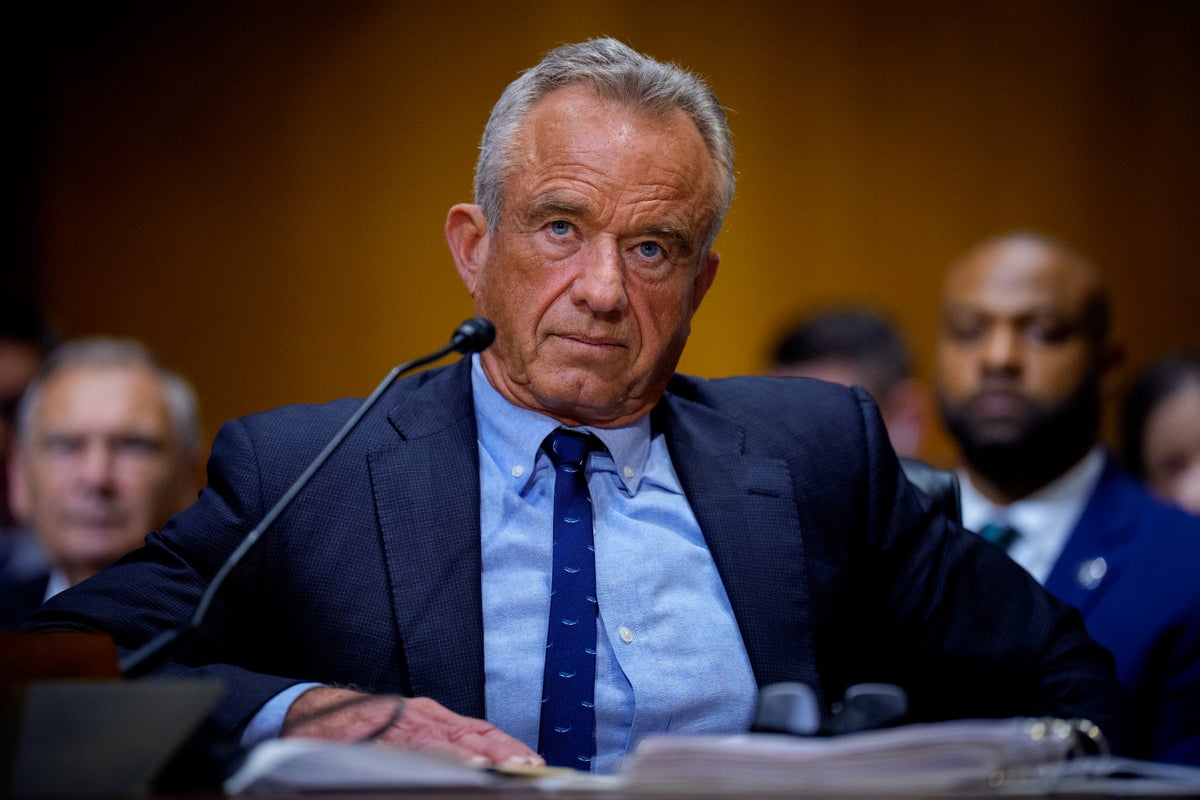
After overhauling a key government vaccine advisory panel to include vaccination skeptics, Health and Human Services Secretary Robert Kennedy, Jr. is reportedly preparing to name new members to the U.S. Preventive Services Task Force (USPSTF)—an independent group that guides recommendations for preventive services such as cancer screenings and helps determine insurance coverage.
Kennedy vowed to remake the group at a Capitol Hill appearance in April, telling a Senate committee that the panel is “lackadaisical and negligent.” Kennedy said his department had already begun receiving applications for new members, and that it would seek to add physicians from specialties that he said were underrepresented in the past, such as oncologists and anesthesiologists.
The USPSTF typically meets three times a year, but it has been on hiatus since March 2025. Kennedy fired the USPSTF’s leadership, Tufts Medical Center physician John Wong and University of Maryland professor Esa Davis, in May of this year. The Department of Health and Human Services said in a statement to Scientific American that the group’s next meeting, which had been slated for July, would take place in August “to allow additional time for selection and onboarding of new Task Force members.”
On supporting science journalism
If you’re enjoying this article, consider supporting our award-winning journalism by subscribing. By purchasing a subscription you are helping to ensure the future of impactful stories about the discoveries and ideas shaping our world today.
Kennedy’s skepticism of accepted medical practices, such as vaccinations, and promotion of unproven substances such as peptides, has given some experts cause for concern over his efforts to reform the USPMTF.
Adam Carroll, president and CEO of health policy nonprofit AcademyHealth, told Politico that it’s possible Kennedy’s appointees could promote policies that are “no longer evidence-based or scientific.” Kennedy has indicated the USPSTF could require insurance companies to cover more preventative health screenings at no additional cost to consumers, but these screenings could be “things that might not be evidence-based or potentially could cause more harm than good,” Carroll said.
When asked for comment, the American Medical Association (AMA) referred Scientific American to two previous statements. In the first, issued in July 2025, the AMA expressed “deep concern” over reports that Kennedy planned to replace all members of the USPSTF, saying it plays a “critical, non-partisan role” in guiding doctors’ efforts to prevent disease.
In the other statement, released after the firings of Wong and Davis, the AMA urged Kennedy to “restore the USPSTF’s long-standing, transparent process for selecting members, specifically clinicians with expertise in the fields of preventive medicine and primary care.”
“We also implore HHS to commit to once again holding regular Task Force meetings to ensure its important work can continue without further delay. Our patients’ lives depend on it.”
Editor’s note (07/08): This is a developing story and could be updated.
It’s Time to Stand Up for Science
If you enjoyed this article, I’d like to ask for your support. Scientific American has served as an advocate for science and industry for 180 years, and right now may be the most critical moment in that two-century history.
I’ve been a Scientific American subscriber since I was 12 years old, and it helped shape the way I look at the world. SciAm always educates and delights me, and inspires a sense of awe for our vast, beautiful universe. I hope it does that for you, too.
If you subscribe to Scientific American, you help ensure that our coverage is centered on meaningful research and discovery; that we have the resources to report on the decisions that threaten labs across the U.S.; and that we support both budding and working scientists at a time when the value of science itself too often goes unrecognized.
In return, you get essential news, captivating podcasts, brilliant infographics, can’t-miss newsletters, must-watch videos, challenging games, and the science world’s best writing and reporting. You can even gift someone a subscription.
There has never been a more important time for us to stand up and show why science matters. I hope you’ll support us in that mission.