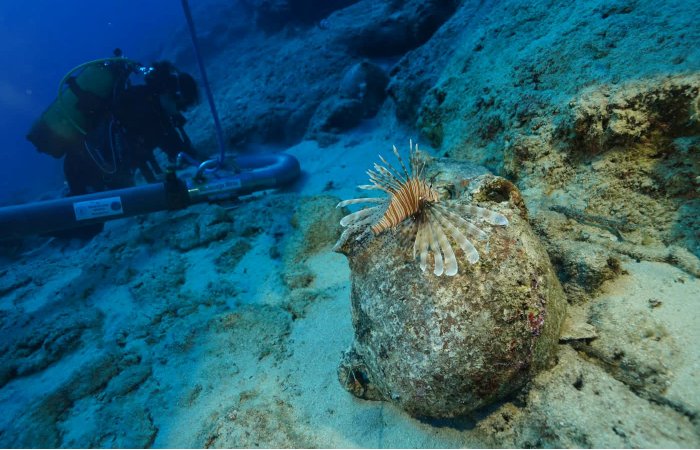
Conny Waters – AncientPages.com – Marine archaeologists have discovered the world’s oldest known shipwreck resting off the southern Mediterranean coast of Turkey near Kekova Island.
Dating to between 4,400 and 4,700 years ago in the Early Bronze Age, this extraordinary site shatters previous maritime records and offers an unprecedented window into the dawn of global commerce.
Credit: Ministry of Culture and Tourism, Turkey
The international expedition, spearheaded by the Mediterranean Archaeology Association, located the wreckage field at a depth of roughly 100 feet (30 meters). According to Professor Hakan Öniz from Akdeniz University, who led the expedition, the vessel’s wooden hull and biodegradable architecture have long since dissolved into the sea. However, its durable cargo remained remarkably intact on the ocean floor, preserved in a sediment pocket for millennia.
A Contemporary Of The Pyramids
To understand the scale of this chronology, the vessel was actively navigating the Mediterranean around the same time ancient Egyptian laborers were stacking blocks to construct the Great Pyramid of Giza.
Credit: Ministry of Culture and Tourism, Turkey
Before this breakthrough, the 4,200-year-old Dokos shipwreck off the Greek coast held the title of the earliest known wreckage site. This new find pushes the timeline of advanced maritime shipping back by centuries.
Unlocking The Cargo Deck
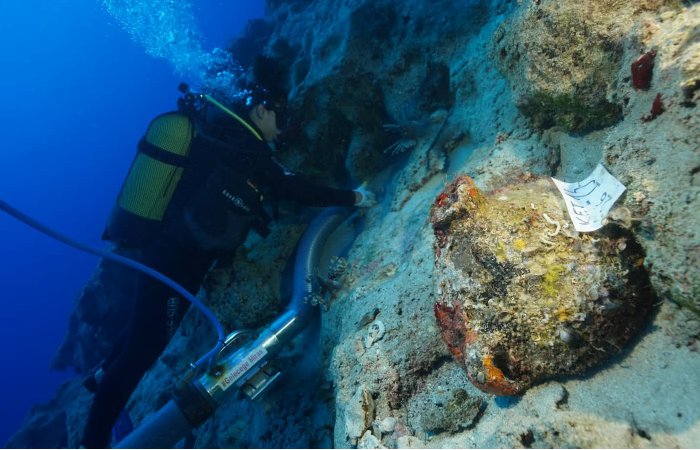
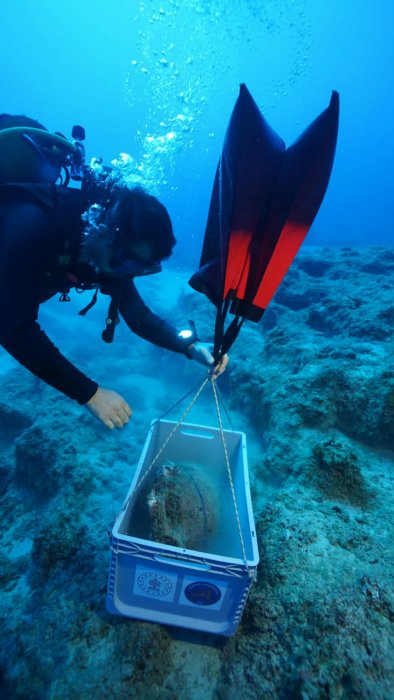
Excavation teams have systematically cataloged and retrieved approximately 30 ancient ceramic storage jars, or amphorae, along with three massive stone anchors. These artifacts are already rewriting trade maps.
Credit: Ministry of Culture and Tourism, Turkey
Macquarie University researcher Dr. Karin Sowada was astonished by the organic remnants found inside the amphorae, stating that upcoming tests should reveal the exact contents and their historical value. Early petrographic and stylistic analyses suggest that the amphorae likely originated from the Levantine coast or the fertile Jordan Valley. Once cataloged, the artifacts will be housed in Antalya’s new Mediterranean Underwater Archaeology Museum when it opens its doors.
Archaeologists believe the vessel was on a long-distance transit bound for major hub centers of the era, such as ancient Troy or early Minoan settlements in Crete. By utilizing modern organic residue analysis on the interior clay linings of the jars, scientists have detected chemical markers of ancient resins, oils, and provisions, mapping the exact goods that fueled early Bronze Age societies.
The New Frontier Of Deep History
This discovery confirms that complex, highly organized state-level maritime trade networks were thriving centuries earlier than previously recognized. The site near Kekova Island will remain under active excavation and strict conservation status, promising a steady stream of insights into how the ancient world first connected by sea.
See also: More Archaeology News
This newfound site officially breaks the record previously held by a 4,200-year-old archaeological find located near the Greek island of Dokos. However, for structurally sound wood preservation, the ultimate benchmark remains a 2,400-year-old ancient Greek merchant vessel. That ship was discovered resting entirely intact at the bottom of the Black Sea within Bulgarian waters.
Written by Conny Waters – AncientPages.com Staff Writer
Expand for references