The popular UK pet foods that contain the most microplastics have been revealed in a new study.
Researchers from the University of Exeter and the University of Sussex tested 38 foods from the 19 biggest brands for traces of tiny plastic particles.
They found that a staggering 76 per cent of all products for cats, dogs, and even hedgehogs are packed with plastic particles.
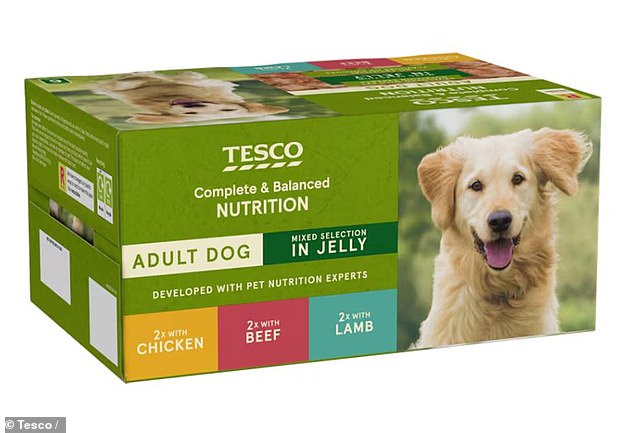
And it’s bad news if you’ve been feeding your pooch Tesco’s own–brand wet food.
Tesco Chunks In Jelly Tinned Dog Food was found to contain up to three microplastic particles per gram.
That is more than twice the average of 1.42 particles per gram in contaminated wet food.
In the worst–case scenario, the researchers estimate that a large dog could be consuming up to 2,314 tiny pieces of plastic every single day.
Professor Tamara Galloway, Professor of Ecotoxicology at the University of Exeter, says: ‘Our results are a reminder that our pets are exposed to the same chemical pollutants as ourselves.’

Scientists found that 76 per cent of popular pet food products contain microplastics, with Tesco’s ‘Adult with chicken in jelly’ dog food containing the most particles per gram of any wet dog food

Researchers found plastic fibres (pictured) and shards in most brands of dog food, especially in those containing so–called ‘animal derivatives’

Researchers estimate that a large dog could be eating up to 2,314 tiny pieces of plastic every single day
To test for microplastics, the researchers purchased samples from six different batches of each product.
Not every single sample was found to contain microplastics, with only 26 per cent of samples being contaminated.
However, microplastics were found in at least one of these batches for 84 per cent of all pet food brands, and 47 per cent of products were found to have microplastics in at least two of the six samples.
Additionally, the researchers found that three pet food products were contaminated with plastics in five out of six samples tested.
Those were Waitrose Essential Meaty Chunky in Jelly with Chicken cat food, Waitrose Complete and Balanced Dog Food Chicken and Vegetable, and Whiskas Chicken in Jelly.
A Waitrose spokesperson told the Daily Mail: ‘The safety and quality of our products are a priority, and all of our packaging strictly complies with UK food contact materials legislation to ensure it is safe.’
Co–author Professor Fiona Matthews, of the University of Sussex, told the Daily Mail that the worst offenders were those containing so–called ‘animal derivatives’.
This is content considered not suitable for human consumption that is added to bulk out the meat content of the product.

Scientists warn that these microplastics (pictured) can hold onto pesticides and hormones, passing through the body like a ‘bullet’ of toxins

The vast majority of all cat, dog, and hedgehog foods contained some level of microplastic contamination. Overall, only three brands were totally microplastic–free
‘Many of them contained less than four per cent chicken, even though they were marketed as “chicken” or “chicken flavour”,’ says Professor Matthews.
‘Of these products with animal derivatives, 90 per cent had microplastic contamination.’
Among the contaminated products, the amount of microplastics found ranged quite widely.
The researchers calculate that a cat might consume anywhere between 33 and 407 microplastic particles per day, depending on the brand and whether they eat wet or dry food.
The highest concentration of plastic particles in cat food was found in Lily’s Kitchen ‘Chicken with Tasty Veggies’ dry food, with three microplastic particles per gram.
However, although dry foods tended to have a higher concentration of microplastic particles, the researchers point out that wet foods have a higher risk because pets need to eat more of them.
That makes Whiskas wet cat food, with up to two particles per gram, a significantly bigger source of potential plastic pollution since cats need to eat about five times more by weight.
Professor Matthews says she would be ‘hesitant’ about advising owners to avoid any particular food at this stage.


Dry foods such as Lily’s Kitchen ‘Chicken with Tasty Veggies’ had higher concentrations of microplastics, but pets eat a smaller volume of these products
She instead warns that ‘microplastics are really widespread across a whole range of brands and food types’.
Researchers currently aren’t sure where this plastic contamination is coming from, and more work will be needed to see if it is related to ingredient quality, packaging types, or processing methods.
Likewise, the researchers didn’t find a strong indication that more expensive pet foods with higher quality ingredients were any less prone to plastic contamination.
A spokesperson for UK Pet Food, the industry body for pet food manufacturers, told the Daily Mail: ‘Our members’ pet food products comply with all applicable regulations and food safety standards, and pet owners can continue feeding commercially prepared pet food with confidence.
‘On behalf of our industry, UK Pet Food continues to engage with regulators, scientists, and colleagues in our sector and beyond to ensure new research is carefully considered as scientific understanding develops.’
However, this may come as worrying news to pet owners as there is a growing recognition that microplastic consumption is likely to lead to negative health consequences for pets and humans alike.
Researchers are increasingly concerned about the capacity of such particles to be internalised within cells, causing alterations in cellular function, particularly when interacting with organs in children and causing definitive alterations in adult life.
There is a growing body of evidence that plastics could play a key role in early–onset cancer genesis, where healthy cells turn cancerous.

The worst dog and cat foods contained up to three microplastic particles per gram
In 2024, a study found that cancer cells in the gut spread at an accelerated rate after contact with microplastics.
Professor Matthews says: ‘We are even finding that small particles can travel across the gut barrier and make their way into organs.
‘This is worrying because, as well as potentially causing physical problems, we know that microplastics can accumulate fat–soluble chemicals, such as pesticides and hormones, so they can act as a “bullet” of toxins.’
Experts are also concerned that pets like dogs and cats might contaminate the environment when microplastics pass through their digestive systems and end up in the soil.
Lead author Emily Thrift, a PhD student at the University of Sussex, says: ‘Given the huge number of pets in the UK, as well as hedgehogs and other wild mammals which are fed these foods to supplement their diets, this represents a major, previously overlooked pathway for plastic to enter terrestrial ecosystems.’
Bramble, Canin, Gardman, Harringtons, Iams, Igelfutter Food, Lily’s Kitchen, Mr Johnson, Nature’s Variety, Pedigree, Sainsbury’s, Spikes, Tesco, Waitrose, Whiskas, Wild Things, and UK Pet Food have been approached for comment.